Garden and Exterior
Your garden and exterior spaces represent far more than decorative borders around your home. They function as extensions of your indoor living areas, environmental buffers, habitat corridors, and significant contributors to property value. Whether you’re working with a compact urban balcony or a sprawling suburban lot, the decisions you make about materials, plant selection, water management, and spatial layout ripple outward—affecting your daily comfort, maintenance burden, ecological footprint, and long-term investment return.
This comprehensive resource connects the foundational principles that transform outdoor spaces from afterthoughts into purposeful, resilient environments. From the technical considerations of sub-base preparation to the aesthetic nuances of threshold design, from supporting pollinators to maximizing resale appeal, we’ll explore how thoughtful exterior planning addresses practical challenges while creating spaces that genuinely enhance how you live. The goal isn’t perfection—it’s understanding the trade-offs and priorities that align with your specific context, climate, and aspirations.
Extending Your Living Space Outdoors
The most successful outdoor spaces blur the boundary between interior and exterior, creating what designers call threshold zones—transitional areas that feel neither fully inside nor completely outside. This psychological shift happens through deliberate design choices rather than simply placing furniture on a patio.
Consider how you move from your home into the garden. A seamless transition might involve matching floor heights, extending rooflines for partial coverage, or using consistent materials that flow from indoor to outdoor. Many homeowners underestimate the importance of weather protection strategies: without shelter from sun, wind, or rain, even beautifully designed spaces sit unused for much of the year. Retractable awnings, pergolas with adjustable louvers, or strategically placed windbreak plantings can extend usability by several months annually.
Privacy concerns often prevent people from fully embracing their outdoor areas. Effective screening doesn’t require fortress-like walls—layered plantings at varied heights, strategically positioned trellises, or even carefully angled seating can create intimate zones while maintaining airflow and light. For spaces used during cooler seasons, heating solutions range from radiant patio heaters to built-in fire features, each with distinct fuel costs, heat distribution patterns, and aesthetic implications.
Creating Functional Outdoor Dining and Entertainment Zones
Outdoor kitchens have evolved from simple grills to fully equipped cooking stations, but logistics matter more than luxury features. The distance from your indoor kitchen directly impacts how you’ll actually use the space—too far, and you’ll abandon elaborate meal preparation; too close, and you might wonder why you bothered building outdoors at all. The sweet spot typically falls between 15 and 30 feet, close enough for efficiency but far enough to feel like a destination.
Successful outdoor entertaining requires addressing three comfort factors simultaneously:
- Wind management: Even light breezes extinguish candles, chill food quickly, and make conversation difficult; plantings, screens, or glass panels positioned perpendicular to prevailing winds create calm pockets
- Insect control: Design-based solutions—eliminating standing water, incorporating insect-repelling plants like citronella grass or lavender, installing discreet fans to disrupt flight patterns—often outperform chemical treatments
- Appropriate lighting: Dining areas need focused illumination at table height (avoid overhead glare), with ambient lighting along pathways and transitions for safety
Furniture durability deserves careful consideration beyond initial aesthetics. Materials face challenges indoor furniture never encounters: UV degradation, moisture cycling, temperature extremes, and mold growth. Powder-coated aluminum resists rust but can feel cold; teak weathers gracefully but requires regular maintenance; synthetic wicker offers low upkeep but may crack in intense sun. Matching material choice to your climate and maintenance willingness prevents buyer’s remorse.
Hardscaping Essentials: Building a Lasting Foundation
Hardscaping—the non-living structural elements of your landscape—creates the bones upon which everything else depends. Poor execution here leads to cracked patios, sunken pavers, persistent weeds, and costly repairs that disrupt established plantings.
The critical layer most homeowners never see is the sub-base preparation. Think of it as the foundation beneath your foundation: properly compacted gravel (typically 4-6 inches deep) prevents settling, facilitates drainage, and distributes weight loads evenly. Skipping this step or using inadequate depth might save a weekend initially but virtually guarantees failure within a few freeze-thaw cycles.
Key Technical Considerations
Weed prevention begins during installation, not afterward. Landscape fabric beneath hardscaping blocks light while allowing water penetration, but quality varies enormously—commercial-grade geotextiles last decades while bargain fabrics disintegrate within years. Edge restraints matter equally; without them, pavers gradually migrate apart, creating gaps where weeds establish.
Heat absorption transforms material selection from purely aesthetic to comfort-critical in sunny climates. Dark pavers can reach temperatures 40-50°F above air temperature, making barefoot use painful and radiating heat that stresses nearby plants. Light-colored concrete, natural stone, or pavers with high solar reflectance index (SRI) ratings maintain more comfortable surface temperatures.
Freeze-thaw resistance becomes paramount in climates experiencing winter freezing. Water infiltrates porous materials, expands when frozen, and causes spalling or cracking. Materials rated for your specific climate zone—verified through ASTM testing standards rather than marketing claims—prevent premature deterioration.
Planning for Furniture and Functionality
Layout decisions should account for furniture footprints plus circulation space. A dining table for six requires roughly 10×10 feet including chairs; add another 3 feet perimeter for comfortable movement. Sketch furniture placement before finalizing hardscape dimensions—discovering you’re 18 inches short after installation means either cramped seating or unused paved area.
Water Management and Sustainable Drainage
Traditional landscaping treated rainwater as a problem to eliminate quickly, channeling runoff into storm sewers. Eco-friendly approaches recognize water as a resource to capture, slow, and infiltrate—reducing downstream flooding, recharging groundwater, and supporting plantings without irrigation.
Permeable paving systems allow water to filter through surfaces rather than sheeting off. These include porous concrete, permeable interlocking pavers with wide joints filled with gravel, and grid systems supporting grass or groundcover. Installation differs significantly from conventional paving—the sub-base uses larger stone aggregate, often with geotextile separation layers, and requires specific compaction techniques to maintain porosity while supporting loads.
Maintenance requirements deserve honest assessment. Permeable surfaces need periodic vacuuming or pressure washing to prevent pore clogging from sediment accumulation. In areas with heavy tree coverage or dusty conditions, annual maintenance becomes necessary; neglected systems gradually lose permeability and function like conventional pavement.
Water retention swales—shallow, vegetated channels—slow runoff velocity and promote infiltration. Positioned along slope contours, they capture water that would otherwise rush across surfaces, allowing it to soak in gradually. Native grasses and moisture-tolerant perennials within swales thrive without irrigation while filtering pollutants. Many municipalities now offer incentives, rebates, or expedited permitting for projects incorporating green infrastructure, recognizing its role in managing stormwater at the source.
Cultivating a Biodiverse, Low-Maintenance Garden
The phrase “low-maintenance garden” often gets misused to justify sterile landscapes of mulch and three shrub varieties. Genuinely sustainable approaches embrace biodiversity as a maintenance-reduction strategy—diverse plantings resist pest outbreaks, support beneficial insects, and fill niches that weeds would otherwise colonize.
Begin by identifying and eliminating invasive species already present. Invasives spread aggressively precisely because local ecosystems lack natural controls—they outcompete natives, require constant management to contain, and provide minimal value to wildlife. Removing established invasives demands persistence, but investing that effort upfront prevents perpetual battles.
Building Soil Health and Resilience
Healthy soil functions as the foundation for low-input gardening. Soil health regeneration focuses on increasing organic matter, supporting microbial communities, and improving structure rather than simply adding fertilizer. Practices include:
- Leaving grass clippings and chopped leaves in place to decompose naturally
- Incorporating compost annually to feed soil organisms, not just plants
- Minimizing tillage, which disrupts fungal networks and oxidizes organic matter
- Using mulch layers (2-3 inches) to moderate temperature, retain moisture, and suppress weeds
Companion planting leverages plant partnerships—deep-rooted species mine nutrients for shallow-rooted neighbors, nitrogen-fixers share fertility, and aromatic herbs confuse pests searching for host plants. These relationships reduce input needs while creating more resilient plant communities.
Supporting Wildlife and Managing Extremes
Gardens supporting native pollinators, birds, and beneficial insects effectively recruit free labor—these creatures pollinate crops, control pest populations, and cycle nutrients. Providing nectar sources across seasons, varied plant structure from groundcovers to small trees, water features, and undisturbed nesting areas transforms gardens into habitat corridors.
Climate extremes—particularly heatwaves and drought—challenge conventional gardening approaches. Plant selection emphasizing climate adaptation matters more than ever: species native to your region have evolved appropriate survival strategies, while introduced ornamentals often struggle. Drought-tolerant doesn’t mean desert plants everywhere—it means matching water needs to natural rainfall patterns in your specific location.
Maximizing Small Spaces with Vertical Solutions
Urban and small-lot gardeners face the challenge of ambitious goals meeting limited square footage. Vertical gardening leverages often-underutilized dimensions—walls, fences, railings—to dramatically expand growing area without expanding footprint.
Safety considerations come first, particularly for balcony and rooftop applications. Weight limits aren’t suggestions—exceeding structural capacity risks catastrophic failure. Saturated soil weighs roughly 100 pounds per cubic foot; multiply container volume by this figure, add hardscaping, furniture, and occupant weight, then verify you’re within allowable loads. When uncertain, consult structural engineers rather than guessing.
Practical Vertical Growing Techniques
Successful vertical systems address three challenges: watering logistics, wind exposure, and soil retention. Wall-mounted planters dry faster than ground-level beds due to air circulation on all sides—drip irrigation or self-watering containers reduce labor. Wind accelerates moisture loss while potentially damaging plants; flexible supports and wind-tolerant species prevent frustration.
Vertical greening serves multiple functions beyond food production:
- Privacy screening: Living walls create instant barriers while maintaining airflow
- Sound masking: Dense foliage absorbs and deflects noise, particularly valuable in urban settings
- Light reflection strategies: Pale-colored walls or carefully positioned mirrors bounce light into shaded areas, expanding growing possibilities
- Visual layering: Multiple height planes create depth and interest in confined spaces
Multi-use furniture designed for small spaces—benches with integrated storage, tables with built-in planters, fold-down work surfaces—maximizes functionality per square foot. Paving scale matters too; oversized pavers make small areas feel larger, while busy patterns visually fragment and shrink spaces.
Illuminating Your Exterior with Solar Technology
Solar-powered outdoor lighting has evolved from disappointing novelties to legitimate alternatives for many applications, eliminating trenching and wiring costs while providing safety and ambiance with zero electrical infrastructure.
Battery lifespan technology represents the critical advancement. Early solar lights failed within a season; current quality units use lithium batteries lasting 3-5 years with gradual degradation rather than sudden failure. Replacement batteries are typically user-serviceable, extending overall fixture life significantly.
Lumen output reality requires managing expectations—even premium solar path lights produce 5-30 lumens compared to 800+ lumens from standard bulbs. They excel at accent lighting, pathway marking, and ambiance but cannot replace wired security lighting or task illumination. Spacing strategies compensate: positioning fixtures closer together (every 6-8 feet rather than 15-20) creates continuous lighting corridors rather than isolated pools.
Optimizing Performance
Panel placement determines whether solar lights meet, exceed, or disappoint expectations. Panels require direct sun for several hours daily; dappled shade reduces output proportionally. South-facing locations (in the Northern Hemisphere) receive maximum sun exposure, while northern exposures may underperform regardless of fixture quality.
Panel maintenance involves periodically wiping accumulated dust, pollen, and debris—even thin films reduce efficiency measurably. Color temperature choice affects ambiance significantly: warm white (2700-3000K) creates inviting spaces similar to incandescent bulbs, while cool white (5000K+) appears harsh but provides better visibility for security applications.
Boosting Curb Appeal and Property Value
First impressions form within seconds of arrival, making your home’s street-facing presentation a disproportionately important value driver. Curb appeal isn’t about expensive renovations—it’s about intentional focus on high-impact areas that signal care and quality to potential buyers or visitors.
The front door focal point deserves particular attention as the natural visual anchor. A freshly painted door in a color that complements but contrasts with the home’s primary color, flanked by symmetrical plantings or lighting, creates instant polish. Entry lighting should illuminate faces, not just the threshold—fixtures positioned at 66-72 inches height cast flattering light while providing security.
Mature trees command premium valuations, often adding thousands to property value. Tree preservation during renovations or landscaping projects requires protecting root zones—the area extending roughly to the canopy edge—from compaction, grade changes, and root severance. Trees tolerate above-ground pruning far better than below-ground root damage; seemingly healthy trees may decline years after construction injury compressed roots or altered drainage patterns.
Strategic Improvements for Maximum Impact
Low-maintenance appeal resonates strongly with buyers who want beauty without weekend-consuming upkeep. Perennial-focused plantings, automated irrigation, and simplified lawn areas signal reduced burden. Driveway aesthetics matter more than many homeowners realize—cracked, stained, or deteriorating pavement suggests deferred maintenance elsewhere, while clean, well-defined drives imply conscientious ownership.
Seasonal timing affects selling outcomes measurably. Homes listed during peak growing season—late spring through early summer in most climates—benefit from lush landscapes and extended daylight for showings. Properties appearing during dormancy face steeper challenges; investing in evergreen structure, hardscaping features, and lighting can offset seasonal disadvantages.
Understanding these interconnected elements—from technical foundations to aesthetic refinements, from ecological functions to financial returns—empowers you to make exterior decisions that align with your priorities, budget, and timeline. Your garden and exterior spaces evolve continuously; approaching them with knowledge transforms maintenance from burden to purposeful stewardship.

Solar-Powered LED Path Lights: A Reviewer’s Guide to Models That Actually Last Through Winter
The frustrating truth is that most solar path lights are not engineered to survive winter; they are designed to be disposable. Longevity isn’t about brightness (lumens) but about superior internal components: a LiFePO4 battery for cold tolerance and a monocrystalline…
Read more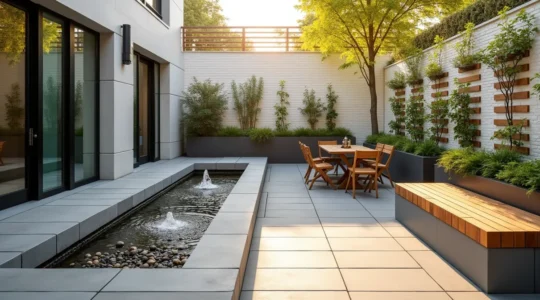
Design Hacks for Compact Urban Courtyards: Creating an Oasis in 200 Sq Ft
Transforming a tiny courtyard isn’t about small furniture; it’s about mastering sensory illusions to trick the brain into perceiving more space. Strategic sound masking and light-bouncing paint are more effective at creating a sanctuary than just adding more plants. Large…
Read more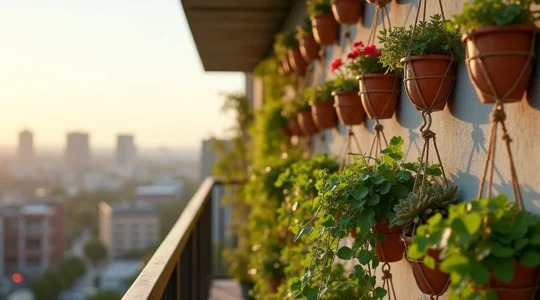
Vertical Gardening with Hanging Planters: Best Plants for Windy Balconies?
The key to a thriving high-rise garden isn’t just tough plants; it’s smart, weather-aware engineering from the ceiling down. Prioritize structural safety by understanding the dynamic forces of wind on hanging planters before selecting any hardware. Implement a closed-loop watering…
Read more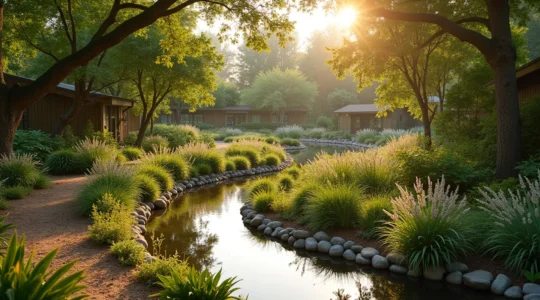
How to Build a Resilient Backyard Ecosystem That Thrives in Climate Extremes
In summary: Your garden’s struggle with extreme weather isn’t a plant problem; it’s a system design problem. A resilient yard actively harvests water, builds living soil, and uses plant relationships to regulate itself. Shift from isolated fixes to creating an…
Read more
Native Plant Selection: How to Design a Beautiful Garden That Needs Zero Watering?
Contrary to popular belief, a zero-water garden isn’t achieved by just picking drought-tolerant plants; it’s built by engineering a self-sufficient ecosystem. Native plants thrive without extra water because their deep roots are adapted to local soil, a process disrupted by…
Read more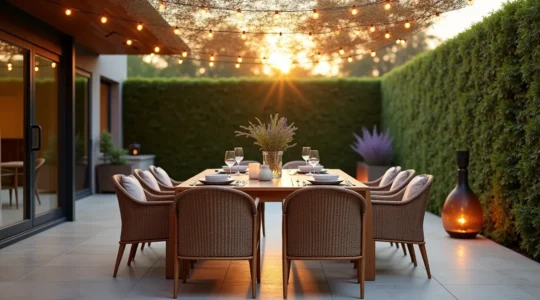
Creating the Perfect Alfresco Dining Area: A Designer’s Guide to Wind, Bugs, and Ambiance
The secret to flawless alfresco dining lies not in fighting the elements, but in ‘environmental choreography’—subtly directing wind, light, and scent to create an oasis of comfort. Strategic barriers (porous hedges, sleek glass) and layered “scent zones” manage wind and…
Read more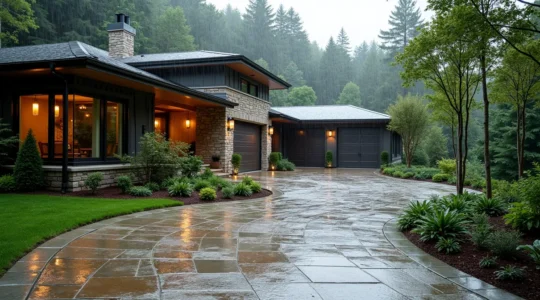
Why Choose Permeable Stone Paving for Driveways in Flood-Prone Areas?
Permeable paving transforms your driveway from a source of water problems into a powerful tool for flood prevention and landscape health. It actively absorbs rainwater on-site, drastically reducing runoff that can flood basements and overwhelm municipal sewers. The deep aggregate…
Read more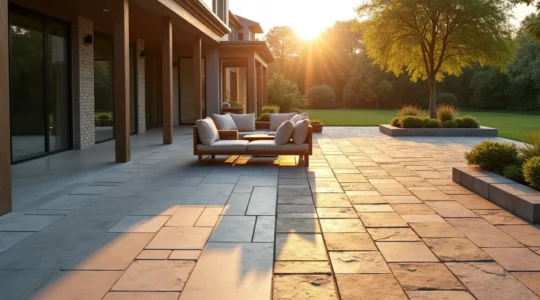
Stamped Concrete vs Natural Stone Pavers: Which Patio Surface Lasts Longer?
The debate over paver versus concrete longevity misses the point; the surface material is secondary to the quality of the installation system beneath it. A patio’s lifespan is determined by the integrity of its sub-base, not just the top layer…
Read more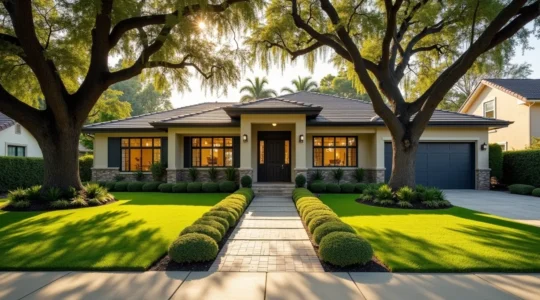
Landscaping for ROI: Which Exterior Upgrades Increase Home Value Most?
Prioritizing exterior upgrades based on proven return on investment is the most effective strategy to maximize your home’s final sale price. High-impact, low-cost changes like a strategically painted front door offer the highest and fastest financial returns. Investing in premium,…
Read more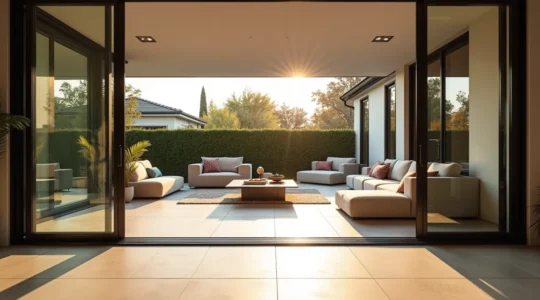
Engineering the Perfect Indoor-Outdoor Flow for Your Suburban Home
Achieving a true indoor-outdoor connection in a small suburban home is a spatial engineering challenge, not a decorating project. The physical threshold between inside and out is the single biggest barrier to seamless flow and must be completely eliminated. Extending…
Read more