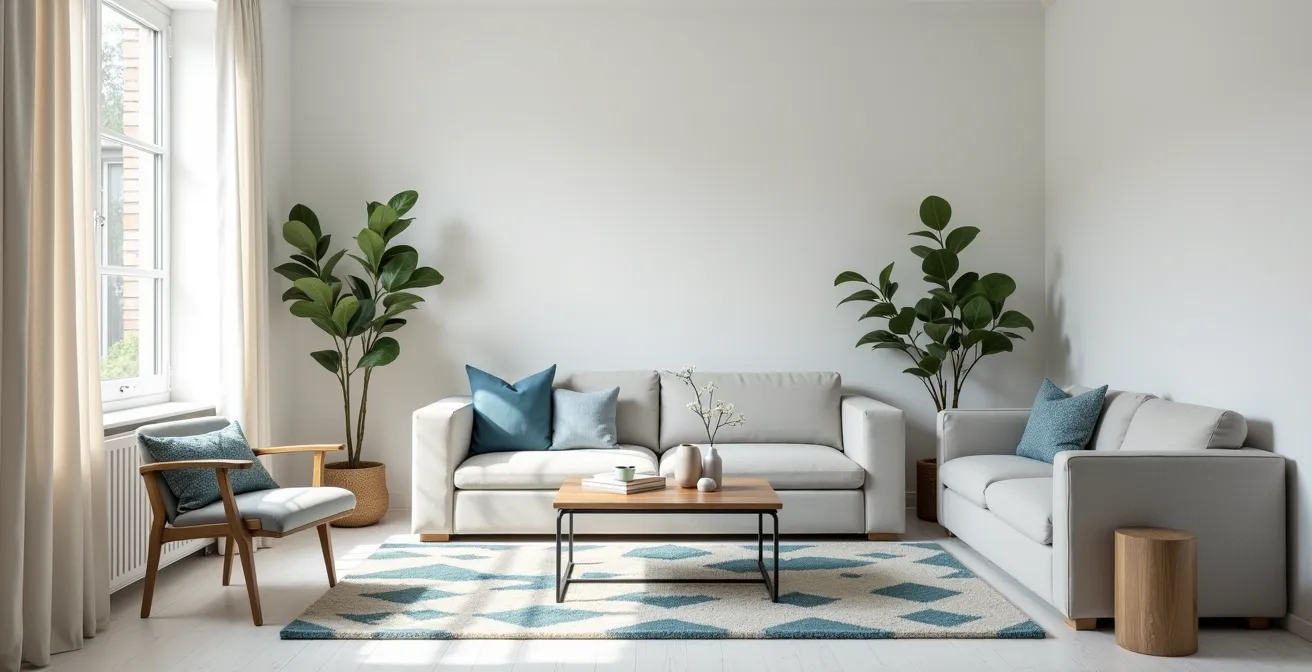
The secret to using patterned rugs in small spaces isn’t avoiding boldness, but mastering the principles of visual density and scale.
- Large, open patterns can make a room feel bigger, while small, dense patterns often create visual clutter.
- Success lies in creating a “scale dialogue” between your rug and other patterns, unified by a shared color bridge.
Recommendation: Instead of defaulting to a plain rug, choose a pattern with a scale that complements your room’s size and use the 60-30-10 color rule to ensure it integrates perfectly.
Choosing a patterned rug for a small living room often feels like a high-stakes design decision. You’re drawn to the character and life a bold pattern can bring, but a nagging fear holds you back: what if it completely overwhelms the space? What if it makes the room feel smaller, busier, and more chaotic? This hesitation is why so many beautiful, character-filled rooms end up with a safe, neutral rug that adds little personality. The common advice to “play it safe” with light colors or minimal patterns only reinforces this fear, preventing you from truly expressing your style.
But as a textile designer, I can tell you that this caution, while understandable, is based on a misconception. The problem isn’t the pattern itself; it’s a lack of understanding of its visual language. A patterned rug is one of the most powerful tools for defining and elevating a small space, but only when you know the rules of engagement. It’s not about avoiding “busy” designs, but about learning to control a room’s visual density through the interplay of scale, color, and texture. The key is to shift your perspective from fear of overwhelming the space to confidence in anchoring it.
This guide will walk you through the core principles that designers use to make bold choices work. We will deconstruct why some patterns feel claustrophobic while others feel expansive. You’ll learn how to mix patterns harmoniously, select the right fiber to preserve your design’s integrity, and apply timeless rules of color and placement. By the end, you’ll see your patterned rug not as a risk, but as your most strategic and expressive asset.
To help you navigate these design principles, this article is structured to address the most common challenges and questions. Explore the sections below to build your confidence and transform your space.
Summary: A Designer’s Guide to Choosing Patterned Rugs for Small Living Rooms
- Why Does a Large Pattern Make a Small Room Feel Claustrophobic?
- How to Mix a Patterned Rug with Patterned Curtains Without Clashing
- Wool vs. Synthetic: Which Fiber Holds Intricate Patterns Best Over Time?
- The ‘Floating Rug’ Mistake That Disconnects Your Seating Area
- How to Clean Intricate Rugs Without Fading the Colors
- How to Apply the 60-30-10 Rule for a Balanced Color Palette
- The Cleaning Trap: Why Do Textured Floors Accumulate More Grime?
- Textured vs. Smooth Flooring: Which Is Safer for Families with Toddlers?
Why Does a Large Pattern Make a Small Room Feel Claustrophobic?
It’s a common paradox: conventional wisdom suggests small patterns for small rooms, yet they often make a space feel more cluttered. The real culprit isn’t the size of the pattern’s motifs, but its visual density. This refers to the amount of visual information packed into a given area. A rug with a dense, intricate pattern, regardless of the motif size, creates a high level of visual activity that can dominate the floor and make a room feel enclosed. The eye struggles to find a resting place, which the brain interprets as clutter and confinement.
Conversely, a rug with a large-scale pattern that includes ample “negative space” (the background color) can have the opposite effect. Think of a large, open geometric design or a sprawling floral pattern. These designs have lower visual density. They allow the floor to breathe and can even create an illusion of spaciousness because the pattern is less demanding on the eye. According to analysis on visual density’s impact on small spaces, highly detailed rugs with dense patterns contribute to a cluttered look, overwhelming the floor area and disrupting the sense of openness.
The key is to assess the balance between the pattern and the background. If the design is tight and complex, like a fine Oriental or a dense damask, it increases visual density. If it’s bold and graphic with plenty of breathing room, like a simple trellis or a bold chevron, it decreases visual density and can make your small living room feel more expansive and intentional.
How to Mix a Patterned Rug with Patterned Curtains Without Clashing
Mixing patterns, especially a dominant rug and curtains, is an art form built on one foundational rule: create a scale dialogue. Instead of trying to match patterns, your goal is to make them complement each other by varying their scale. If your rug features a large-scale pattern (like bold, graphic florals), your curtains should feature a small-scale one (like a subtle pinstripe or a micro-dot). This contrast allows each pattern to have its own identity without competing for attention. The large pattern becomes the statement, while the smaller one reads as a texture from a distance.
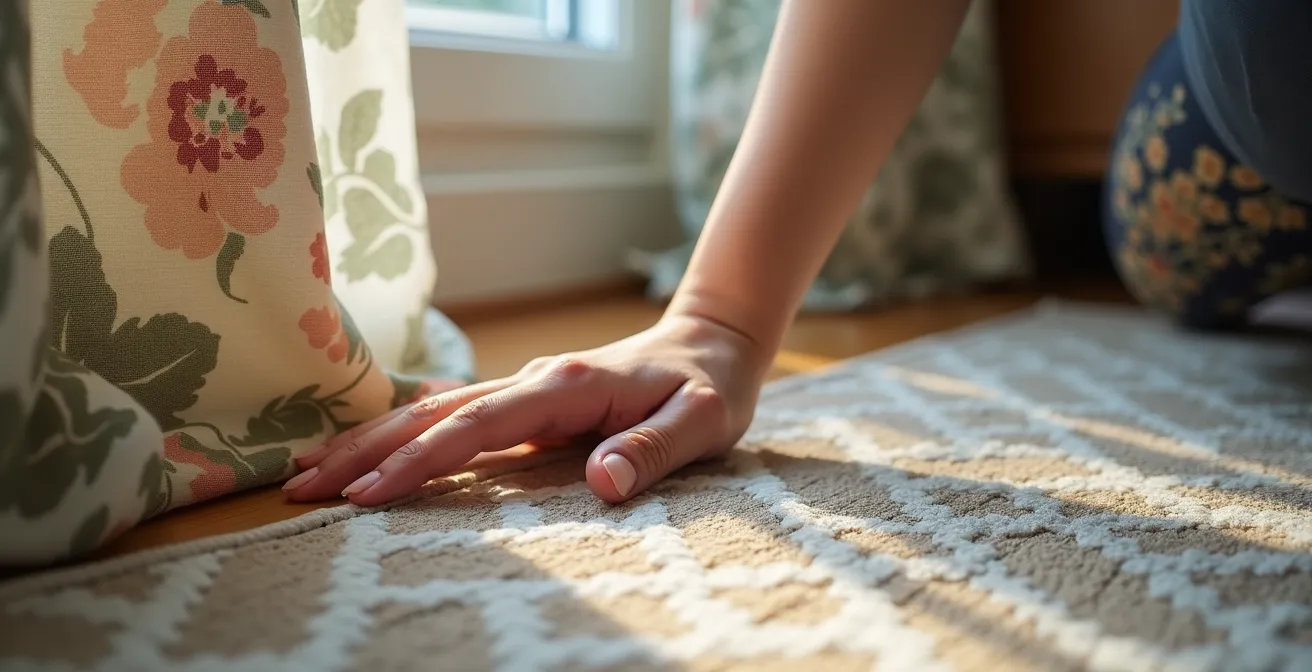
The second key to success is creating a color bridge. Your patterns should share at least one unifying color. This common thread ties the disparate patterns together into a cohesive palette. For instance, if your geometric rug is navy and cream, choose floral curtains that feature the same shade of navy, even if they also introduce other colors like blush or green. This shared hue tells the eye that these elements belong together, preventing a chaotic, clashing effect. If you have a busy rug, keeping other accents minimal is crucial; throw pillows can be a great way to pull out rug colors without overwhelming the room.
This table provides a simple guide to creating successful pattern combinations based on scale and color.
| Rug Pattern Type | Best Curtain Match | Color Bridge Strategy |
|---|---|---|
| Large Geometric | Small-scale floral or solid texture | Keep other accents minimal with busy patterns; use throw pillows and blankets to add rug colors without overwhelming the small space |
| Dense Tribal/Oriental | Solid with subtle texture | Pull one accent color from rug for curtain trim or tiebacks |
| Abstract/Watercolor | Geometric stripes or grids | Match the lightest tone in both for cohesion |
Wool vs. Synthetic: Which Fiber Holds Intricate Patterns Best Over Time?
When selecting a patterned rug, the fiber content is as crucial as the design itself. Each material has its own “voice” that influences how a pattern is expressed. Wool, a natural fiber, has a unique structure that takes dye with a rich, nuanced depth. This results in a slightly softer, more diffused appearance for patterns—a “soft-focus” effect. This quality is ideal for traditional, intricate designs like Oriental or tribal patterns, as it lends them an authentic, timeless character. Wool is also exceptionally resilient, making it perfect for high-traffic areas.
Synthetic fibers like polypropylene and nylon, on the other hand, have a much “crisper” voice. Their non-porous strands don’t absorb dye but are solution-dyed, meaning the color is part of the fiber itself. This process allows for incredibly sharp, precise lines and high-contrast designs. If your heart is set on a bold, high-contrast geometric or a very precise graphic pattern, a synthetic rug will render it with superior clarity and vibrancy. Nylon, in particular, is known for its excellent detail retention and durability, making it a workhorse for busy households.
As the design team at CHD Interiors notes, the choice also depends on the room’s function. The following table, based on expert advice from sources like their guide on rug styles, breaks down how fiber impacts pattern clarity and performance.
| Fiber Type | Pattern Clarity | Best For | Maintenance |
|---|---|---|---|
| Wool | Soft-focus effect, natural texture | High-traffic areas, soft and long-lasting | Naturally stain-resistant |
| Polypropylene | Sharp, crisp lines | High-contrast geometric designs | Easy clean, fade-resistant |
| Nylon | Excellent detail retention | Precise patterns, busy households | Durable, resilient |
The ‘Floating Rug’ Mistake That Disconnects Your Seating Area
One of the most common design mistakes in a small living room is choosing a rug that’s too small. This creates the dreaded “floating rug” effect, where the rug sits isolated in the middle of the floor, touching no furniture. Instead of unifying the space, it visually breaks it apart, making the room feel disjointed and even smaller. A rug’s primary function is to anchor your seating area, creating a defined, cohesive zone. To do this, it must physically connect the main pieces of furniture.
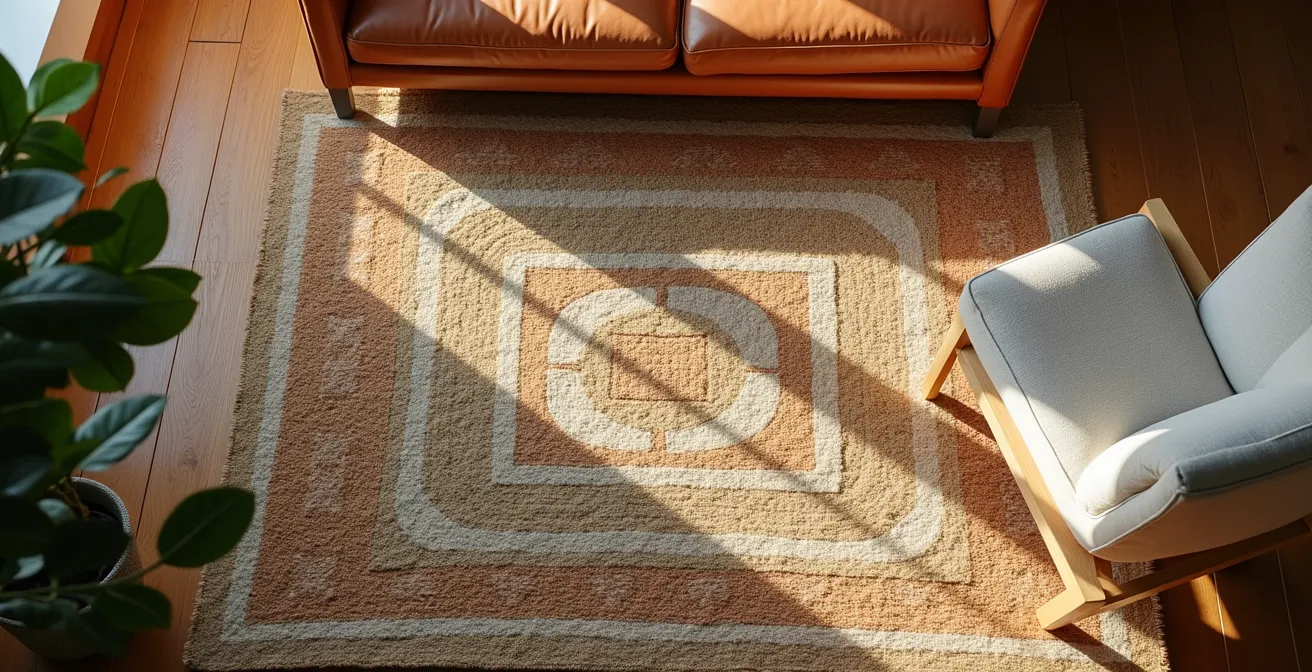
The cardinal rule is that, at a minimum, the front two legs of your sofa and any armchairs must rest on the rug. This simple act of connection immediately makes the arrangement feel intentional and grounded. In most small living rooms, this will mean opting for an 8’x10′ or even a 9’x12′ rug. While it may seem counterintuitive, a larger rug makes a small room feel bigger because it unifies the space and draws the eye across a wider plane.
But what if you’ve fallen in love with a patterned rug that’s too small or too expensive in a larger size? The designer’s solution is layering. Place a larger, inexpensive neutral rug (like jute or sisal) that is correctly sized for the room first. Then, layer your smaller, more precious patterned rug on top. This technique allows you to get the anchoring benefits of a large rug while still showcasing the pattern you love, creating a sophisticated, textured look.
Your Action Plan: Correctly Anchoring Your Rug
- Verify Furniture Contact: Ensure at least the front legs of your sofa and all accent chairs are sitting firmly on the rug. This visually groups them into a single, cohesive unit.
- Check Your Borders: In a small room, aim to leave at least 18 inches of bare floor between the edges of the rug and the walls. This creates a border that helps define the space without making it feel cramped.
- Assess for Layering: If your beloved patterned rug is too small to meet the “front legs on” rule, source a larger, neutral rug (like jute or sisal) to act as a base.
- Center the Top Layer: Place the smaller patterned rug on top of the base rug, centering it under the coffee table to define the core conversation area.
- Integrate with Decor: Select a pattern with a neutral color scheme that coordinates with your existing decor to ensure the layered look feels cohesive, not chaotic.
–
How to Clean Intricate Rugs Without Fading the Colors
The fear of a devastating spill on a beautiful, intricate rug is real. Aggressive cleaning can lead to fading, bleeding, or fiber damage, especially with delicate dyes. However, the most effective strategy for “cleaning” a patterned rug begins at the point of purchase. The secret weapon? Embracing the concept of pattern as camouflage. Densely patterned rugs are exceptionally forgiving and are masters at disguising minor stains, crumbs, and everyday wear and tear.
Where a single drop of red wine on a solid cream rug creates a glaring emergency, the same spill on a busy Persian or a multi-colored tribal rug can go virtually unnoticed. This inherent camouflage drastically reduces the need for frequent, intensive spot-cleaning, which is the primary cause of color fading over time. By choosing a pattern that is inherently busy, you are proactively building a defense against life’s little accidents.
Case Study: The Pattern as Camouflage Strategy
An analysis of rug performance in high-traffic areas reveals a key insight. A study from home furnishing experts at Slumberland confirms that patterned rugs help disguise stains and wear. In a family living room setting, a solid light-colored rug showed visible signs of wear and multiple small stains within six months. In a parallel setting, a dense, multi-colored Bokhara-style rug appeared pristine after the same period, despite enduring similar spills and foot traffic. The pattern effectively absorbed the minor imperfections into its design, requiring only regular vacuuming instead of aggressive chemical cleaning.
When cleaning is unavoidable, always opt for the gentlest method first. Blot spills immediately with a clean, dry cloth—never rub. For more persistent spots, use a solution of clear dish soap and water, but always test it on an inconspicuous area first (like under the sofa) to ensure it doesn’t affect the dyes. For natural fiber rugs like wool, avoid harsh chemical cleaners, which can strip the lanolin and damage the fibers.
How to Apply the 60-30-10 Rule for a Balanced Color Palette
Once you’ve chosen your patterned rug, it can’t exist in a vacuum. It must integrate into your room’s overall color story. The most foolproof method for achieving a harmonious, professional-looking palette is the classic 60-30-10 rule. This interior design principle provides a simple framework for balancing colors in a way that is pleasing to the eye. It states that your room’s color scheme should be composed of:
- 60% Dominant Color: This is your main color, the backdrop for the room. It typically covers the largest surface areas, like the walls and possibly large furniture pieces.
- 30% Secondary Color: This color supports the dominant hue and is used about half as much. It’s often found in your curtains, accent chairs, or the rug itself.
- 10% Accent Color: This is the “pop” of color, used sparingly for accessories like throw pillows, artwork, and decorative objects.
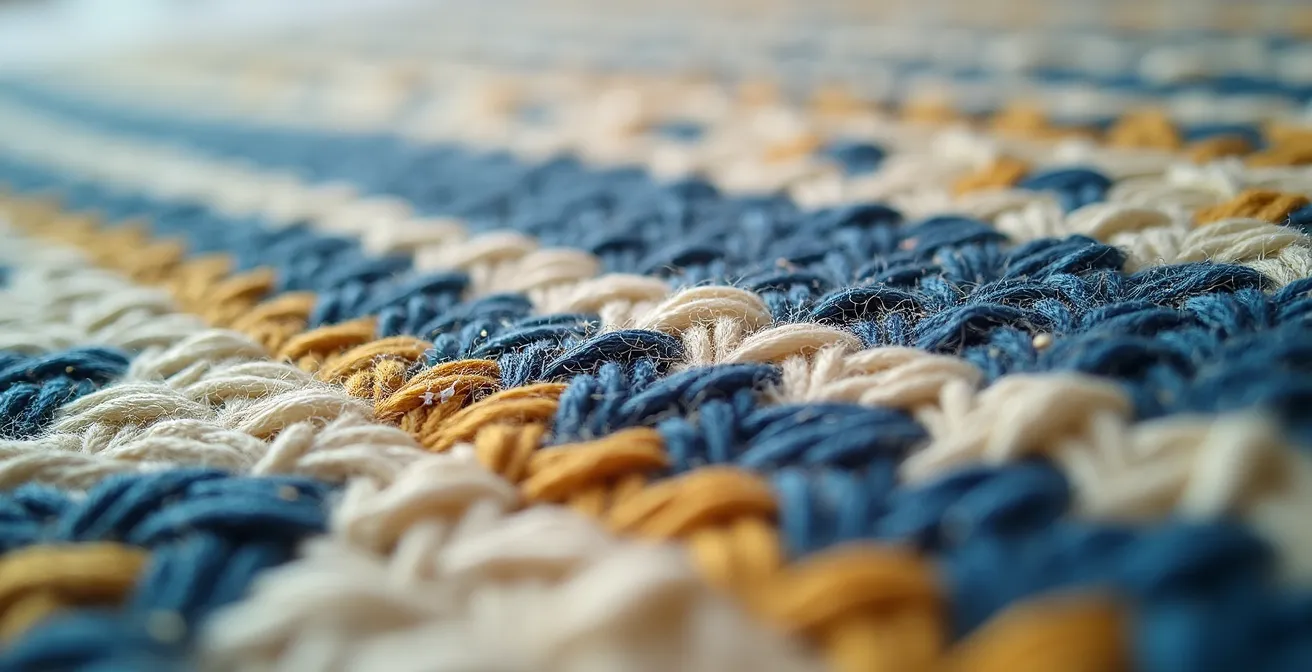
When working with a patterned rug, you can use this rule in two ways. In the “Rug-First Method,” you deconstruct the colors within your rug to build the room’s palette. For instance, the rug’s background color could become your 60% (walls), the main pattern color your 30% (sofa), and a minor detail color your 10% (pillows). Alternatively, in the “Inverted Bold Rug” approach, you keep your walls and furniture neutral (the 60%) and let the entire patterned rug serve as your vibrant 30%. The power of color in creating a memorable space is immense; research on visual memory shows that 81% of consumers are more likely to recall a brand’s color than its name—a principle that applies directly to creating an unforgettable room.
The following table illustrates different ways to apply this timeless rule with a patterned rug at the center of your design.
| Approach | Dominant 60% | Secondary 30% | Accent 10% |
|---|---|---|---|
| Rug-First Method | Rug’s background color for walls | Main pattern color for sofa | Vibrant detail for pillows |
| Inverted Bold Rug | Neutral walls & furniture | The patterned rug itself | Metallic or bright accessories |
| Monochrome Variation | Lightest shade of one color | Medium shade | Darkest/most saturated shade |
Key Takeaways
- The key to using patterns in small spaces is managing visual density, not just pattern size. Open patterns feel more expansive.
- Successfully mix patterns by varying their scale (large with small) and connecting them with a shared “color bridge.”
- Anchor your room by ensuring the front legs of all main seating rest on the rug; use layering if your favorite rug is too small.
The Cleaning Trap: Why Do Textured Floors Accumulate More Grime?
Many homes feature beautifully textured flooring, like rustic hardwood with deep grain or natural stone tiles with slight crevices. While visually appealing, this texture creates a maintenance challenge: it provides countless microscopic hiding spots for dust, dirt, and grime. A smooth, polished floor can be cleaned with a quick sweep, but textured floors trap debris, requiring more intensive vacuuming and scrubbing to look truly clean. This can create a “cleaning trap” where the floor never feels completely pristine.
This is where a patterned area rug becomes a brilliant strategic solution. As the Lulu and Georgia Design Team points out, “Patterns aren’t just there to fill space; they also help define it.” By placing a patterned rug over the central, high-traffic area of your living room, you are not just adding style; you are creating a “Designated Clean Zone.” This zone covers the textured floor where it matters most—in the seating area where you live, entertain, and are most likely to notice debris.
The rug itself, especially a low-pile or flatweave design, is far easier to vacuum and maintain than the textured floor beneath it. The pattern on the rug also provides that crucial camouflage for everyday dust and lint, drawing attention away from any imperfections in the surrounding floor. You effectively concentrate your cleaning efforts on one easy-to-manage surface, liberating you from the constant battle with the textured floor.
Your Action Plan: Creating a ‘Designated Clean Zone’
- Identify the Core Zone: Pinpoint the main seating area where foot traffic, spills, and daily life are concentrated. This is where your rug will go.
- Select an Appropriate Scale: Choose a rug pattern with a scale that creates visual interest without looking too busy, ensuring it complements your home decor for a cohesive look.
- Choose a Forgiving Pattern: Opt for multi-colored or dense patterns that naturally hide everyday debris, drawing the eye away from surrounding floor imperfections.
- Prioritize Low Pile: In this context, a low-pile or flatweave rug is ideal as it is easiest to vacuum and won’t trap dirt like a high-pile shag would.
- Establish a Routine: Make regular vacuuming of the rug your primary cleaning task, treating the surrounding textured floor as a secondary, less-frequently-cleaned area.
Textured vs. Smooth Flooring: Which Is Safer for Families with Toddlers?
For families with young children, the choice between textured and smooth flooring presents a safety dilemma. Smooth surfaces like polished hardwood or laminate are easy to clean but can be dangerously slippery for unsteady toddlers. Textured surfaces, like carpeting or rough-hewn tile, offer better grip but can be abrasive on sensitive knees and are harder to keep hygienic. This is where a patterned rug offers the perfect synthesis of safety, comfort, and style.
Placing a low-pile patterned rug over a smooth floor provides the best of both worlds. The rug’s surface offers the necessary grip to prevent slips and falls, creating a much safer play area for toddlers. Unlike high-pile shag rugs, which can be a tripping hazard and hide small toys, a low-pile construction provides a stable and secure surface. Simultaneously, it offers a soft cushion for the inevitable tumbles, protecting little ones from the hardness of the floor beneath. This turns any living room into a CPSC-compliant, kid-friendly zone.
Furthermore, the pattern and color of the rug can influence the room’s atmosphere to benefit a family environment. While many fear dark colors, insight on the psychology of rug placement shows that darker colors and bold patterns can make a large room feel more intimate and snug—a desirable quality for a family gathering space. The pattern also serves its practical purpose of camouflaging the small spills and stains that are an unavoidable part of life with toddlers, making the space feel welcoming and lived-in, not sterile and precious.
Now that you are armed with the principles of visual density, scale, and color, you can approach the world of patterned rugs with confidence. The next step is to start browsing with this new designer’s eye, seeing patterns not as risks, but as opportunities to create a space that is uniquely and beautifully yours.