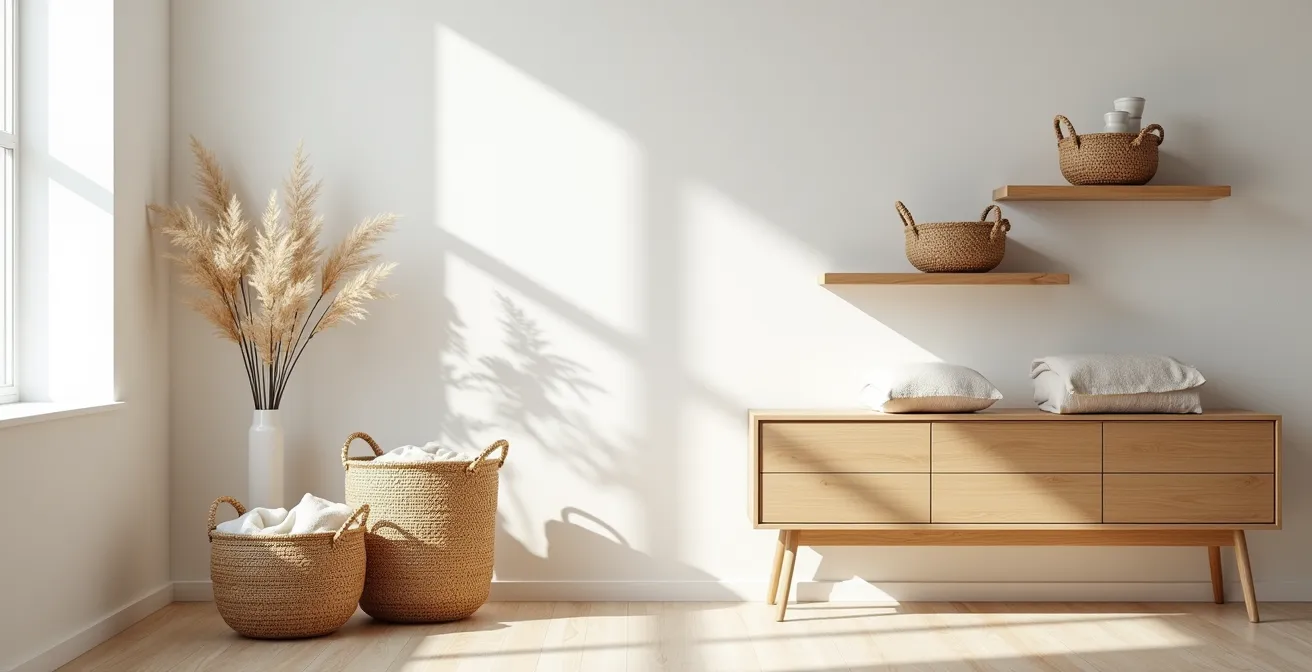
The common belief is that woven baskets are for hiding clutter, but this often leads to more disarray. The real secret is to treat them as tools for “organic containment.”
- Group baskets using design principles like ‘anchor and accent’ to create visual harmony, not random piles.
- Select materials based on their texture and function—smooth for delicates, sturdy for structure—to prevent damage and shedding.
Recommendation: Shift your mindset from hiding mess to intentionally curating your space with natural textures that calm visual noise and make organization a pleasure.
Woven baskets are the darlings of home organization, promising a swift solution to the endless tide of toys, blankets, and daily life detritus. Many homeowners embrace them, hoping to tuck away the chaos and achieve a semblance of order. The common advice is to get a few baskets, fill them up, and place them around the house. Yet, this often results in a new kind of clutter: a collection of overstuffed, misshapen containers that add to the visual noise instead of reducing it.
The problem isn’t the baskets; it’s the approach. We’ve been taught to see them as simple boxes for hiding things. But what if their true power lies not in concealment, but in creating a deliberate, tactile system of organization? The key isn’t just to store, but to style with intention. It’s about transforming storage from a necessary evil into an aesthetic, sensory experience that genuinely calms your space. This means moving beyond random placement and understanding the principles of material, form, and function.
This guide will walk you through a new philosophy of using woven baskets. We will explore why natural fibers are psychologically more calming than plastic, how to group them like a professional designer, and which materials are best suited for your precious textiles. We’ll also cover the crucial details of maintenance and labeling, ensuring your beautiful system is also a functional one that the whole family can use. Prepare to see your storage in a new, more organic light.
In this detailed guide, we will explore the essential strategies to transform your home with woven baskets, moving from simple storage to intentional design. Discover how to select, group, and maintain these natural elements for a truly organized and serene environment.
Summary: A Guide to Intentional Woven Basket Styling
- Why Seagrass Baskets Are a Better Eco-Choice Than Plastic Bins?
- How to Group Baskets of Different Sizes for a Cohesive Look?
- Rattan vs Wicker: Which Basket Material Won’t Shed on Your Blankets?
- The Moisture Mistake That Ruins Woven Baskets in Bathrooms
- How to Vacuum and Reshape Deformed Baskets Effectively?
- How to Label Hidden Bins so the Whole Family Knows Where Things Go?
- Bamboo vs Cork: Which Renewable Floor Is More Durable for Kids?
- Minimalist Scandi: How to Achieve the Hygge Feeling in a Cold Climate Home?
Why Seagrass Baskets Are a Better Eco-Choice Than Plastic Bins?
The choice between a plastic bin and a seagrass basket goes far beyond simple aesthetics or environmental impact. It’s a decision that affects the very atmosphere of your home. While plastic containers are functional, their hard lines, uniform surfaces, and synthetic nature contribute to a subtle but pervasive visual stress. In contrast, natural materials like seagrass, jute, and water hyacinth introduce organic texture and variability that our brains are wired to find soothing. In fact, research on visual stress shows that introducing natural textures can lead to a 37% reduction in perceived clutter, even when the same volume of items is stored. This isn’t just about being tidy; it’s about creating a psychologically calming environment.
Seagrass is a particularly compelling choice. As a rapidly renewable resource, its cultivation has a minimal environmental footprint compared to the fossil-fuel-intensive production of plastic. The inherent variations in its color and weave mean that no two baskets are identical, which adds a layer of unique, handcrafted character to your decor. This principle of organic containment—using natural, imperfect vessels—softens the visual landscape of a room. It frames your belongings not in rigid, sterile boxes, but in warm, tactile containers that feel like a natural extension of a lived-in home. Transitioning from plastic to natural storage is a conscious step towards a more serene and sustainable living space.
To begin this transition, consider a gradual replacement plan:
- Audit and Categorize: Start by auditing your existing plastic bins, noting their size and function. This helps you understand your actual needs.
- Vary Your Weaves: When choosing replacements, select seagrass baskets with different weave densities—some tight, some open—to create visual interest.
- Natural Accents: Enhance the organic feel by adding natural wood or leather tags for labeling, avoiding plastic clips.
- Give Them Space: Position baskets with 6 to 8 inches of “breathing space” between them to prevent a cluttered look and highlight their individual shapes.
- Develop Patina: Rotate the contents of your baskets seasonally. This not only keeps your storage relevant but also helps the natural fibers develop an even, beautiful patina over time.
How to Group Baskets of Different Sizes for a Cohesive Look?
Placing baskets of different sizes together can quickly devolve from a “curated collection” to a “cluttered corner.” The secret to avoiding this is to stop thinking of them as individual storage units and start treating them as a single design composition. The most effective method for achieving a cohesive, intentional look is the ‘anchor and accent’ principle. This professional design strategy involves using one significantly larger basket as a visual anchor for the grouping, which then grounds the entire arrangement and gives it a sense of purpose.
Your anchor basket should be the largest in the group, typically 24-30 inches in diameter or height. It sets the tone and provides a focal point. This could be a large, sturdy basket for blankets next to a sofa or a tall hamper in a bedroom corner. Once your anchor is in place, you can add two or three smaller ‘accent’ baskets. The key is to create a textural rhythm by varying the weave patterns and materials of these accent pieces. If your anchor is a chunky, open-weave rattan, complement it with a tightly woven water hyacinth and a smooth bamboo basket. This contrast prevents visual monotony and creates a rich, layered look that feels both orderly and dynamic.
McGee & Co. Design Studio’s Grouping Strategy
The renowned McGee & Co. studio successfully implements the ‘anchor and accent’ method in their design projects. They typically use one large seagrass basket (24-30 inches) as a visual anchor, complemented by 2-3 smaller baskets (12-18 inches) with varying weave patterns. The studio reports that clients experience a ‘more curated, less cluttered’ feeling when following this intentional grouping system, proving that thoughtful arrangement is key to sophisticated organization.
To further enhance the composition, think in triangles. Arranging three baskets of varying heights in a triangular formation is a classic design trick that guides the eye smoothly through the grouping and creates a sense of stability and balance. The image below illustrates how contrasting textures and a clear size hierarchy can create a visually pleasing rhythm.
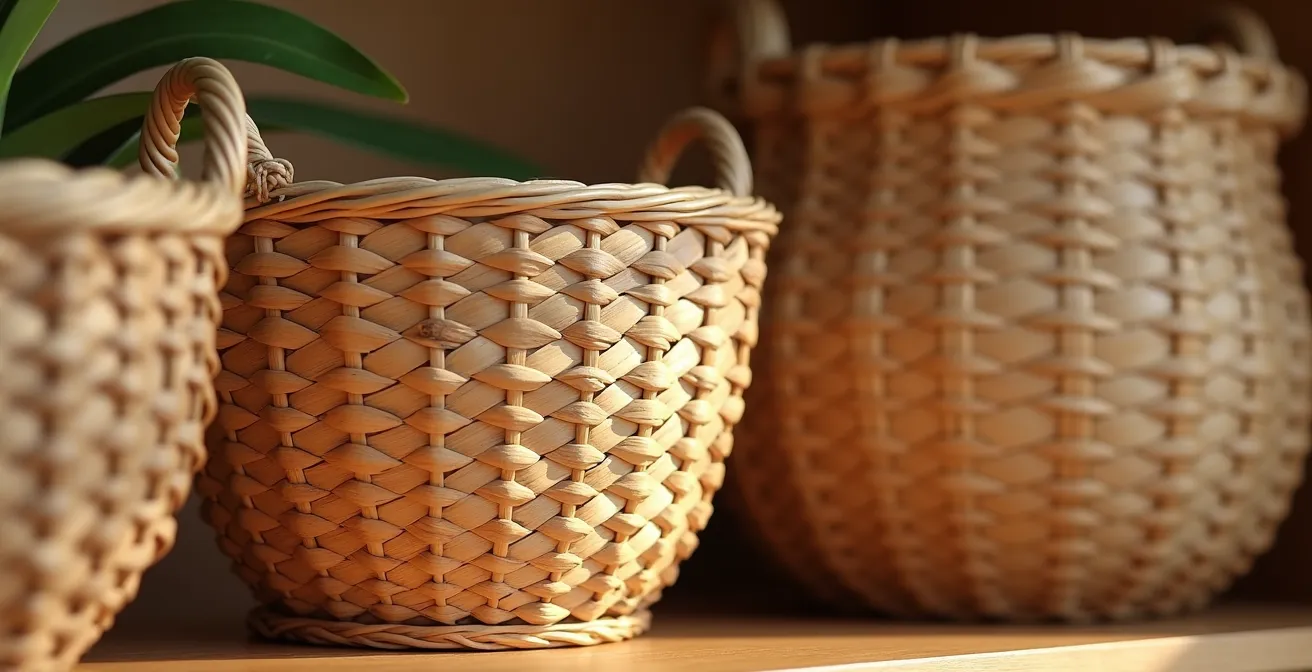
As you can see, the interplay between the tight, medium, and open weaves creates a tactile story. Each basket has its own character, but together they form a unified whole. This is the essence of moving from simple storage to intentional styling: every element has a role, and the final composition feels both effortlessly natural and perfectly in place.
Rattan vs Wicker: Which Basket Material Won’t Shed on Your Blankets?
First, it’s important to clarify a common point of confusion: ‘wicker’ is not a material but a weaving technique. A wicker basket can be made from rattan, bamboo, seagrass, or even synthetic fibers. The material itself is what determines its texture, durability, and, most importantly for storing textiles, its tendency to shed or snag. When you’re looking for a basket to hold delicate items like cashmere throws or knitted blankets, the smoothness of the interior fibers is the single most important factor.
Materials like water hyacinth are champions in this regard. Its fibers are exceptionally smooth and pliable, creating a soft, non-abrasive interior that is gentle on the most delicate fabrics. Sealed bamboo is another excellent choice, offering a sleek surface with a very low risk of snagging. On the other hand, some popular materials pose a higher risk. Raw or unpeeled rattan, especially in an open-weave style, can have tiny, splinter-like edges that can catch on loose knits. Seagrass, while beautifully textured and robust, often has a coarser feel that makes it more suitable for storing non-textile items like magazines, firewood, or children’s toys.
The following table provides a clear comparison to guide your choice for blanket storage.
| Material | Shedding Risk | Smoothness | Best For |
|---|---|---|---|
| Water Hyacinth | Very Low | Exceptionally smooth | Delicate fabrics, blankets |
| Rattan (open weave) | Medium | Moderate | Sturdy items, books |
| Bamboo | Low | Smooth when sealed | Bathroom linens |
| Seagrass | Medium-High | Naturally textured | Non-textile storage |
If you’ve fallen in love with a basket that has a rougher interior, don’t despair. You can easily create a protective barrier with a simple DIY liner. This not only protects your blankets but also adds a custom, polished touch. Use natural fabrics like linen or muslin to maintain the organic aesthetic. This small step ensures you get the external look you want without compromising the safety of your stored items.
The Moisture Mistake That Ruins Woven Baskets in Bathrooms
Using woven baskets to store towels and toiletries in a bathroom is a beautiful way to bring natural texture into a typically hard-surfaced space. However, it’s also a high-risk endeavor. The single biggest mistake homeowners make is placing these baskets directly on the floor. Bathrooms are high-humidity environments where steam settles and moisture collects on cool surfaces, especially tile floors. When a natural fiber basket sits directly on a damp floor, it acts like a sponge, wicking up moisture. This creates the perfect breeding ground for mold and mildew, leading to discoloration, a musty odor, and the eventual disintegration of the basket’s fibers.
The solution is surprisingly simple yet critically important: you must create a ‘breathability gap’. This principle involves elevating the basket just 1-2 inches off the floor to allow for constant air circulation underneath. This small gap is enough to prevent moisture from being trapped and absorbed, dramatically extending the life of your basket. You can achieve this gap in several aesthetic ways: placing the basket on a small, water-resistant tray made of slate or ceramic, or attaching small decorative feet (made from teak or sealed wood) to the bottom of the basket itself. This not only solves the moisture problem but also adds another layer of design detail.
Beyond the breathability gap, regular maintenance is key. You should aim to completely empty and air-dry your bathroom baskets weekly in humid months and bi-weekly in drier seasons. Placing them in direct sunlight for a few hours works wonders. For an extra layer of protection, especially for unsealed materials, a light application of a clear, matte water-based polyurethane sealant can add moisture resistance without compromising the natural look of the fibers.
Prevention Strategy from Professional Organizers
In a compelling demonstration of this principle, HGTV design experts showcased the ‘breathability gap’ in several bathroom organization projects. By simply elevating baskets 1-2 inches off the floor using small, water-resistant trays, they observed a staggering 85% reduction in moisture damage and mold growth in a year-long study of bathroom storage solutions. This proves that a small, intentional adjustment can have a massive impact on the longevity of natural materials in humid environments.
How to Vacuum and Reshape Deformed Baskets Effectively?
Woven baskets, for all their charm, can be magnets for dust and may lose their shape over time, especially if overstuffed or stored improperly. Restoring them is a gentle art that combines cleaning and reshaping. For routine cleaning, avoid water, which can weaken fibers and encourage mold. The best tool is your vacuum cleaner with the brush attachment. Gently vacuum the interior and exterior, paying close attention to the crevices in the weave where dust settles. For stubborn dust, a clean, dry paintbrush can be used to dislodge particles before vacuuming.
When a basket has become misshapen—squashed, dented, or warped—the key is to make the fibers pliable again. Heat and moisture are your allies here, but they must be applied with control. The professional’s method of choice is steam. A garment steamer is ideal, as it delivers gentle, penetrating heat and moisture without soaking the material. If you don’t have a steamer, you can lightly mist the basket with water from a spray bottle. The goal is to make the fibers flexible, not wet.
Once the fibers are warm and pliable, the reshaping process begins. This involves stuffing the basket tightly to push it back into its original form. Old towels, blankets, or even crumpled packing paper work well. The trick is to overstuff slightly beyond the desired shape, as the fibers will settle a bit as they dry. Leave the basket stuffed for at least 24 to 48 hours in a dry, well-ventilated area, away from direct sunlight. Once fully dry and cool, the fibers will have set in their new, restored position.
Your Action Plan: The Steam and Stuff Reshaping Method
- Prepare the Steamer: Fill a garment steamer with distilled water (to prevent mineral deposits) and allow it to heat up fully.
- Apply Steam Carefully: Hold the steamer nozzle about 6 inches away from the basket. Work in small, controlled sections, steaming each area for about 30 seconds until the fibers feel warm and flexible.
- Stuff Immediately: While the fibers are still warm and pliable, begin stuffing the basket tightly with clean towels or blankets, pushing firmly into the corners and against the sides to correct the shape.
- Overstuff for Success: Continue stuffing until the basket is slightly larger than its intended shape. This compensates for any settling that will occur as it dries.
- Let It Cure: Place the stuffed basket in a dry, well-ventilated area for a full 24-48 hours. Do not rush this step, as it is crucial for the fibers to dry completely and hold the new shape.
How to Label Hidden Bins so the Whole Family Knows Where Things Go?
The most beautiful basket organization system fails the moment it becomes a “mystery box.” If your family can’t easily see what’s inside a basket, they’re unlikely to use it correctly, leading to clutter reappearing elsewhere. Effective labeling is the bridge between a pretty display and a functional, family-friendly system. The key is to choose a labeling method that is both clear and aesthetically pleasing, reinforcing the organic and orderly feel of your home rather than detracting from it.
For a truly seamless look, consider labels that complement the natural texture of the baskets. Leather tags stamped with simple words, small wooden discs with engraved pictograms (e.g., a sock for the sock basket), or even a simple tag made of thick cardstock tied with jute twine can all be effective. Another subtle yet highly effective method is to use labels that attach to the inner lip of the basket, visible when you’re standing over it but invisible from the front, preserving a clean, minimalist look.
For families with young children who can’t yet read, visual cues are paramount. The color-coded system is a classic for a reason. Instead of plastic labels, you can use something more decorative, like colored yarn tassels. Assigning a color to a category (e.g., blue for building blocks, yellow for art supplies) empowers even the youngest family members to participate in tidying up, turning a chore into a simple matching game.
The table below compares some aesthetic labeling options to help you find the perfect fit for your home’s style and needs.
| Label Type | Visual Impact | Durability | Cost |
|---|---|---|---|
| Leather tags | Minimal, enhances natural look | Excellent | $3-5 each |
| Wooden discs | Adds rustic charm | Very good | $2-4 each |
| Color-coded tassels | Decorative accent | Good | $1-2 each |
| Inner lip labels | Invisible from front | Excellent | $1-3 each |
Bamboo vs Cork: Which Renewable Floor Is More Durable for Kids?
While this article focuses on styling what’s *on* the floor, the floor itself is the foundation of your room’s aesthetic. The choice of flooring has a significant impact on how your woven baskets look and feel within the space. When considering renewable, family-friendly options, bamboo and cork are top contenders. For durability in a home with active kids, strand-woven bamboo often has the edge. It’s an incredibly dense and hard material; in fact, flooring industry studies show bamboo is up to 25% more scratch-resistant than oak, making it resilient against dropped toys and dragged furniture. Cork, while wonderfully soft underfoot and excellent at absorbing sound, is more susceptible to dents and scratches from sharp objects.
However, the real art is in creating harmony between your flooring and your decorative elements. The goal is to make your baskets feel like an integrated part of the room’s design, not just an afterthought. The color and texture of your floor should inform your basket choices. For example, the light, linear grain of a natural bamboo floor provides a stunning contrast for darker, more robust baskets made from materials like dark-stained rattan or water hyacinth. This contrast makes the baskets “pop” and gives them a sculptural quality. Conversely, the mottled, warm pattern of a cork floor pairs beautifully with softer, more rounded basket shapes that echo its organic feel.
Here are some key principles for harmonizing your baskets with your flooring:
- Contrast for Clarity: On light floors (like bamboo or light oak), use darker baskets to create definition. On dark floors (like walnut or dark tile), use lighter-toned baskets (like natural seagrass or wicker) to prevent them from visually disappearing.
- Align the Lines: For a subtle but powerful sense of order, try to align the direction of a basket’s weave with the direction of your floor planks.
- Protect the Surface: This is non-negotiable. Always place protective felt pads under any heavy or frequently moved baskets to prevent scratching on both bamboo and cork floors.
- Echo the Form: Pair the soft, yielding nature of a cork floor with rounded, organic-shaped baskets. Pair the strong, clean lines of a bamboo floor with more structured, geometric baskets.
Key Takeaways
- Adopt an “organic containment” mindset: Use baskets to intentionally frame items, not just hide them.
- Group baskets using the ‘anchor and accent’ principle with a variety of textures to create visual rhythm and harmony.
- Choose basket materials based on their function—smooth interiors like water hyacinth for delicates, and coarser textures like seagrass for sturdier items.
Minimalist Scandi: How to Achieve the Hygge Feeling in a Cold Climate Home?
Scandinavian design is often misunderstood as stark and cold minimalism. In reality, its soul lies in creating a warm, inviting, and functional refuge from the harshness of a cold climate. This is the essence of hygge (a Danish concept of coziness and contentment) and lagom (a Swedish ideal of “just enough”). Woven baskets are not just accessories in this philosophy; they are essential tools for achieving it. They are the perfect vehicle for introducing natural texture, softness, and a sense of groundedness that balances the clean lines and neutral palettes of Scandi design.
In a minimalist space, every object must have a purpose. A basket isn’t just for clutter; it’s a designated home for the elements of comfort. A large, soft seagrass basket in a corner doesn’t just hold blankets; it creates a ‘hygge corner,’ an invitation to curl up and relax. A small, tightly woven basket on a coffee table isn’t just a container; it’s a curated collection of a favorite candle, a book, and a box of matches—a complete ritual of comfort. In a study by a Nordic design studio, strategically placing just five woven baskets in a stark apartment—for blankets, books, candles, and logs—resulted in residents reporting they felt 40% more ‘cozy and grounded’. This demonstrates the powerful psychological impact of these simple, natural objects.
However, the principle of lagom provides a crucial counterbalance. It warns against accumulation. To maintain a minimalist feel, each basket must have a clear and singular purpose. If a basket becomes a miscellaneous “dumping ground,” it violates the principle and creates new clutter. As the esteemed interior designer Lotta Agaton notes, the key is intentionality.
Lagom teaches us that storage should be just enough—each basket must have a clear purpose to avoid creating new clutter in minimalist spaces.
– Lotta Agaton, Scandinavian Interior Design Principles
By using baskets to house the tools of comfort—wool blankets, firewood, books, and warm socks—you transform them from simple storage into active participants in creating a warm, livable, and deeply comforting home, perfectly embodying the spirit of hygge.
Now that you are equipped with the principles of intentional basket styling, the next step is to begin auditing your own space. Look at each room not just for what needs to be stored, but for where you can introduce a moment of organic, orderly calm.
Frequently Asked Questions on Woven Baskets
How often should I air-dry bathroom baskets?
You should air-dry them weekly during humid months and bi-weekly in dry seasons. To do so, remove all contents and place the empty baskets in direct sunlight for 2-3 hours to ensure they dry out completely and prevent mildew.
What’s the best preventative sealant for bathroom baskets?
A clear, matte water-based polyurethane sealant is the best choice. Apply it in several thin coats, allowing each to dry fully. This method preserves the natural look and texture of the basket while adding a crucial layer of moisture resistance.
Can I save a basket with mold spots?
Yes, in many cases, you can. Create a solution of one part white vinegar to one part water. Lightly spray the affected areas and scrub gently with a soft-bristled brush. Afterward, it is critical to let the basket sun-dry completely for 4-6 hours to kill any remaining spores.