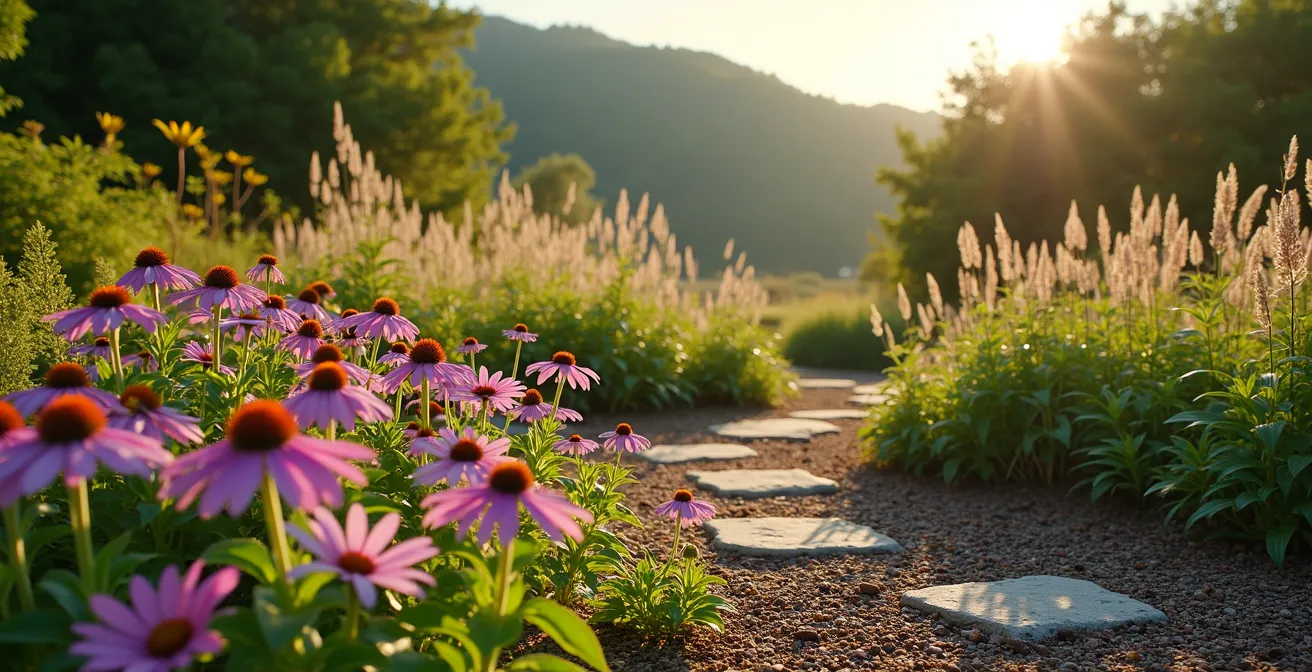
Contrary to popular belief, a zero-water garden isn’t achieved by just picking drought-tolerant plants; it’s built by engineering a self-sufficient ecosystem.
- Native plants thrive without extra water because their deep roots are adapted to local soil, a process disrupted by soil amendments.
- A resilient garden provides full lifecycle support for pollinators (host and nectar plants) and maintains visual appeal even in winter.
Recommendation: Shift your mindset from a ‘gardener’ who waters and weeds to an ‘ecosystem engineer’ who facilitates natural, symbiotic relationships.
The vision is alluring: a lush, vibrant garden that bursts with life and color, all without the constant chore of watering. For busy homeowners in drought-prone regions, this sounds like a dream. The conventional answer is often a sterile landscape of rocks and succulents or a thirsty lawn demanding endless resources. Many turn to native plants, hoping for a simple, plug-and-play solution. They are told to “just plant natives” and the problem will be solved. But this advice often leads to frustration when a supposedly “easy” groundcover swallows the yard or the garden looks barren and weedy.
The truth is that a thriving, water-free garden is less about the individual plants and more about the system you create. It requires a fundamental shift in perspective. The key isn’t found in a catalog of drought-tolerant species, but in understanding the deep, symbiotic relationships between plants, soil, and local wildlife. It’s about moving beyond simple gardening and becoming an architect of a small, resilient ecosystem. This approach doesn’t just save water; it creates a dynamic, beautiful landscape that supports biodiversity and requires minimal intervention once established.
This guide will walk you through the core principles of this ecological design. We will deconstruct common mistakes, explore how to ensure year-round beauty, and reveal why working with your existing soil is crucial. By the end, you will have the framework to not just plant a garden, but to engineer a living system that sustains itself.
Summary: A Guide to Engineering a Self-Watering Native Garden
- Why That ‘Easy’ Groundcover Might Take Over Your Entire Yard?
- How to Ensure Color in a Native Garden During Winter Months?
- Why You Shouldn’t Amend Soil When Planting Natives?
- Host Plants vs Nectar Plants: What Does Your Local Butterfly Need?
- How to Convince Your HOA That Native Plants Aren’t ‘Weeds’?
- Why Buyers Prefer ‘Neat and Tidy’ over ‘Exotic and Complex’ Gardens?
- Why Seagrass Baskets Are a Better Eco-Choice Than Plastic Bins?
- How to Build a Resilient Backyard Ecosystem That Survives Climate Extremes?
Why That ‘Easy’ Groundcover Might Take Over Your Entire Yard?
Many gardeners choose vigorous groundcovers for a quick, low-maintenance carpet of green. However, “vigorous” can quickly turn into “invasive,” even with native species. Without understanding a plant’s growth habit, you risk creating a monoculture that outcompetes everything else. In fact, research from University of Maryland Extension reveals that some aggressive groundcovers can displace wildflowers and fundamentally alter habitats. The plant isn’t the problem; the lack of a management strategy is. An ecosystem engineer doesn’t just plant; they anticipate and guide growth.
Instead of letting a spreader run wild, you can employ a containment strategy. This involves creating physical or living barriers to define the plant’s territory. This “editing” technique transforms a potential problem into a controlled, functional part of your garden design. It’s a prime example of strategic intervention over constant maintenance. The goal is not to eliminate work but to concentrate it into a few purposeful actions per year.
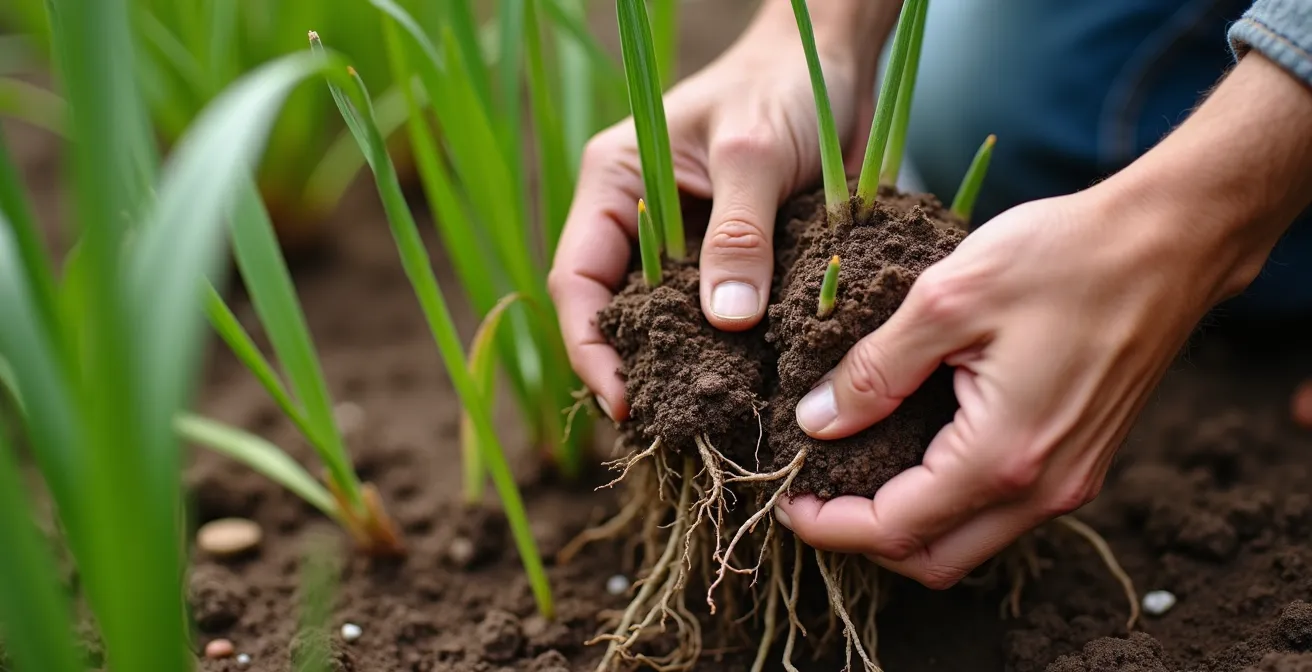
The image above demonstrates one of the most effective management techniques: division. By periodically dividing the plant, you not only keep it in check but also generate new plants to fill other areas or share with neighbors, turning vigorous growth into a community benefit. This proactive approach is the hallmark of a well-engineered native garden.
Action Plan: Containing Aggressive Native Plants
- Install physical root barriers made of metal or recycled plastic at least 18 inches deep around the designated planting area.
- Plant clumping native grasses, like Pennsylvania Sedge or Little Bluestem, as a “living border” that competes with the spreader’s runners.
- “Edit” the plant by digging up and dividing large clumps in early spring before the major growth surge begins.
- Use a sharp spade to sever and remove any runners that have escaped their designated boundary during monthly garden walks.
- Monitor the edges of the planting area and be prepared to remove sections that are becoming too dominant, maintaining the overall balance of the ecosystem.
How to Ensure Color in a Native Garden During Winter Months?
A common fear associated with native gardens is a bleak, colorless winter landscape. This concern arises from a traditional focus on flowers alone. However, an ecological design approach prioritizes four-season interest by selecting plants for their structure, texture, and persistent features long after the blooms have faded. A well-designed native garden can be just as captivating in January as it is in June, offering a subtle and architectural beauty that contrasts sharply with the starkness of a dormant lawn.
The key is to think in layers and textures. The fiery red stems of a Red Osier Dogwood against fresh snow, the frosty seed heads of Coneflower (Echinacea) catching the low winter sun, or the bronze hues and gentle sway of Little Bluestem grass all provide critical visual appeal. As highlighted in a drought-tolerant design by Fine Gardening, these elements create a living sculpture that also provides essential food and shelter for winter birds. It’s a functional beauty that serves the ecosystem year-round.
This table illustrates how different native plants can be selected specifically for their winter contributions, ensuring your garden remains a point of interest throughout the year.
| Plant Type | Winter Feature | Visual Impact | Maintenance |
|---|---|---|---|
| Echinacea (Coneflower) | Persistent seed heads | Architectural, frost-catching | Leave standing until spring |
| Little Bluestem Grass | Copper-bronze foliage | Movement, warm color | Cut back late winter |
| Red Osier Dogwood | Bright red stems | Vivid color against snow | Prune old wood annually |
| Liatris | Tall seed stalks | Vertical interest | Leave for birds |
Why You Shouldn’t Amend Soil When Planting Natives?
The instinct to “improve” soil with compost, peat moss, or topsoil is deeply ingrained in traditional gardening. For decades, we’ve been taught that rich, black, fluffy soil is the ideal. While true for many vegetables and ornamental annuals, this practice is often detrimental to native plants. Amending the soil is like giving a wild animal a diet of processed food; it creates a dependency and weakens its natural resilience. Native plants have spent millennia adapting to your region’s specific soil conditions, whether they are clay, sand, or rock.
The secret to their drought-tolerance lies beneath the surface in the form of deep, extensive root systems. Unlike turf grasses with shallow roots just a few inches long, native prairie plants have roots extending 4-8 feet deep. These incredible root networks are genetically programmed to seek out water and nutrients in the native soil profile. When you amend the planting hole, you create a comfortable “pot” of rich soil. The plant’s roots have no incentive to grow deep and wide to search for water, so they stay in the amended zone, making the plant less resilient and more dependent on supplemental watering.
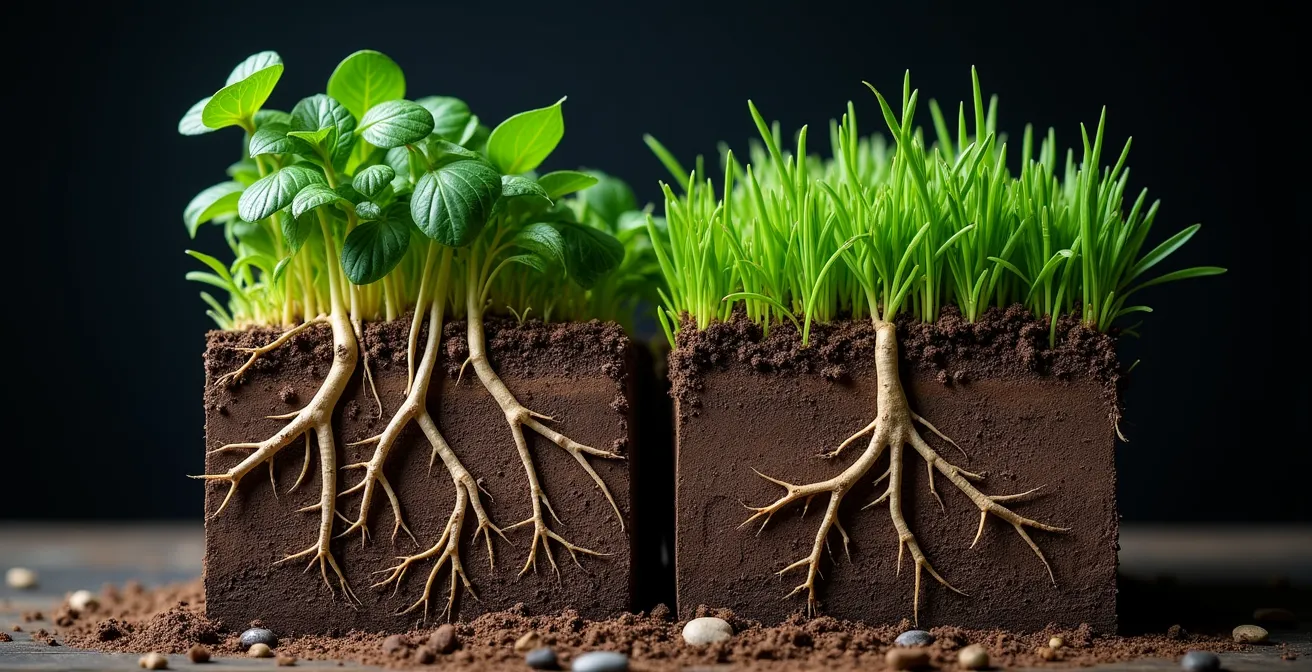
This visual comparison shows the stark difference. True xeriscaping relies on this soil-plant symbiosis. By forcing the plant to adapt to the existing soil, you encourage the development of a robust, self-sufficient root system that is the true foundation of a zero-water garden. The only amendment needed is a top layer of natural mulch to retain moisture and suppress weeds.
Host Plants vs Nectar Plants: What Does Your Local Butterfly Need?
Creating a pollinator-friendly garden is a primary motivation for many who choose native plants. Often, this translates to planting colorful, nectar-rich flowers—the “cafeteria” for adult butterflies, bees, and hummingbirds. While important, this is only half of the equation. To build a truly resilient ecosystem, you must also provide the “nursery”: host plants. These are the specific plants that a butterfly or moth species requires to lay its eggs and for its caterpillars to eat.
Without host plants, you have a transient population that stops for a meal but cannot reproduce. The most famous example is the Monarch butterfly and its exclusive relationship with Milkweed (Asclepias species). The alarming fact that Monarch butterflies have declined by more than 80% since the 1990s is directly linked to the loss of Milkweed from the landscape. Providing both nectar sources for adults and host plants for larvae is the essence of pollinator lifecycle support. A garden with only nectar plants is a bar; a garden with host plants is a home.
A strategic design incorporates both types of plants to maximize ecological impact. An effective approach includes:
- Positioning host plants, which may show signs of caterpillar damage, in more sheltered or less prominent areas of the garden.
- Placing the showy nectar plants in sunny, high-visibility spots where you can enjoy the pollinator activity.
- Grouping plants with similar water and sun needs together, a practice known as hydrozoning, to ensure all plants thrive with minimal input.
- Creating a layered garden with trees, shrubs, and perennials to offer varied sources of food and shelter.
This integrated strategy ensures you are not just feeding pollinators, but actively helping to grow their populations for a more vibrant and resilient local ecosystem.
How to Convince Your HOA That Native Plants Aren’t ‘Weeds’?
One of the biggest hurdles for homeowners wanting to adopt a water-wise landscape can be the Homeowners Association (HOA) and its often-outdated rules favoring manicured, high-water-use lawns. The perception of native gardens as “messy” or “weedy” is a common barrier. To overcome this, you must frame your project not as an act of rebellion, but as a smart, fiscally responsible, and community-enhancing decision. The most powerful tools in your arsenal are data and success stories.
Instead of arguing about aesthetics, present a compelling case based on resource conservation and financial savings. Highlight the immense water savings, which translate directly into lower utility bills for the entire community. A powerful example is the Cherry Creek 3 HOA in Colorado. As documented by the Audubon Society, this community undertook a native plant overhaul and saw incredible results. They succeeded in saving 15 million gallons annually, a reduction that not only slashed costs but also earned them rebates from their water utility company. This is not just gardening; it’s responsible asset management.
Case Study: The Cherry Creek HOA Water Savings
By replacing thirsty turfgrass with water-wise native plantings, the Cherry Creek 3 Homeowners Association reduced its annual water consumption from 37 million gallons to under 22 million gallons. This 15-million-gallon saving is equivalent to the volume of 138 average swimming pools and resulted in significant financial benefits for the community, proving that ecological landscaping is also economical landscaping.
When you present your plan, emphasize words like “intentional,” “designed,” and “managed.” Use professional landscape plans, plant lists with beautiful photos, and case studies like Cherry Creek’s. By shifting the conversation from “weeds” to “water conservation” and “cost savings,” you transform your native garden from a potential violation into a model of smart, modern, and sustainable community living.
Why Buyers Prefer ‘Neat and Tidy’ over ‘Exotic and Complex’ Gardens?
Even when a garden is ecologically sound, its aesthetic appeal plays a huge role in its perceived value, especially in a neighborhood context. The “wild” look of a natural meadow, while beautiful to an ecologist, can be interpreted as neglect by neighbors or potential home buyers. The key to bridging this gap is what landscape designers call “cues to care.” These are signals that a garden is being intentionally managed, not simply abandoned. A neat, tidy appearance communicates that the space is purposeful and valued.
This doesn’t mean you have to sacrifice the ecological benefits of a native garden. It’s about applying principles of traditional design to a naturalistic plant palette. This is the concept of functional aesthetics, where design elements create a legible and pleasing frame for the wilder beauty within. As experts from the University of Nevada Extension note, a successful landscape is one that is both functional and well-managed.
A water-efficient landscape has functional lawn areas that are irrigated properly and plants grouped and irrigated according to their water needs.
– Andrews, A. and Kratsch, H., University of Nevada Extension
Applying “cues to care” is a straightforward process that makes your native garden universally appealing. This includes defining clear, crisp edges for garden beds, using clean pathways of mulch or gravel, and selectively pruning plants to reveal their structure. Adding a simple bench or a piece of sculpture can also act as a powerful signal of human intention. These elements tell the observer, “This is not a patch of weeds; this is a thoughtfully designed garden.”
Your Action Plan: Staging a Native Garden for Maximum Appeal
- Define Beds: Ensure clean, crisp bed edges using a spade or installing permanent edging to create a strong ‘intentional’ appearance.
- Create Pathways: Add clear pathways using natural materials like wood chips, gravel, or stone to guide the eye and foot.
- Prune for Structure: Selectively prune shrubs and perennials after they bloom to reveal their branching structure and maintain an organized look.
- Add ‘Cues to Care’: Install simple garden art, a bird bath, or benches to signal that the space is actively managed and cared for.
- Group for Cohesion: Arrange plants in groups or drifts of the same species, ordered by height, to create a sense of visual rhythm and coherence rather than a random jumble.
Why Seagrass Baskets Are a Better Eco-Choice Than Plastic Bins?
The philosophy of an ecological garden extends beyond the plants themselves. It encompasses every element, including the containers, tools, and materials we use. While a black plastic bin might be a cheap and convenient pot, it represents a contradiction to the core principles of a native ecosystem. Plastic is a petroleum product, impermeable, and destined to break down into microplastics that persist in the environment for centuries. It disrupts the very natural cycles we are trying to foster.
Choosing containers made from natural, biodegradable materials like seagrass, terracotta, or untreated wood is an extension of the ecosystem-building mindset. These materials are “breathable,” or porous, which has significant functional benefits for the plants. Porous containers allow for better air and moisture exchange at the root zone, preventing the root rot that can occur in waterlogged plastic pots. This is especially critical for drought-tolerant natives, which require excellent drainage to establish their strong root systems.
Beyond the functional advantages, using natural materials reinforces the aesthetic and ethical coherence of the garden. A woven seagrass basket or a weathered terracotta pot visually harmonizes with the naturalistic plant palette. More importantly, it completes the lifecycle loop. At the end of its life, a seagrass basket can be composted and returned to the soil, enriching the very ecosystem it helped support. A plastic pot, on the other hand, becomes a permanent piece of waste. Embracing this holistic approach ensures that every choice, no matter how small, contributes to the overall health and resilience of your garden ecosystem.
Key Takeaways
- A zero-water garden is an engineered ecosystem, not just a collection of drought-tolerant plants.
- Working with your native soil is critical; amending soil weakens plants by discouraging deep root growth.
- True biodiversity support includes both nectar plants (food) and host plants (nurseries) for pollinators.
How to Build a Resilient Backyard Ecosystem That Survives Climate Extremes?
We’ve explored the foundational elements: managing growth, ensuring year-round beauty, nurturing soil, supporting wildlife, and maintaining a cared-for appearance. The final step is to weave these threads together to build a truly resilient backyard ecosystem. Resilience is the ultimate goal—a garden that can not only survive but thrive through climate extremes like prolonged drought, intense heatwaves, and sudden downpours, all with minimal human intervention. This is the culmination of the “ecosystem engineering” approach.
A resilient system is diverse and interconnected. It features layers of plants—a canopy of small native trees, a mid-story of shrubs, and a ground layer of perennials and grasses—that work together. This structure creates microclimates, shades the soil to keep it cool, and provides varied habitats for beneficial insects and birds. These creatures, in turn, help with pest control and pollination, creating a self-regulating system. A study from UC Davis on landscape conversion highlights the profound impact, showing that converting a landscape to natives can result in a 60% reduction in water use for an entire city—a testament to the power of these systems at scale.
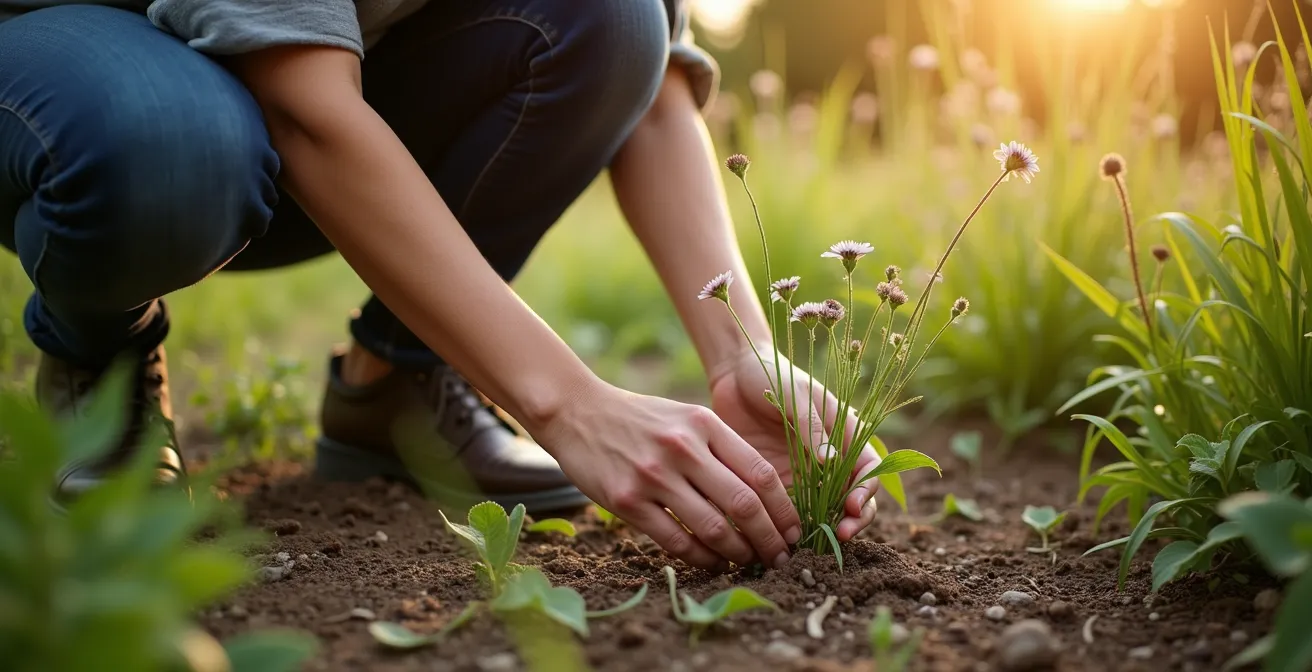
This is what ecological resilience looks like. It is a dynamic, living system where each component supports the others. The deep-rooted plants hold the soil during heavy rains, the mulch layer conserves water during drought, and the diversity of life ensures that if one species struggles, others are there to fill the gap. This is the path to a truly beautiful, low-effort, and zero-water garden that gives back more than it takes.
Begin today by assessing one area of your yard. Instead of asking “What can I plant here?” ask “How can I build a system here?” Start small, focus on the soil, and choose a few key native plants that work together. This shift in thinking is the first and most important step toward creating your own resilient, self-watering oasis.
Frequently Asked Questions About Native Plant Gardening
Why are porous containers better for native plants?
Natural materials like seagrass, terracotta, or wood promote healthier root development by allowing air and moisture exchange, unlike impermeable plastic.
How do natural containers support the native garden philosophy?
Using biodegradable materials extends the ecological ethos beyond plants, considering the entire lifecycle of garden components.
What’s the functional advantage of ‘breathing’ containers?
Porous materials prevent root rot and encourage stronger root systems, especially important during the establishment phase of drought-tolerant natives.