Contrary to popular belief, choosing textured flooring for its slip-resistance is only the first step; true safety lies in understanding its lifecycle trade-offs.
- Smooth, glossy floors pose a significant fall risk in wet areas, failing to meet crucial safety standards for grip.
- While textured surfaces hide wear and subfloor flaws, they introduce hidden challenges in cleaning and long-term refinishing that can’t be ignored.
Recommendation: Assess flooring not just on initial texture, but on its material durability, ease of maintenance, and long-term cost to create a genuinely safe environment for your family.
For any parent with a toddler, the home transforms into an obstacle course where every surface is a potential hazard. When it comes to flooring, the choice often seems simple: textured floors offer more grip and are therefore safer than their smooth, glossy counterparts. This is a valid starting point, especially considering that slips and falls are a primary cause of household injuries. Many parents gravitate towards hand-scraped wood, embossed vinyl, or rustic tiles, believing they have solved the safety equation. This initial logic, however, overlooks the complex reality of what makes a floor truly “safe” over its entire lifespan in a busy, messy, and demanding family home.
The conversation around flooring safety is often limited to slip-resistance. But as a safety consultant, I urge parents to look deeper. The very texture that prevents a fall in the bathroom can become a trap for grime and allergens in the kitchen. The durable finish that resists scratches from toys might be impossible to refinish conventionally, leading to a costly full replacement down the line. The true measure of a family-friendly floor isn’t just about preventing falls; it’s a calculated balance between immediate grip, long-term durability, cleanability, and even the material’s ability to cushion an inevitable tumble.
But what if the key to a safe home wasn’t just choosing texture over smoothness, but understanding the specific *type* of texture and material best suited for each area of your home? This guide moves beyond the surface-level debate. We will dissect the science of slip-resistance, explore how different textures handle wear and tear, confront the cleaning and maintenance challenges, and analyze the lifecycle cost of popular materials. By the end, you’ll be equipped to make an informed, strategic decision that ensures your home is not only beautiful but fundamentally safe for its most precious occupants.
To help you navigate these critical decisions, this article breaks down the essential factors to consider. The following sections will guide you through the pros and cons of different flooring options, from a technical safety perspective to practical, everyday concerns.
Summary: Textured Flooring vs Smooth Finish: A Complete Safety & Durability Analysis
- Why Smooth Tiles Are a Hazard in Kitchens and Bathrooms?
- How to Install Textured Planks to Hide Subfloor Imperfections?
- Hand-Scraped vs Wire-Brushed: Which Texture Hides Scratches Better?
- The Cleaning Trap: Why Textured Floors Accumulate More Grime?
- When to Refinish Textured Wood: Signs Your Floors Need Attention
- Why Cheap Laminate Costs You More in the Long Run Than Slate?
- Bamboo vs Cork: Which Renewable Floor Is More Durable for Kids?
- Which Interior Materials Offer the Best Durability for High-Traffic Entryways?
Why Smooth Tiles Are a Hazard in Kitchens and Bathrooms?
The sleek, polished look of smooth tiles is a popular choice for modern kitchens and bathrooms, but from a safety perspective, it’s a significant red flag in any home with toddlers. The primary danger lies in its low coefficient of friction, especially when wet. This technical measure, known as the Dynamic Coefficient of Friction (DCOF), quantifies how much grip a surface provides when an object (or a person’s foot) is in motion. For surfaces expected to be walked on when wet, safety standards are clear. A landmark study confirms that a floor should have a minimum DCOF rating of 0.42 to be considered safe under wet conditions. Many high-gloss ceramic or porcelain tiles fall well below this critical threshold.
For a toddler who is still mastering balance and coordination, a smooth, wet floor is akin to an ice rink. Their unsteady gait, combined with quick, unpredictable movements, makes them especially vulnerable to slips. A simple splash from the bathtub or a spilled sippy cup can turn a high-traffic area into a serious hazard zone. The statistics are sobering; according to the National Safety Council, over 8 million fall-related injuries occur in homes each year, with a significant number involving young children in areas like kitchens and bathrooms. Opting for a floor with a matte, textured finish in these rooms is not just an aesthetic choice—it’s a fundamental safety measure to mitigate this pervasive risk.
The illusion of cleanability with smooth tiles also masks a danger. While they wipe clean easily, any film of moisture, grease, or soap residue can drastically reduce their DCOF without being easily visible. This creates a false sense of security for parents. A textured tile, by contrast, provides micro-channels that can help displace water from underfoot, maintaining a higher level of grip even when not perfectly dry. Therefore, prioritizing a high DCOF rating over a glossy finish is one of the most critical decisions a parent can make when designing these accident-prone spaces.
How to Install Textured Planks to Hide Subfloor Imperfections?
Beyond safety, one of the most practical benefits of textured flooring is its remarkable ability to conceal minor subfloor imperfections. In many homes, especially older ones, the subfloor is rarely perfectly flat. It may have slight dips, humps, or seams between plywood sheets. Installing a smooth, thin flooring material over these issues will only accentuate them, creating an uneven look and potentially leading to premature wear. Textured planks, particularly those with a rustic or hand-scraped finish, work wonders to mask these flaws.
This visual trickery works because the inherent variations in the textured surface draw the eye away from the underlying topography. The shadows and highlights created by the scrapes, knots, and grain patterns create a “visual noise” that makes slight deviations in the subfloor virtually invisible. The effectiveness of this camouflage depends on the depth of the texture:
- Light wire-brushing is suitable for minor issues, masking subfloor deviations up to 1/8 inch over a 10-foot span.
- Moderate hand-scraping offers more forgiveness, capable of hiding imperfections up to 3/16 inch over the same distance.
- Heavy, rustic-grade hand-scraping provides the most coverage, concealing variations up to 1/4 inch. However, it’s crucial to understand this is a cosmetic fix, not a structural one; it will not solve significant sagging or foundational problems.
To maximize this benefit, the installation method is key. A floating installation, where planks lock together without being glued or nailed to the subfloor, is the most forgiving method. It allows the new floor to “float” over minor irregularities. For even better results, consider using thicker planks (12mm or more) that often come with an attached underlayment. This combination of thickness and texture provides the ultimate solution for achieving a beautiful, stable floor over a less-than-perfect subfloor.
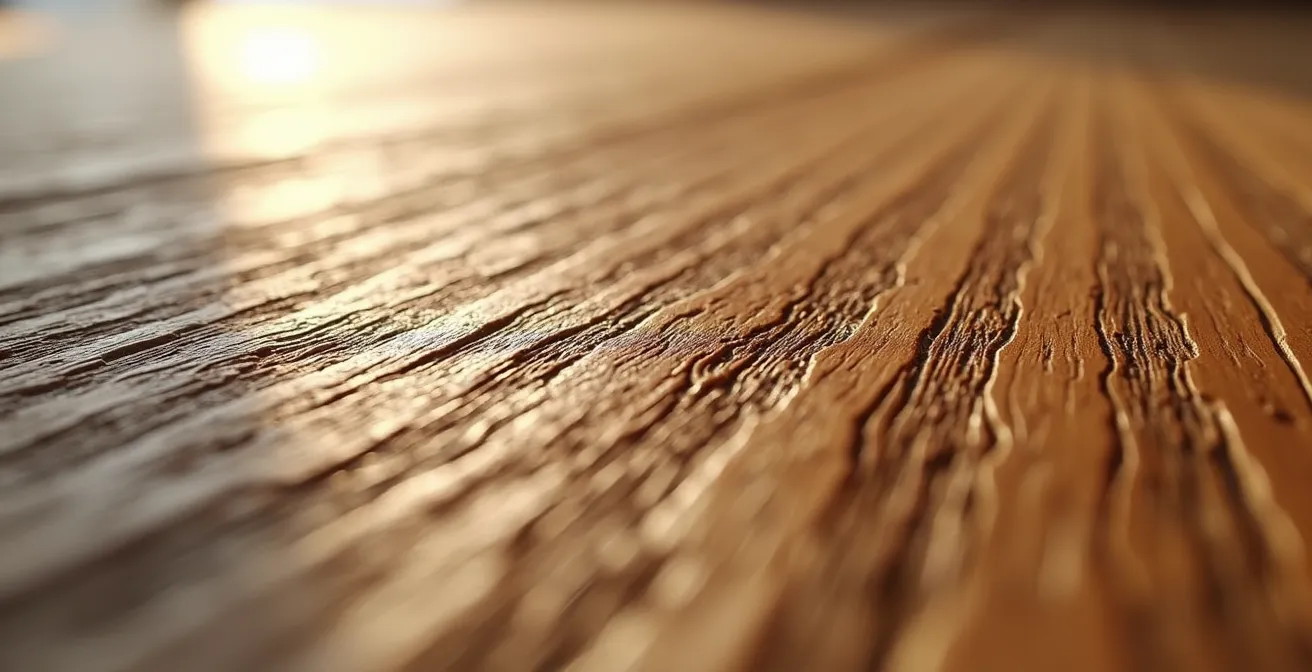
As this detailed image shows, the deep grooves and undulating surface of hand-scraped wood create a complex landscape. This inherent randomness is what makes the texture so effective at hiding both subfloor issues and the inevitable dings and scratches of family life.
Hand-Scraped vs Wire-Brushed: Which Texture Hides Scratches Better?
Once you’ve decided on textured flooring, the next question is which type of texture best suits a home with active children and pets. The two most popular options are hand-scraped and wire-brushed, and while both add character, they offer different levels of performance when it comes to hiding everyday wear and tear. From a pure durability and concealment standpoint, hand-scraped finishes are superior for masking the dents and scratches common in a family environment.
Hand-scraped flooring features longer, deeper, and more random grooves that mimic the look of wood shaped by hand tools. This heavy, inconsistent texture creates a rustic and forgiving surface. When a toy is dropped or a piece of furniture is dragged, any resulting dent or scratch tends to blend into the existing pattern. As the experts at Schmidt Custom Floors note, this is a significant advantage for busy households.
Hand-scraped floors tend to hide small dents and scratches well, making them an ideal choice for active families or homes with pets. The natural variation in each plank means everyday wear blends right into the design.
– Schmidt Custom Floors, The Art of Hand-Scraped and Wire-Brushed Hardwood Finishes
Wire-brushed flooring, in contrast, has a more subtle texture. The process involves using a hard-bristled wire brush to scrape away the softest part of the wood grain, leaving the harder heartwood exposed. This enhances the natural grain but results in a finer, more uniform texture with shallower grooves (typically 1-2mm deep compared to 3-5mm for hand-scraped). While this texture does help hide minor surface scratches better than a smooth finish, deeper gouges or dents are more noticeable because they disrupt the consistent grain pattern. Wire-brushed floors are an excellent choice for those who want character without a heavily rustic look, but for maximum concealment in a high-activity zone, the random, deep topography of a hand-scraped floor is the clear winner.
The Cleaning Trap: Why Textured Floors Accumulate More Grime?
While textured flooring is a champion for hiding imperfections and preventing slips, it presents a significant challenge that every parent must anticipate: the cleaning trap. The very grooves, bevels, and scrapes that give the floor its character and safety benefits also serve as perfect little reservoirs for dust, dirt, crumbs, and spilled liquids. This is the primary trade-off of choosing texture over a smooth surface. A perfectly flat floor can be cleaned with a quick swipe, but textured surfaces require a more deliberate approach to dislodge the “micro-groove grime.”
The extent of this problem varies with the texture’s depth. A lightly wire-brushed floor will be easier to maintain than a deeply hand-scraped or rustic-finished one. In fact, some studies suggest that wire-brushed floors can require up to 30% more cleaning effort than their smooth counterparts due to the exposed grain. For a parent, this means that crushed cereal, glitter from an art project, or mud tracked in from the garden won’t just sit on the surface; it will become embedded in the floor’s topography.
This isn’t just an aesthetic issue. An accumulation of organic matter like food crumbs can become a breeding ground for bacteria, and trapped dust and pollen can be a concern for children with allergies. Therefore, committing to a textured floor means committing to a more rigorous cleaning routine. Simply mopping is often ineffective, as it can push dirt further into the grooves. Instead, a vacuum with a soft-bristle brush attachment becomes an essential tool for lifting debris out of the texture before mopping. Overlooking this maintenance requirement is one of the biggest mistakes families make, turning a beautiful, safe floor into a perpetually grimy surface.
Your Action Plan: The Parent’s Cleaning Playbook for Textured Floors
- Daily Debris: Use a vacuum with a soft-bristle brush attachment to lift crushed cereal, crumbs, and dirt from within the grooves.
- Targeted Stains: Employ a magic eraser sponge specifically for stubborn crayon marks or scuffs on embossed LVT and similar surfaces.
- Routine Cleaning: Use a microfiber mop with minimal moisture for daily or bi-daily maintenance to avoid pushing dirt into the texture.
- Deep Cleaning: Once a month, deep clean with a pH-neutral cleaner specifically formulated for textured surfaces to break down accumulated grime without damaging the finish.
- Preventive Measures: Install high-quality doormats at all entryways to trap up to 80% of incoming dirt before it reaches your floors.
When to Refinish Textured Wood: Signs Your Floors Need Attention
One of the most misunderstood aspects of owning textured hardwood is long-term maintenance, specifically refinishing. Many homeowners assume that when their beautiful hand-scraped or wire-brushed floor starts to look worn, they can simply sand it down and reapply a finish, just like a traditional smooth hardwood floor. This is a critical and costly misconception. A full sanding will completely erase the valuable texture you paid for, turning your character-rich floor into a plain, flat surface.
Therefore, recognizing the early signs of wear is crucial to avoid reaching a point of no return. You must learn to distinguish between acceptable “patina”—minor surface scratches that blend into the texture—and true finish failure. The key is to look for signs that the protective topcoat has been compromised, exposing the raw wood beneath. Key warning signs include:
- Grey or Faded Spots: These appear in high-traffic areas where the finish has worn away completely, and the wood has started to oxidize.
- Peeling or Flaking: If you see the finish itself starting to peel, particularly at the edges of planks, it’s a clear sign of failure.
- Water Stains: Dark rings or spots indicate that moisture has penetrated the finish and is staining the wood directly. Once this happens, the damage is much harder to repair.
If you see these signs, it’s time to act, but not by calling a standard floor sander. The correct approach for preserving texture is a process known as “screening and recoating.”
Case Study: The “Screen and Recoat” Preservation Process
Professional flooring contractors have developed a specialized technique for renewing textured floors. Instead of aggressive sanding, they use a fine-grit screen to lightly abrade, or “screen,” only the top layer of the existing polyurethane finish. This process is just abrasive enough to create a mechanical bond for a new coat of finish to adhere to, but gentle enough that it does not remove any wood or flatten the hand-scraped or wire-brushed texture. This “Screen and Recoat” method effectively adds a new protective layer, restoring the floor’s sheen and durability while preserving its valuable texture. It’s a critical maintenance technique that extends the life of the floor without destroying its character.
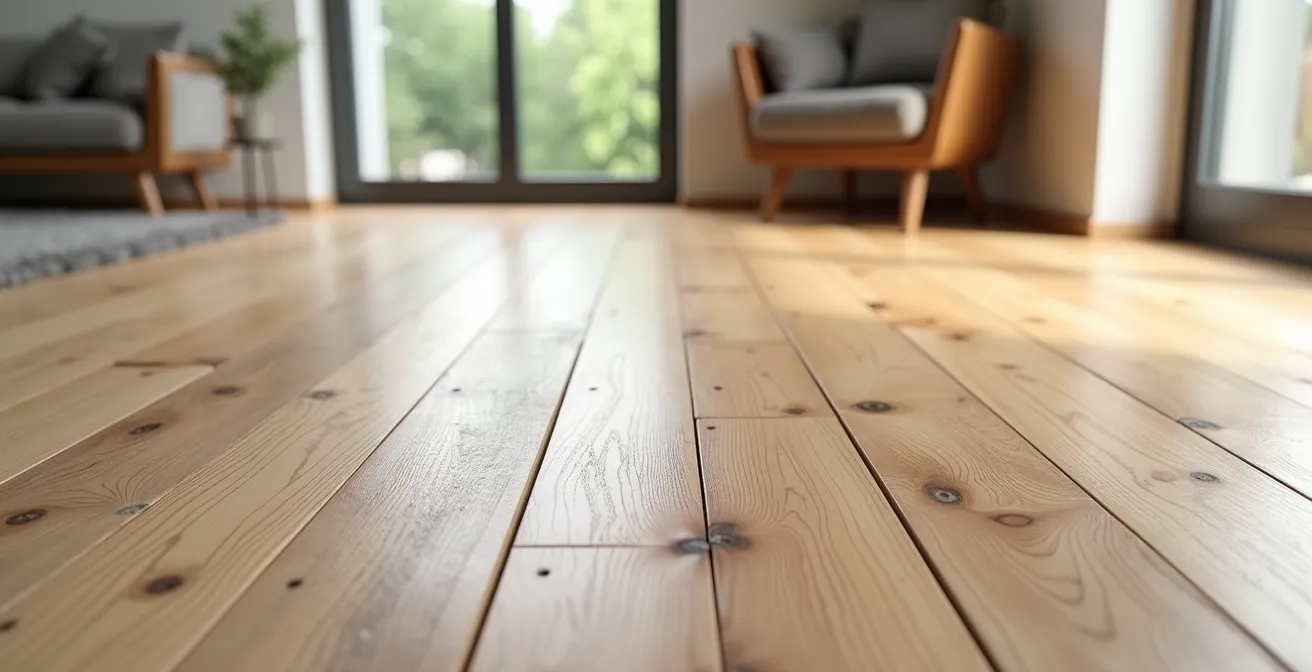
The visual difference is stark. A floor with normal wear maintains its color and integrity, while a floor with finish failure shows clear signs of discoloration and wood exposure, demanding immediate attention to prevent permanent damage.
Why Cheap Laminate Costs You More in the Long Run Than Slate?
In the quest for a budget-friendly floor, cheap laminate often appears to be a winner. Its low initial price per square foot is highly attractive to families trying to manage renovation costs. However, this upfront saving is often an illusion that gives way to a much higher lifecycle cost, especially when compared to a durable, natural material like slate. A true cost analysis must extend beyond the initial purchase and consider lifespan, replacement frequency, and impact on home value.
Cheap laminate flooring, typically with a thickness of 6-8mm and a low-grade wear layer, has an average lifespan of only 5-7 years in a high-traffic family home. It is extremely vulnerable to its two greatest enemies: moisture and impact. A single overflowing sink or a persistent leak from a pet’s water bowl can cause the fiberboard core to swell, bubble, and delaminate, requiring a full replacement. There is no repairing water-damaged laminate. In contrast, natural slate is completely waterproof and can last for 50 years or more with minimal maintenance.
When you project these costs over a 20-year period, the financial picture flips entirely. The cheap laminate floor might need to be replaced three or four times, while the slate floor remains. The following table illustrates this stark difference in long-term value.
| Factor | Cheap Laminate ($2/sqft) | Quality Slate ($10/sqft) |
|---|---|---|
| Initial Cost (200 sqft) | $400 | $2,000 |
| Lifespan | 5-7 years | 50+ years |
| Cost Per Year | $57-80/year | $40/year |
| Water Damage Risk | High – requires full replacement | None – completely waterproof |
| Resale Value Impact | Negative (replacement cost) | Positive (adds home value) |
| Total 20-Year Cost | $1,600 (4 replacements) | $2,000 (original only) |
As the data shows, the annual cost of the “expensive” slate is actually lower than the “cheap” laminate. Furthermore, slate adds tangible value to a home at resale, while worn-out laminate is often a liability that buyers factor in as a required replacement cost. This demonstrates that focusing solely on the initial price tag is a common but costly mistake for homeowners.
Bamboo vs Cork: Which Renewable Floor Is More Durable for Kids?
For families interested in sustainable materials, bamboo and cork are two of the most popular renewable flooring choices. Both offer eco-friendly credentials, but when assessed for durability in a home with kids, they present a fascinating contrast of properties. The answer to “which is more durable?” is not straightforward; it depends entirely on what kind of durability you are prioritizing: resistance to scratches and dents, or resistance to impacts and falls.
On one hand, strand-woven bamboo is a powerhouse of hardness. This manufacturing process involves shredding bamboo stalks, mixing them with resin, and compressing them under extreme pressure. The resulting material is incredibly dense. According to industry tests, strand-woven bamboo measures two to three times harder than oak on the Janka hardness scale. This makes it exceptionally resistant to scratches from pet nails and dents from dropped toys. However, this hardness is also its downside from a comfort and safety perspective; it offers no cushioning for a falling toddler.
Cork, on the other hand, offers a completely different kind of durability. Its unique, honeycomb-like cellular structure makes it naturally soft and compressible. This provides an exceptional “safety trifecta” for families: it has natural shock absorption that cushions falls, its antimicrobial properties resist mold and mildew (ideal for crawling babies), and it offers excellent sound insulation, reducing the clatter of dropped toys. However, this softness makes it vulnerable to punctures from sharp objects and deep scratches. While it can “heal” from minor dents, it does not have the surface invulnerability of bamboo. This table breaks down their resilience to common family hazards.
| Hazard Type | Strand-Woven Bamboo | Cork Flooring |
|---|---|---|
| Dropped Toys | Highly resistant to dents | Dentable but recovers partially |
| Scratches (Pet Nails) | Superior scratch resistance | Vulnerable to deep scratches |
| Sharp Impacts | Can chip on edges | Puncture risk from sharp objects |
| Water Spills | Endures moisture and standing water well | Natural suberin provides water resistance |
| Comfort for Falls | Hard surface, no cushioning | Soft and comfortable, reducing strain |
Ultimately, the choice depends on your primary concern. If your main worry is scratches and surface wear in a high-traffic area, strand-woven bamboo is the more durable option. If your priority is a softer, more forgiving surface for a playroom or nursery that can reduce the severity of falls, cork is the superior choice.
Key Takeaways
- True flooring safety is a balance of slip-resistance (high DCOF), cleanability, and long-term durability, not just texture.
- Textured floors excel at hiding subfloor imperfections and daily wear, but require a more rigorous cleaning routine to prevent grime buildup.
- Long-term lifecycle cost, including replacement and maintenance, is a more accurate measure of value than low initial price per square foot.
Which Interior Materials Offer the Best Durability for High-Traffic Entryways?
The entryway is the ultimate torture test for any flooring material. It faces a constant barrage of foot traffic, dirt, moisture, and debris from the outside world. For families with children, this area requires a material with uncompromising durability. While a single flooring type can work, the most effective strategy from a safety and maintenance perspective is to create a “zoning” system, using the most robust materials at the immediate point of entry.
The undisputed champion for this “landing zone” is textured porcelain tile. Porcelain is fired at higher temperatures than standard ceramic, making it denser, less porous, and exceptionally resistant to water and scratches. When choosing a porcelain tile for an entryway, it’s critical to select one with a high DCOF rating (above 0.55 is ideal for an exterior transition) and a textured finish to prevent slips when shoes are wet or snowy. This creates a nearly indestructible first 3-5 feet of flooring that can be cleaned aggressively without fear of damage.
Beyond this initial tile zone, you can transition to other durable materials like luxury vinyl tile (LVT) or strand-woven bamboo. High-quality LVT offers excellent water resistance and a durable wear layer, while bamboo provides top-tier scratch resistance. For any hardwood chosen for an area adjacent to the entryway, the quality of the finish is paramount. Modern, factory-applied finishes are far superior to older site-applied ones. Look for products with an aluminum oxide finish, as these specialized coatings can provide up to two times the wear life of a standard polyurethane finish, giving you a crucial defensive layer against the grit and grime that makes its way past the doormat. A strategic entryway plan might look like this:
- Zone 1 (Landing Zone): Install ultra-durable textured porcelain tile for the first 3-5 feet from the door.
- Zone 2 (Transition): Use quality reducer strips to create a seamless transition to the main flooring.
- Zone 3 (Main Floor): Choose a durable secondary material like high-quality LVT or strand-woven bamboo to handle the rest of the high-traffic area.
By combining materials strategically, you create a system where each part of the floor is optimized for the specific challenges it faces, ensuring maximum durability and safety for the long haul.
To put these principles into practice, the next logical step is to conduct a personalized assessment of your own home’s high-traffic areas, identifying the specific risks and choosing a material that provides the right balance of safety, durability, and maintainability for your family’s unique needs.