For moderate climates, the performance gain from triple-pane windows often provides diminishing returns unless the entire window system—frame, coatings, and installation—is optimized.
- The U-Factor, not R-Value, is the critical metric for window thermal performance, and it’s heavily influenced by the frame and gas fills.
- A superior frame material like fiberglass and proper installation are more critical to long-term value and energy savings than the third pane of glass alone.
Recommendation: Prioritize a high-performance double-pane window with a low U-factor, superior Low-E coating, and a dimensionally stable fiberglass frame installed by a certified professional. This approach often delivers a better return on investment than a basic triple-pane unit.
For any homeowner embarking on a window replacement project, the central debate quickly becomes “double-pane or triple-pane?” The conventional wisdom suggests a simple trade-off: triple-pane offers superior insulation but comes at a significant premium. For those in extreme northern climates, the decision is often straightforward. But for the majority of homeowners in moderate climates, the answer is far more nuanced. The focus on just the number of glass panes misses the bigger picture and can lead to a poor investment, where you pay for performance you never actually realize.
The real value of a window isn’t found in a single feature, but in its performance as a complete system. This includes the frame’s resistance to expansion, the longevity of the insulating gas between the panes, the type of low-emissivity (Low-E) coating applied, and, most critically, the quality of the installation. A high-tech triple-pane unit installed improperly or set in a flimsy, uninsulated frame can perform worse than a well-built, correctly installed double-pane window. The key isn’t simply asking if a third pane is worth it, but rather understanding which components deliver the most significant return on investment for your specific home and climate.
This guide will deconstruct the window into its essential components to provide a clear, value-focused framework. We will move beyond the glass to analyze how factors like U-factor, frame material, gas retention, and solar heat gain collectively determine a window’s true performance. By understanding these elements, you can make an informed decision that balances budget with long-term comfort and energy savings, ensuring your investment truly pays off.
To navigate this complex decision, this article breaks down the critical performance factors one by one. The following sections will guide you through the technical details that matter most, helping you build a complete picture of what constitutes a high-value window for your home.
Summary: A Homeowner’s Guide to Window Performance and Value
- Why a Low U-Factor Matters More Than R-Value for Windows?
- Vinyl vs Fiberglass Frames: Which Expands Less in Extreme Heat?
- How Long Does Argon Gas Actually Stay Inside Your Windows?
- The Flashing Mistake That Rots Walls Under New Windows
- Solar Gain vs Heat Retention: Which Low-E Coating Suits South-Facing Windows?
- How to Position Windows to Reduce Artificial Lighting Needs by 40%?
- Nominal vs Effective R-Value: What Your Walls Are Actually Delivering?
- How to Use Smart Automation to Reduce Heating Bills by 15%?
Why a Low U-Factor Matters More Than R-Value for Windows?
When evaluating insulation, most homeowners are familiar with R-value—a measure of thermal resistance used for walls and attics. However, for fenestration products like windows, the primary metric for performance is the U-factor. U-factor measures the rate of heat transfer and tells you how well the window prevents heat from escaping. The key difference is simple: for R-value, higher is better, but for U-factor, lower is better. In a moderate climate, focusing on a window’s U-factor is far more critical than trying to equate it to a wall’s R-value.
A window is a complex assembly of glass, gas, spacers, and frame, and the U-factor represents the performance of this entire system. While high-performance double-pane windows can achieve a respectable U-factor of 0.30, triple-pane windows can achieve U-factors as low as 0.15, effectively cutting the rate of heat loss in half. This is the core of their performance advantage. As building codes become more stringent, the U-factor is the benchmark. For instance, the latest ENERGY STAR 7.0 requirements for northern climate zones mandate a U-factor of 0.22 or lower, a standard that high-performance triple-pane units are designed to meet.
The image below provides a thermal visualization of this difference, showing how a lower U-factor translates directly into a warmer interior surface and significantly less heat loss during cold weather. This also reduces the likelihood of condensation, which can damage sills and walls over time.

While a triple-pane window offers a mathematically superior U-factor, the homeowner on a budget must weigh the incremental cost against the real-world savings in a moderate climate. The performance gap between a top-tier double-pane and a mid-range triple-pane can be surprisingly small. Therefore, selecting a window with the lowest possible U-factor within your budget, regardless of the pane count, is the most pragmatic strategy for maximizing value.
Vinyl vs Fiberglass Frames: Which Expands Less in Extreme Heat?
The most advanced glass package is only as good as the frame that holds it. The frame material is a critical component of the window system, impacting not only insulation but also long-term durability and air tightness. In climates with temperature swings, a material’s dimensional stability—its resistance to expansion and contraction—is paramount. While vinyl is a popular and cost-effective choice, fiberglass frames offer superior performance, especially when supporting the heavier weight of triple-pane units.
Fiberglass expands and contracts at a rate nearly identical to glass, meaning the frame and the glass move together. This minimizes stress on the seals that hold the insulating argon gas, reducing the risk of seal failure and preserving the window’s U-factor over its lifespan. Vinyl, by contrast, expands and contracts at a much higher rate. This constant movement can compromise seals, leading to air and water leakage over time. As the Department of Energy notes in its guide, this stability is a key advantage.
Fiberglass window frames are dimensionally stable and have air cavities that can be filled with insulation, giving them superior thermal performance compared to wood or uninsulated vinyl.
– Department of Energy, Window Types and Technologies Guide
For a homeowner weighing the triple-pane upgrade, the frame choice is a non-negotiable part of the equation. A heavier triple-pane unit puts more stress on the frame. Opting for a cheaper vinyl frame to afford triple-pane glass is often a poor trade-off, creating a performance bottleneck that negates the benefit of the extra pane.
This comparative table, based on Department of Energy analysis, clearly outlines the trade-offs between common frame materials. For homeowners focused on long-term value, fiberglass presents the best balance of stability, insulation, and strength.
| Frame Material | Thermal Resistance | Dimensional Stability | Triple-Pane Support |
|---|---|---|---|
| Fiberglass | Superior with foam fill | Excellent – minimal expansion | Ideal for heavy units |
| Vinyl | Good with insulation | Moderate – more expansion | Requires thicker profiles |
| Wood | Good natural insulation | Variable with moisture | Strong but needs maintenance |
| Aluminum | Poor without thermal break | Excellent stability | Strong but conducts cold |
How Long Does Argon Gas Actually Stay Inside Your Windows?
A common concern for homeowners considering double or triple-pane windows is the longevity of the insulating gas—typically argon—sealed between the panes. Many worry that the gas will leak out within a few years, negating the window’s energy-efficient benefits. This fear, while understandable, is largely based on the performance of older window technologies. Modern manufacturing has dramatically improved seal integrity and gas retention, making today’s windows a reliable long-term investment.
Reputable manufacturers now use advanced dual-seal systems that are exceptionally effective at preventing leakage. While a minuscule amount of gas loss is inevitable over decades, the rate is far slower than most people assume. According to industry data, modern argon-filled windows can retain over 80% of their gas after 20 years, with a typical annual leakage rate of less than 1%. This means the window will maintain the vast majority of its insulating performance for its entire expected service life. The enhanced thermal comfort and energy savings are not a short-term benefit but a lasting feature.
However, seal failure can still occur, especially in lower-quality windows or units that have been improperly installed. When the seal is breached, moist air enters the space between the panes as the argon gas escapes. This not only eliminates the insulating benefit but also leads to cosmetic and potentially damaging issues. Knowing the warning signs is crucial for any homeowner with insulated glass units (IGUs).
Your Checklist: Signs Your Window Has Lost Its Gas Fill
- Check for Condensation: Look for persistent fogging, moisture, or frost forming *between* the panes of glass. This is the most definitive sign of a failed seal.
- Inspect the View: Examine the glass for a distorted, wavy, or milky appearance. This indicates that the two panes are no longer perfectly parallel due to pressure changes.
- Feel for Drafts: Monitor for a noticeable increase in cold drafts near the window during winter, or radiant heat during summer, compared to other windows.
- Analyze Energy Bills: Notice a sudden or unexplained increase in your heating or cooling costs. If other factors are ruled out, it could point to compromised window performance.
- Look for Moisture Stains: Inspect the interior of the sealed unit for any visible water droplets or mineral stains left behind by evaporated moisture.
The Flashing Mistake That Rots Walls Under New Windows
The single greatest threat to a window’s performance and the health of your home is not a faulty seal or a cracked pane—it’s water. A new window, whether double or triple-pane, is only as good as its installation, and the most critical and unforgiving part of that process is the flashing. Flashing is a thin, waterproof material that directs water away from the window opening and integrates the window into the home’s water-resistive barrier. A single mistake here can lead to slow, hidden leaks that rot wall sheathing, studs, and subfloors, causing thousands of dollars in damage.
This risk is amplified when upgrading to triple-pane windows. A key factor that many budget-conscious homeowners overlook is weight. Triple-pane units are 30-50% heavier than their double-pane counterparts. This extra weight makes them more difficult to handle and set perfectly in the opening. An installer who is inexperienced with these heavier units may struggle to position the window correctly, rushing the process and compromising the precise application of flashing tapes and sealants. This can create tiny gaps or reverse laps in the flashing that act as funnels for water infiltration.
Proper flashing is a systematic, layered process. It involves creating a waterproof sill pan at the bottom of the opening, then layering the side and top flashing in a way that directs water down and out—much like shingles on a roof. There is zero room for error.
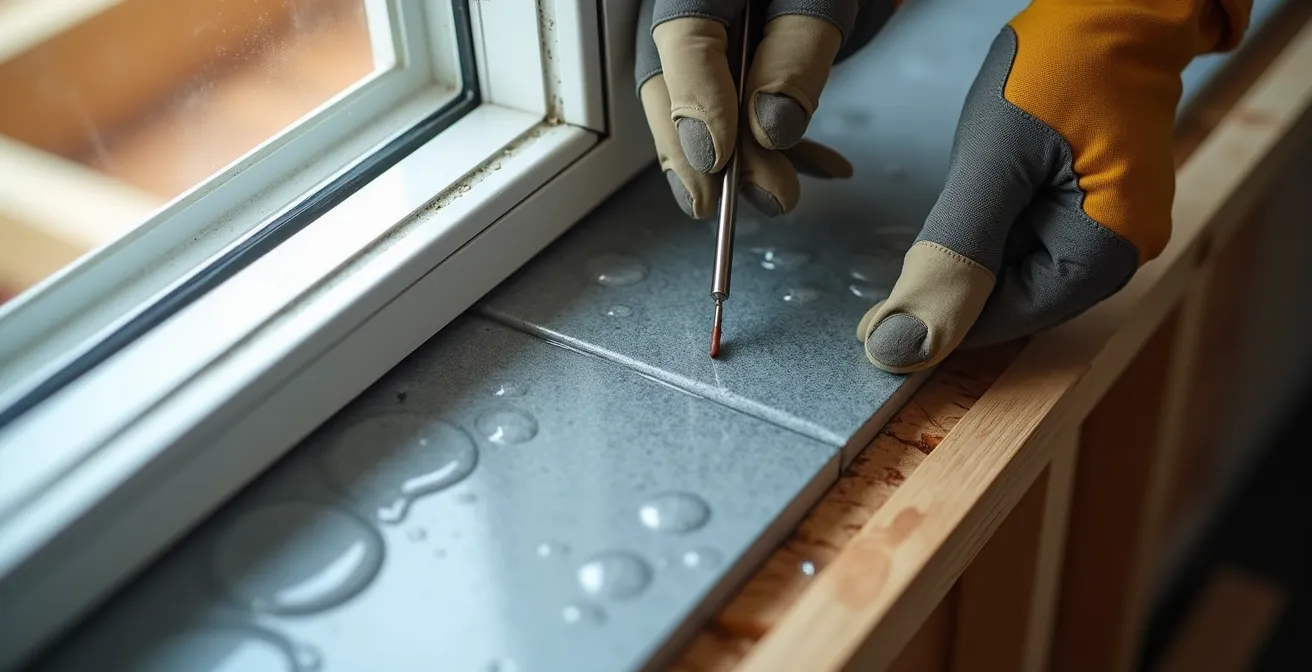
The detailed cross-section above illustrates the correct layering needed to create a durable, waterproof seal around the window. This is not a step to be rushed or a place to cut corners. When getting quotes for window replacement, it is crucial to ask installers specifically about their flashing methods and their experience with the weight and specific requirements of the windows you are choosing. Paying a little more for a master installer is the best insurance against catastrophic water damage.
Solar Gain vs Heat Retention: Which Low-E Coating Suits South-Facing Windows?
Beyond the number of panes, the most significant technological feature of a modern window is its Low-E (low-emissivity) coating. This is an invisible, microscopically thin metallic layer applied to one or more glass surfaces that helps control heat transfer. Low-E coatings are the powerhouse of window efficiency, working year-round to improve comfort and reduce energy bills. However, not all Low-E coatings are created equal. They are specifically engineered to either maximize or minimize solar heat gain, and choosing the right one is crucial for performance.
The key metric here is the Solar Heat Gain Coefficient (SHGC), a number between 0 and 1 that measures how much of the sun’s heat is transmitted through the window. A lower SHGC is ideal for hot climates, as it blocks unwanted solar heat. A higher SHGC is beneficial in cold climates, as it allows free passive solar heating in the winter. For a moderate climate, the goal is balance: blocking summer heat while allowing some winter sun. This is where spectrally selective coatings excel, letting in visible light while blocking infrared (heat) and UV radiation.
For south-facing windows in a moderate climate, a spectrally selective coating with a moderate SHGC (around 0.25-0.35) is often the ideal choice. It prevents overheating in the summer but doesn’t completely block the beneficial, low-angle winter sun. Furthermore, investing in the right coating can be financially rewarding, as many high-performance windows qualify for significant incentives that help offset the initial cost.
The following table breaks down the different types of Low-E coatings and their ideal applications, helping you tailor your window choice to your specific climate needs and orientation.
| Coating Type | Best Climate | SHGC Range | Primary Benefit |
|---|---|---|---|
| Low-E4 | Mixed climates | 0.30-0.40 | Year-round balance |
| SmartSun | Hot climates | <0.25 | Blocks 95% UV rays |
| PassiveSun | Cold climates | >0.40 | Maximizes solar heating |
| Spectrally Selective | Moderate climates | 0.25-0.35 | High light, low heat |
How to Position Windows to Reduce Artificial Lighting Needs by 40%?
An often-overlooked aspect of window replacement is the opportunity to improve not just thermal comfort, but also the quality and amount of natural light in your home. This practice, known as daylighting, involves strategically placing and sizing windows to maximize the use of sunlight, which can significantly reduce the need for artificial lighting and enhance the well-being of occupants. With thoughtful design, it’s possible to reduce reliance on electric lights by up to 40% in daytime hours.
The core principle of effective daylighting is to orient the majority of your glass toward the south. South-facing windows receive the most consistent, high-quality sunlight throughout the day in the northern hemisphere. Overhangs or awnings can be used to block the high-angle summer sun while allowing the low-angle winter sun to penetrate deep into the home, providing free passive heating. In contrast, east and west-facing windows should be used sparingly as they can cause glare and significant unwanted heat gain in the summer.
Here are several key strategies for effective window positioning:
- Place 50-60% of your total window area facing south for optimal light and passive solar gain.
- Use tall, vertical ‘slot’ windows, which allow light to penetrate deeper into a room than wide, horizontal ‘ribbon’ windows.
- Limit window area on east and west-facing walls to reduce glare and summer heat gain.
- Opt for fewer, larger windows instead of many small ones to improve the glass-to-frame ratio, which enhances both views and energy efficiency.
- Aim for a window-to-floor-area ratio of about 16-18% for a good balance between daylighting and energy conservation.
This strategic approach to daylighting highlights the importance of seeing windows as more than just openings. They are dynamic components of your home’s energy system. It also reinforces the idea that an expensive upgrade isn’t always the smartest move. As the Zero Energy Project wisely points out, a high-performance double-pane window can be an excellent, cost-effective choice when part of a well-designed system.
Some double-pane windows achieve U-values close to 0.22 and offer a good balance of high performance and lower cost.
– Zero Energy Project, Select Optimum Window Performance Guide
Nominal vs Effective R-Value: What Your Walls Are Actually Delivering?
To make the best decision on windows, it’s crucial to see them as one part of a larger system: your home’s entire thermal envelope. Homeowners often get fixated on the performance numbers of a single component, like a window, without considering its performance relative to the surrounding walls. This is where understanding the vast difference between a window’s insulating capability and a wall’s is a major “aha” moment for budgeting.
Even the most advanced, expensive residential window cannot compete with a standard insulated wall. A top-of-the-line triple-pane window might achieve an R-value of around R-7 or R-8 (the inverse of its U-factor). In contrast, a typical 2×6 exterior wall is insulated to a nominal R-20 or more. This means even the best window is a significant thermal hole compared to the wall it’s in. This isn’t a reason to neglect windows, but it’s a powerful argument for prioritizing your investments wisely.
Spending thousands of extra dollars to upgrade from a high-performance double-pane (perhaps R-4) to a triple-pane (R-7) may not be the most cost-effective move if your walls are poorly insulated or your attic has minimal insulation. You are essentially installing a tiny patch of high-tech armor in a leaky boat. Research from the U.S. Department of Energy’s Pacific Northwest National Laboratory confirms this holistic view. Their studies on window efficiency emphasize that in cold climates, upgrading windows is a critical first step *before* installing other systems like heat pumps, to ensure the entire thermal envelope is sound and can maintain comfort.
For a homeowner in a moderate climate, this means performing a simple energy audit of your home is the first step. Before over-investing in triple-pane glass, ensure your attic is well-insulated and your walls are as airtight as possible. Fixing the biggest thermal leaks first will always provide the greatest return on investment. Then, choose a window that provides a good, balanced performance for your budget.
Key Takeaways
- Focus on U-Factor: For windows, a low U-factor is the most important measure of thermal performance, not R-value. This single number represents the performance of the entire window system.
- The System is Key: A window’s value comes from the synergy of its parts. A stable fiberglass frame and a high-performance Low-E coating are just as crucial as the glass package.
- Installation is Non-Negotiable: The best window in the world will fail if installed improperly. Proper flashing is critical to prevent water damage and preserve the integrity of your home’s structure.
How to Use Smart Automation to Reduce Heating Bills by 15%?
Once you’ve invested in high-performance windows, the final step is to operate them intelligently. Even the best windows are static components, but when paired with dynamic window treatments and smart home automation, they can become an active part of your home’s climate control system. This strategic management can further reduce your energy bills, potentially by an additional 15% or more, by making the most of passive heating and cooling opportunities.
The concept is simple: control the amount of solar energy and heat that enters or leaves through your windows based on the time of day, the season, and the weather. Manually opening and closing blinds or drapes can achieve this, but automation makes the process effortless and far more effective. Motorized shades, blinds, or drapes connected to a smart home hub can be programmed to work in concert with your thermostat and local weather data.
This technology is particularly impactful when you consider that for many households, a significant portion of energy costs is dedicated to climate control. With up to 40% of the average family’s annual energy budget going toward heating and cooling, optimizing every component of the thermal envelope is a powerful savings strategy. Here are some effective smart automation strategies:
- Winter Sun Harvesting: Program automated shades on south-facing windows to open on sunny winter days, allowing passive solar energy to heat your home for free.
- Summer Heat Rejection: Schedule those same shades to close during the hottest part of a summer afternoon to block solar heat gain and reduce the load on your air conditioner.
- Enhanced Insulation: Install insulating cellular shades, which can add up to an R-4 insulation value to your window when closed, and program them to lower automatically at night during winter.
- Responsive Control: Place smart temperature sensors near large windows to trigger shades to close if the area becomes too hot, providing responsive and localized climate control.
By automating your window treatments, you transform your windows from passive holes in your wall into an active, energy-saving system. This final layer of optimization ensures you are extracting the maximum possible value from your window investment every single day.
To truly determine the best value for your home, the next logical step is to move beyond general advice and get a holistic assessment that considers your specific climate, home orientation, and existing insulation. An evaluation focused on the entire window system—not just the glass—will ensure your investment delivers comfort and savings for decades to come.