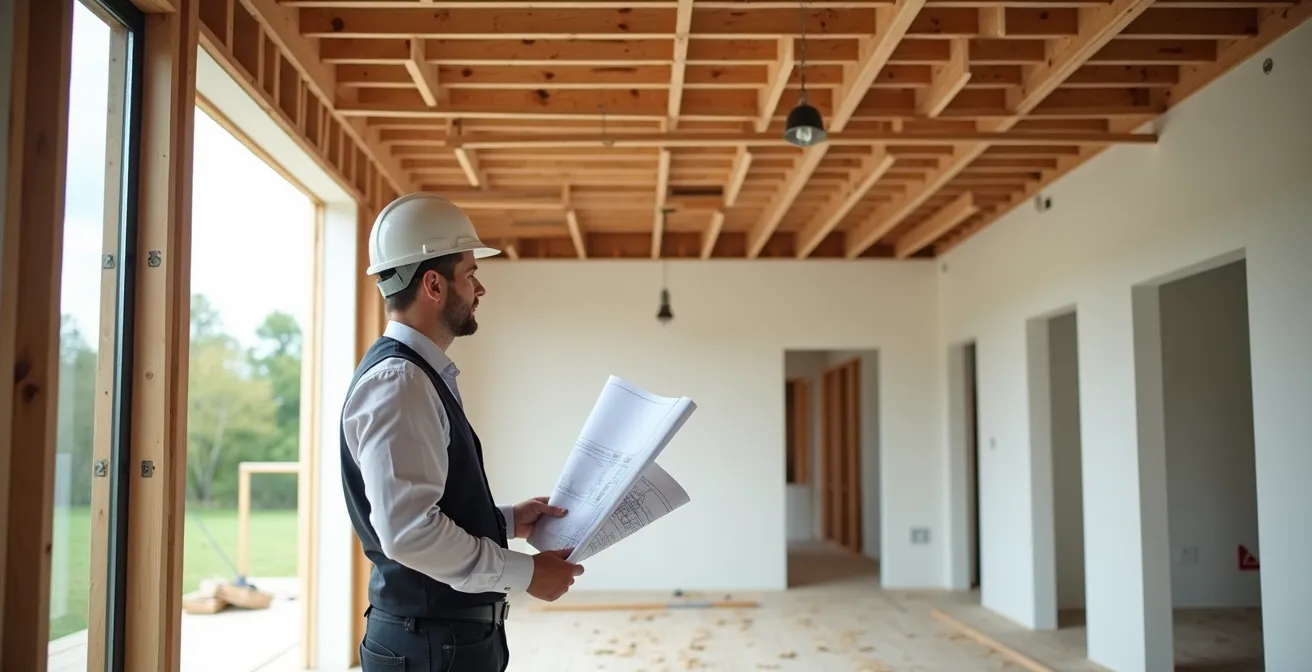
Contrary to popular belief, the decision to hire a structural engineer isn’t just about whether a wall is “load-bearing”; it’s about understanding how removing *any* wall disrupts your home’s entire structural system.
- Even non-load-bearing walls can provide critical lateral stability (diaphragm action) and their removal can lead to sagging, cracks, and other costly damage.
- An engineer’s primary role is to analyze these hidden load paths and design a solution that safely redistributes weight to the foundation, a task outside an architect’s typical scope.
Recommendation: If your project involves a multi-story home, spans over 10 feet, or shows any signs of structural stress (uneven floors, sticking doors), consulting an engineer is not optional—it’s essential for safety and liability.
The ambition for an open-concept living space often begins with a single, exciting question: “Can we take this wall down?” For many homeowners, the answer seems to hinge on a simple binary—is the wall load-bearing or not? This leads them down a path of online checklists and advice, trying to self-diagnose their home’s structure. While well-intentioned, this approach misses the fundamental truth of residential construction: a house is not a collection of independent parts, but a complex, interconnected structural system.
The common wisdom suggests that if a wall isn’t holding up the floor above, it’s safe to remove. This oversimplification is the single biggest misconception in home renovation. It fails to account for lateral loads from wind, the bracing effect of partition walls, and the complex ways that forces travel from the roof all the way down to the foundation. An architect might design the new, beautiful open space, but they are not typically trained to calculate the new stresses this change imposes on the rest of the structure. The confusion between an architect’s role (design and aesthetics) and an engineer’s role (safety and structural integrity) can lead to disastrous and expensive outcomes.
This guide moves beyond the simplistic “load-bearing” question. It adopts the perspective of a structural engineer to reveal the hidden risks and critical considerations involved in any wall removal project. We will explore why even a “non-load-bearing” wall removal can go wrong, what signs indicate an absolute need for an engineer, and how to interpret their work. This is about understanding that your home is a dynamic system, and changing one key element requires a professional who can predict and manage the consequences for the entire structure.
To navigate this complex topic, this guide is structured to answer your most pressing questions in a logical sequence. We will cover the warning signs that necessitate an engineer’s involvement, the common errors to avoid, technical choices in materials, and the legal and financial ramifications of unpermitted work.
Summary: When to Hire a Structural Engineer: A Guide for Wall Removal Projects
- When to Consult a Structural Engineer: Signs Your Wall Removal Is Risky
- The Load-Bearing Wall Error That Ruins Open Concept Dreams
- Why Removing a Non-Load Bearing Wall Can Still Cause Sagging?
- Steel vs LVL Beams: Which Is Best for a 20-Foot Open Span?
- Why Soil Testing Is Critical Before Building a Home Extension?
- The Liability Risk: What Happens If Your Unpermitted Renovation Collapses?
- How to Interpret an Engineer’s Report for Your Contractor?
- Seamless Home Extensions: How to Match New Brickwork to an Old House?
When to Consult a Structural Engineer: Signs Your Wall Removal Is Risky
Before any demolition begins, a thorough assessment is required to determine if professional engineering is necessary. While the term “load-bearing” is common, a more accurate approach is to look for signs that a wall is an integral part of the home’s structural system. Certain indicators are non-negotiable red flags that demand an expert eye. If your wall is located centrally in the house, it is often designed to distribute roof and floor loads evenly across the foundation. Similarly, any wall located near a staircase is almost certainly carrying complex loads and providing critical bracing.
Physical signs of pre-existing stress are also crucial. Doors that stick in their frames, cracks appearing in drywall above doorways, or floors that are noticeably uneven can all point to past structural shifts or settlement. Removing a wall in these conditions without a proper analysis could exacerbate an existing problem. The most definitive sign is the relationship between the wall and the framing above and below. If the wall runs perpendicular to the ceiling or floor joists, it is very likely supporting them. A professional consultation is the only way to be certain. For a homeowner, the modest cost to hire a structural engineer for load-bearing wall analysis, typically between $300 to $1,000, is a small price for the certainty and safety it provides.
Ultimately, any project that involves a multi-story home, spans longer than 10 feet, or shows any of the warning signs below requires a structural engineer’s involvement. It is not a step to be skipped for the sake of budget or speed. The potential cost of remediation far outweighs the initial investment in professional analysis.
The Load-Bearing Wall Error That Ruins Open Concept Dreams
The most catastrophic error in a renovation is the misidentification of a load-bearing wall. Removing one without providing adequate temporary support and a permanent new load path can have immediate and devastating consequences. In a multi-story home, these walls are part of a continuous load path that transfers weight from the roof, through the upper floors, and down into the foundation. Mistakenly cutting into this system compromises the integrity of the entire structure, not just the immediate area. The dream of an open-concept space can quickly turn into a nightmare of sagging floors, cracked walls throughout the house, and, in the worst-case scenario, a partial or total collapse.

As the image above illustrates, removing a wall means the weight it once carried must be redirected. This is typically achieved by installing a new beam, which collects the load from the joists above and transfers it to new support posts. These posts, in turn, create new point loads on the foundation. An engineer must calculate the size of this beam and ensure the posts are placed over footings in the foundation capable of handling this concentrated weight. This is a complex calculation that accounts for dead loads (the weight of the structure itself) and live loads (furniture, people, snow). The financial stakes are high; the average cost for removing a two-story load-bearing wall is between $9,000 to $15,000, a reflection of the extensive work required to do it safely.
This process is not a DIY project. It requires precise calculations, proper material specification, and a deep understanding of structural mechanics. Attempting it without an engineer’s stamped plans is not just risky; it’s a gamble with your home’s safety and value.
Why Removing a Non-Load Bearing Wall Can Still Cause Sagging?
One of the most dangerous assumptions in home renovation is that “non-load-bearing” means “structurally insignificant.” While these partition walls may not carry vertical floor or roof loads directly, they often play a crucial role in the overall stability of the structural system. They act as bracing, preventing joists from twisting or buckling over long spans. More importantly, they contribute to the diaphragm action of the floors and ceilings, providing lateral stability against forces like wind. When you remove a long partition wall, you may be removing a key component that keeps your floor system stiff and flat.
The consequences may not be immediate or catastrophic, but they are insidious. Over time, the ceiling joists can begin to deflect or sag, creating a noticeable dip in the ceiling and causing cracks to appear in the drywall. Doors in adjacent rooms may start to stick as the frame shifts. This exact scenario is more common than many homeowners realize. In one documented case, a homeowner removed what they believed to be a simple partition wall, only to find their pantry door rubbing against the ceiling days later. As a professional from LEVEL Engineering noted after an inspection in a real-world case study, “That is when we realized that the ceiling was actually sagging…it is a load bearing wall and we need to do something about it.” This highlights how even walls not directly under joists can carry unexpected loads.
This is why an engineer’s assessment is so valuable. They look beyond the obvious vertical loads to analyze the entire system’s behavior. The cost of a project, even for a single-story home, reflects this complexity. A seemingly simple wall removal project requires careful planning to avoid these unintended consequences, ensuring the new open space remains stable for years to come.
Steel vs LVL Beams: Which Is Best for a 20-Foot Open Span?
Once an engineer determines a new support beam is necessary, the next critical decision is the material. For long spans, such as the 20-foot opening common in modern open-concept designs, the choice typically comes down to a steel I-beam or Laminated Veneer Lumber (LVL). Each has distinct advantages and is specified based on the project’s unique constraints, including load requirements, headroom clearance, and budget. There is no single “best” option; there is only the most appropriate option for the specific application.
A steel I-beam offers the highest strength-to-size ratio. This means it can carry immense loads over long distances with a minimal vertical profile (depth). This is its primary advantage, especially when preserving maximum ceiling height is a priority. However, steel is heavier, more expensive, and requires specialized labor for installation, often involving cranes and on-site welding. LVL, on the other hand, is an engineered wood product made from multiple layers of thin wood veneers. It is lighter, less expensive, and can be installed by a standard framing crew. Its main drawback is that, for an equivalent load-bearing capacity, an LVL beam will be much deeper than a steel beam, potentially requiring a bulkhead or soffit that hangs below the ceiling level.
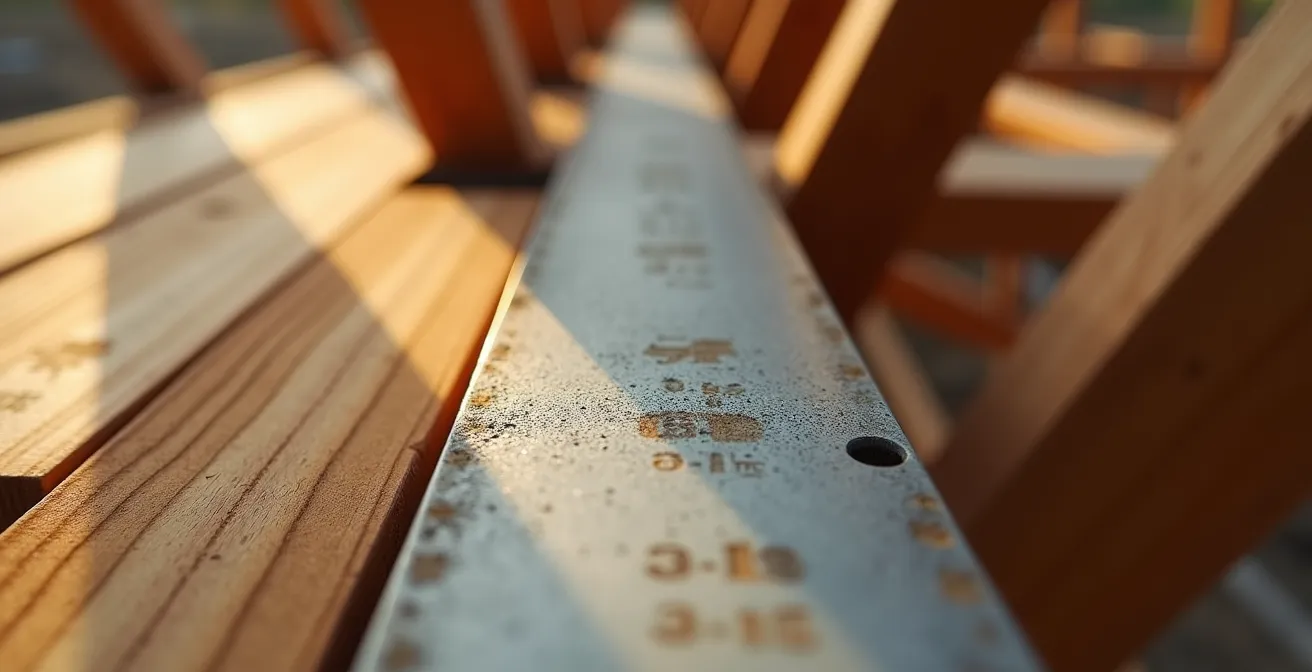
The choice is a trade-off between performance, aesthetics, and cost, as this comparative analysis from home renovation experts demonstrates.
| Beam Type | Material Cost | Installation Cost | Key Considerations |
|---|---|---|---|
| Steel I-Beam | $1,300 to $5,000 | Requires crane and specialized welders | Minimal depth but needs thermal bridging prevention |
| LVL (Laminated Veneer Lumber) | $55 to $400 | $200 to $400 labor per beam | Deeper profile but integrates seamlessly with wood framing |
An engineer’s calculations will determine the minimum required size for both a steel and an LVL option. This allows the homeowner and contractor to make an informed decision based on the project’s specific priorities: achieving a completely flush ceiling with steel or opting for a more cost-effective installation with LVL.
Why Soil Testing Is Critical Before Building a Home Extension?
When a wall removal is part of a larger home extension, the structural analysis must extend beyond the existing house and literally go into the ground. The foundation of any structure is only as strong as the soil it rests upon. Before adding a new extension, and especially when creating new point loads from a major wall removal, understanding the soil’s properties is not just a best practice—it is a critical step to prevent catastrophic failure. Soil testing, performed by a geotechnical engineer, determines the soil’s type, density, and, most importantly, its bearing capacity.
This information is fundamental to the structural engineer’s foundation design. If the soil is weak, expansive (like clay), or poorly compacted, a standard foundation may not be sufficient. The new footings designed to support the posts from your wall removal might sink or shift over time, causing the new beam to sag and creating cracks throughout the new and old parts of the house. As structural engineers often find in a complete analysis, “When you remove a load-bearing-wall, the weight shifts to other areas in the foundation and can cause severe damage” if those areas are not prepared to handle it. This is particularly true for homes with certain foundation types; it can cost $1,000+ extra to remove walls on a pier and beam foundation compared to a concrete slab, due to the complexity of reinforcing the sub-structure.
Ignoring soil conditions is a gamble. A properly designed foundation, based on a geotechnical report, ensures that the new extension and the modified existing structure will remain stable and integrated. It prevents differential settlement, where one part of the house sinks at a different rate than another, which is a leading cause of severe structural damage. For any significant extension, soil testing is the foundation of a safe and durable project.
The Liability Risk: What Happens If Your Unpermitted Renovation Collapses?
Executing a wall removal without a permit and an engineer’s approval is more than a structural risk; it is a significant legal and financial liability. If a failure occurs, from minor sagging to a catastrophic collapse, the consequences extend far beyond the cost of repairs. Homeowner’s insurance policies almost universally contain clauses that deny coverage for damage resulting from unpermitted or non-compliant construction work. This leaves the homeowner solely responsible for all costs, which, according to renovation data, can result in tens of thousands of dollars in damage from accidentally removing a load-bearing wall.
The permitting process is not merely bureaucratic red tape; it is a critical safety checkpoint. It ensures that the plans for the renovation are reviewed and approved by the municipality and that the work is inspected at key stages to verify compliance with building codes. As experts at HomeAdvisor emphasize, this process is essential for risk mitigation:
Pulling a permit triggers plan review and inspections that confirm the work meets local code and safety standards. Skipping this step can lead to fines or being forced to rebuild later.
– HomeAdvisor Expert Contributors, 2025 Load-Bearing Wall Removal Cost Guide
Furthermore, an unpermitted renovation creates a major problem when it comes time to sell the property. Potential buyers’ inspectors will likely identify the unauthorized work, leading to failed sales, demands for costly retroactive permits, or significant reductions in the home’s value. The short-term savings of skipping the proper process are dwarfed by the long-term financial and legal exposure. An engineer’s stamped plans are the key to obtaining a permit and, ultimately, the only way to protect your investment and ensure your family’s safety.
How to Interpret an Engineer’s Report for Your Contractor?
Once you’ve engaged a structural engineer, you will receive a set of drawings and a report. This document is the critical communication tool between the engineer and your contractor, translating complex calculations into actionable construction plans. As a homeowner, understanding the key elements of this report is essential for overseeing the project and ensuring the work is executed correctly. The report is not just a piece of paper for the permit office; it is the definitive blueprint for a safe renovation.
The most important part of the report is the specification section. This is where you will find the precise details of the new structural elements. Key items to look for include the beam size (e.g., ‘W8x24’ for a steel I-beam or ‘Four-ply 14″ LVL’ for an engineered wood beam), the type and size of the support posts (e.g., ‘4×4 pressure-treated post’), and the requirements for the connections (e.g., ‘Simpson HUCQ hangers with specified fasteners’). It will also detail the new footings required under the posts, specifying their dimensions and the required strength of the concrete. These details are non-negotiable and must be followed exactly by your contractor.
The report will often specify the need for a “field review” or “site inspection” by the engineer. This is a crucial quality control step. It allows the engineer to inspect the installation of the new beam and supports before they are covered by drywall. This review confirms the work was built according to the plans and allows the engineer to issue a letter of conformance, which may be required by the city to close out the permit. This provides the final layer of assurance that the structural modification has been completed safely and correctly.
Key takeaways
- The decision to hire an engineer goes beyond identifying a “load-bearing” wall; it’s about managing changes to your home’s entire structural system.
- Even non-load-bearing walls can provide critical bracing and lateral stability. Their removal can lead to subtle but costly damage like sagging and cracks over time.
- An engineer’s report is a non-negotiable blueprint. It specifies the exact materials (beam, posts, connections) and procedures your contractor must follow to ensure safety and code compliance.
Seamless Home Extensions: How to Match New Brickwork to an Old House?
When a wall removal is part of a larger extension project, structural integrity must be paired with aesthetic cohesion. A successful project is one where the new addition feels like a natural part of the original home, not a tacked-on appendage. For brick homes, achieving a seamless transition requires meticulous planning and craftsmanship, particularly in how the new brickwork is integrated with the old. This involves more than just finding a similar-looking brick; it requires a technical approach to bonding, mortar, and structural connection.
The first step is sourcing the right materials. This can involve searching for reclaimed bricks from the same era or ordering custom-made bricks to match the color, texture, and size of the originals. Beyond the brick itself, the mortar is equally critical. The color, texture, and composition of the mortar must be analyzed and replicated. A new, hard cement-based mortar used against old, soft lime-based mortar can cause the old bricks to crack and spall over time. An expert mason will also replicate the original joint style (e.g., raked, flush, or beaded) and the bond pattern (e.g., Flemish, English, or stretcher bond) to ensure visual continuity.
Structurally, the connection between old and new is paramount. A technique called “toothing” is often used, where every other brick in the new wall is slotted into corresponding gaps created in the old wall. This creates a strong, interlocking bond that is far superior to a simple straight joint. This entire process, from material selection to structural bonding, ensures the extension is not only visually seamless but also built to last as a single, cohesive structure.
Action Plan: Key Steps for a Seamless Wall and Extension Integration
- Install temporary support systems: Before any demolition, ensure robust temporary supports like adjustable jack studs and steel beams are in place to carry all loads.
- Expose structural elements: Carefully remove drywall and finishes to fully expose the wall’s studs, headers, and connections for accurate assessment and removal.
- Cut structural members: Only after all temporary supports are secure and bearing the load, carefully cut through the wall studs and headers according to the engineer’s plan.
- Create proper brick connections: For brick exteriors, ensure the mason creates a ‘toothing’ bond between the old and new brickwork for a strong, integrated connection.
- Match mortar and bond pattern: Verify that the new mortar’s composition, color, and joint style, along with the brick bond pattern, precisely match the existing house to ensure a seamless finish.
Frequently Asked Questions about When to Hire a Structural Engineer: A Guide for Wall Removal Projects
What key specifications should I look for in an engineer’s report?
Look for beam size specifications (e.g., ‘W8x24′ steel or ’14” LVL’), connection details (e.g., ‘Simpson HUCQ hangers’), and post/footing requirements (‘4×4 post on new 24×24 concrete footing’).
Do I need a field review after installation?
Yes, engineers can perform field reviews to inspect the contractor’s work before it’s covered up and issue a letter of conformance confirming it was built to spec. This is often required to close out the building permit.
What calculations does the engineer perform?
Experienced licensed structural engineers perform the required load calculations for vertical (gravity) and lateral (wind/seismic) forces, create structural plans detailing the new load path, and prepare permit sets for construction approval.