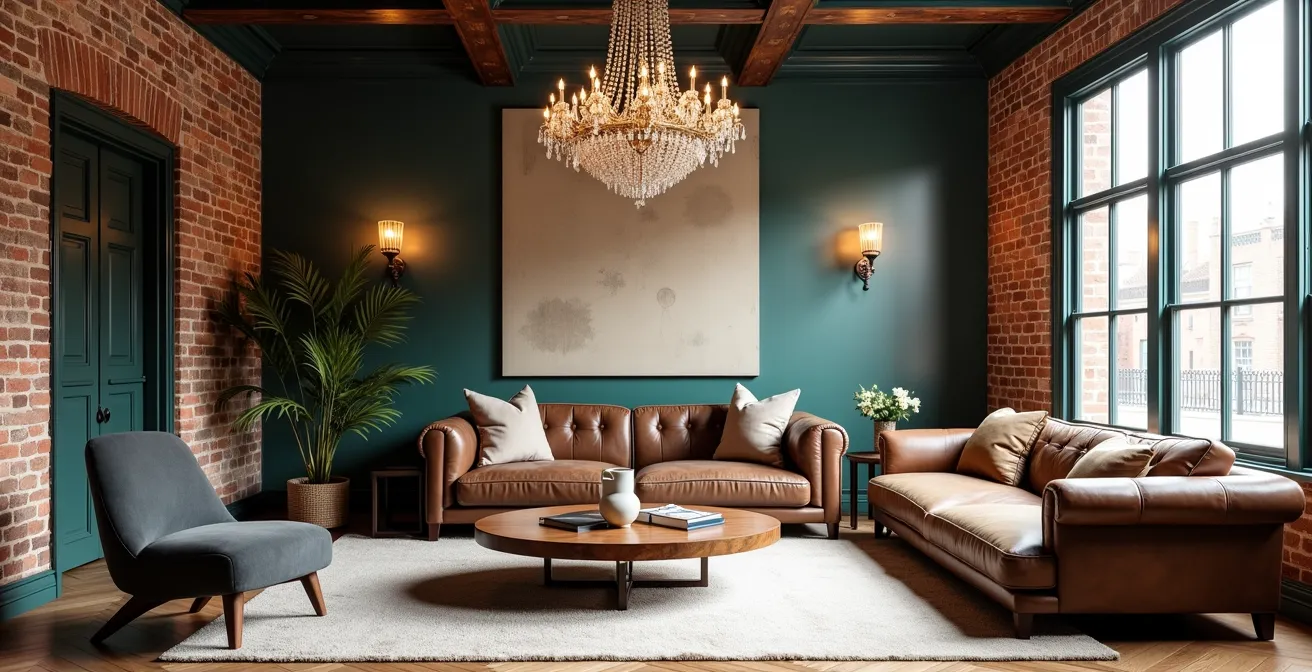
The highest long-term home value comes not from mimicking a specific era, but from adopting the historical principles of authenticity, community-focused layouts, and structural honesty.
- Timeless materials (hardwood, brick) and structural features consistently outperform trendy finishes in 10-year value retention.
- Modern buyers are paying a premium for “broken-plan” spaces and features that foster social connection, signaling a shift away from purely open-concept living.
Recommendation: Focus renovations on revealing a home’s authentic character and improving its functional layout, rather than chasing short-lived aesthetic trends.
For any property investor or homeowner planning a renovation, the central question is always the same: which changes will deliver the highest return on investment? The market is saturated with advice, often pointing towards replicating the clean lines of Mid-Century Modern or the broad appeal of neutral, minimalist palettes. While these strategies have their place, they often overlook a more powerful driver of value. The most profitable approach isn’t about copying a specific look, but about understanding the *why* behind enduring design principles.
The true financial leverage lies in identifying historical design elements that solve distinctly modern problems—such as digital-age isolation, a craving for authenticity, and the need for functional, multi-use spaces. This is where concepts like structural honesty and emotional premium become critical metrics for analysis. An exposed brick wall or a well-conceived social space isn’t just an aesthetic choice; it’s a feature that meets a deep-seated psychological need in today’s buyers, and they are willing to pay for it.
This analysis moves beyond surface-level trends to dissect the historical features that generate quantifiable value in the current market. We will explore why certain elements are making a comeback, how to blend old and new without devaluing your asset, and how to differentiate between a fleeting fad and a timeless investment. The goal is to equip you with an analytical framework to make renovation decisions that are not only beautiful but, more importantly, profitable for years to come.
This article provides a detailed breakdown of the historical design principles that impact resale value. We will examine specific features, from 1970s social spaces to Victorian architectural details, and analyze their relevance and ROI in today’s property market.
Summary: Which Interior Design Eras Influence Modern Home Value the Most?
- Why 1970s Conversation Pits Are Making a Comeback in 2024?
- How to Blend Victorian Features with Modern Minimalism Without Clashing?
- Timeless Design vs Trendy Fads: Which Renovations Hold Value Over 10 Years?
- The Open-Plan Mistake That History Predicts We Will Regret
- When to Update Your Interiors: The 7-Year Cycle of Design Relevance
- Why Your Green Oak Frame Cracks and Shrikes in the First 2 Years?
- Why Exposed Brick Walls Create Emotional Connection to History?
- Structural Integrity: How to Spot Dangerous Cracks Before Buying a Fixer-Upper?
Why 1970s Conversation Pits Are Making a Comeback in 2024?
The resurgence of the 1970s conversation pit is not driven by nostalgia alone, but by its powerful solution to a modern-day problem: social disconnection in an increasingly digital world. These sunken living areas physically bring people together, fostering intimacy and face-to-face interaction by design. For property investors, understanding this functional appeal is key. The 2024 revival, however, is far more sophisticated than its shag-carpeted predecessor, focusing on modularity and safety to mitigate concerns about resale value.
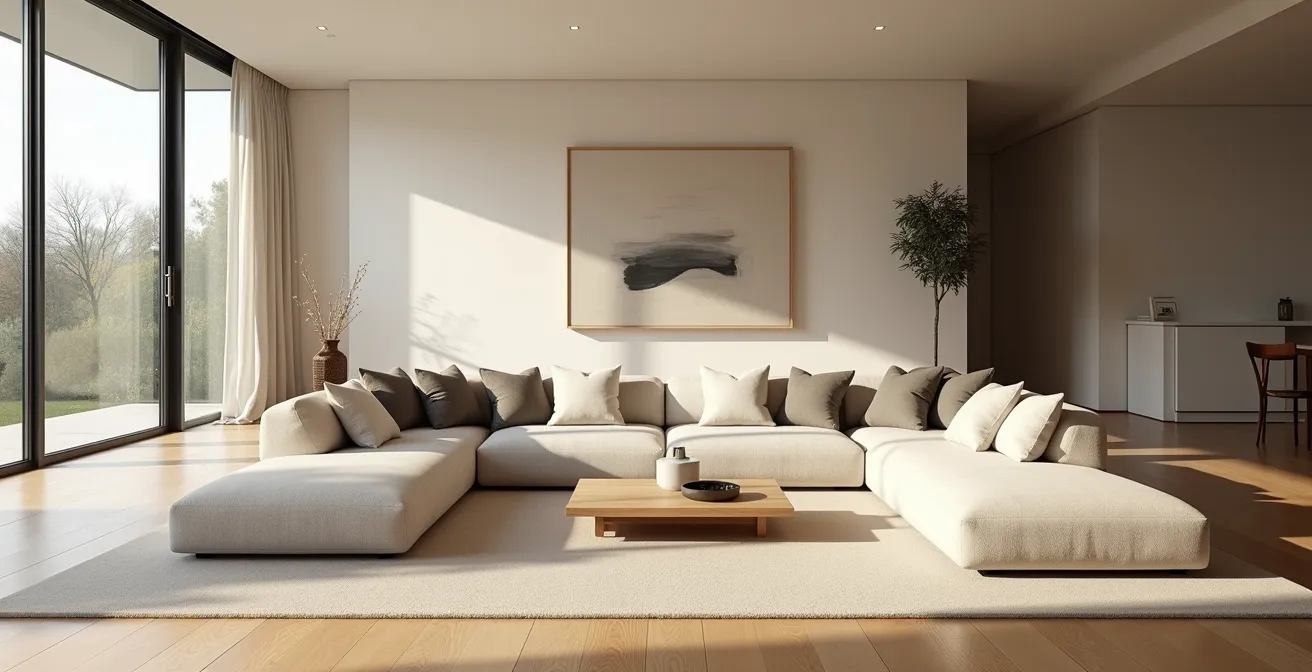
As this contemporary interpretation shows, modern pits often feature subtle drops of just 6-8 inches and use high-end, modular furniture to create the effect without permanent, costly structural changes. This approach captures the social benefit while offering flexibility that appeals to a broader market. However, investors should be aware of the costs; a 2025 analysis shows that creating a true sunken living room requires structural modifications costing between $25,000 and $50,000. This makes the modular, “pit-effect” approach a more financially prudent strategy for maximizing ROI.
How to Blend Victorian Features with Modern Minimalism Without Clashing?
Successfully merging ornate Victorian architecture with stark modern minimalism presents a significant opportunity to add unique character and value to a property. The key is not to create a halfway compromise, but a deliberate and confident juxtaposition. As interior designer Merav Frenkel notes, “The challenge and beauty of Modern Victorian design lie in harmoniously integrating these historical elements with the sleek, minimalist designs of modern styles.” The most effective strategy is to treat the space as a minimalist gallery where the Victorian features are the curated art pieces.
This is best achieved through the 80/20 Juxtaposition Principle. By dedicating 80% of the visual space to a clean, minimalist canvas—neutral walls, simple flooring, unadorned furniture—the remaining 20% of ornate features like an original fireplace, intricate crown molding, or a dramatic bay window are elevated, not diluted. This creates a powerful dialogue between eras. The bridge between them is often built with materials: using modern finishes like matte black or brushed brass on classic forms connects the two styles without conflict. Maximizing natural light by keeping tall Victorian windows uncluttered further enhances this blend, making the space feel both grand and modern.
Your Action Plan: The 80/20 Juxtaposition Principle
- Establish the Canvas: Keep 80% of the space as a minimalist foundation with neutral walls, simple floors, and clean-lined furniture.
- Select the Artwork: Allow 20% of the space for ornate Victorian features to stand as deliberate art pieces, such as a fireplace, crown molding, or a bay window.
- Bridge the Eras: Use material continuity to connect styles, applying modern finishes (e.g., matte black, brushed brass) to classic Victorian forms or hardware.
- Light Strategically: Employ modern lighting fixtures that highlight and complement the Victorian architecture without competing with it.
- Maximize Assets: Leverage Victorian features like high ceilings and large windows by keeping surrounding areas uncluttered to enhance the sense of space and light.
Timeless Design vs Trendy Fads: Which Renovations Hold Value Over 10 Years?
For a property investor, the distinction between a trend and a timeless feature is the difference between a short-term gain and a long-term asset. While the market can be tempting, with house flipping investors achieving an average 25.1% net return in Q2 2025, sustainable value is built on durable choices. Trendy elements, like busy patterned cement tiles, may capture attention for a season but often see their value plummet as tastes change, resulting in poor long-term retention. In contrast, timeless renovations focus on quality, function, and authentic materials that transcend fleeting styles.
This is evident when analyzing renovation ROI over a decade. While a full open-plan conversion may yield a 70% return initially, its value can be volatile. The real long-term winners are upgrades rooted in quality and durability. This detailed comparison from a 2025 analysis clearly illustrates the divide between fleeting trends and lasting investments.
| Renovation Type | Category | Average ROI | 10-Year Value Retention |
|---|---|---|---|
| Garage Door Replacement | Timeless | 194% | Excellent |
| Hardwood Floor Restoration | Timeless | 70-80% | Excellent |
| Energy-Efficient Windows | Timeless | 72.3% | Good |
| Trendy Patterned Cement Tile | Fad | 40% | Poor |
| Open Floor Plan Conversion | Mixed | 70% | Moderate |
The data from this recent real estate analysis shows that investments in a home’s fundamental components, such as restoring original hardwood or upgrading functional elements like a garage door, consistently hold their value. These are choices that signal quality and durability to future buyers, forming the bedrock of a property’s worth.
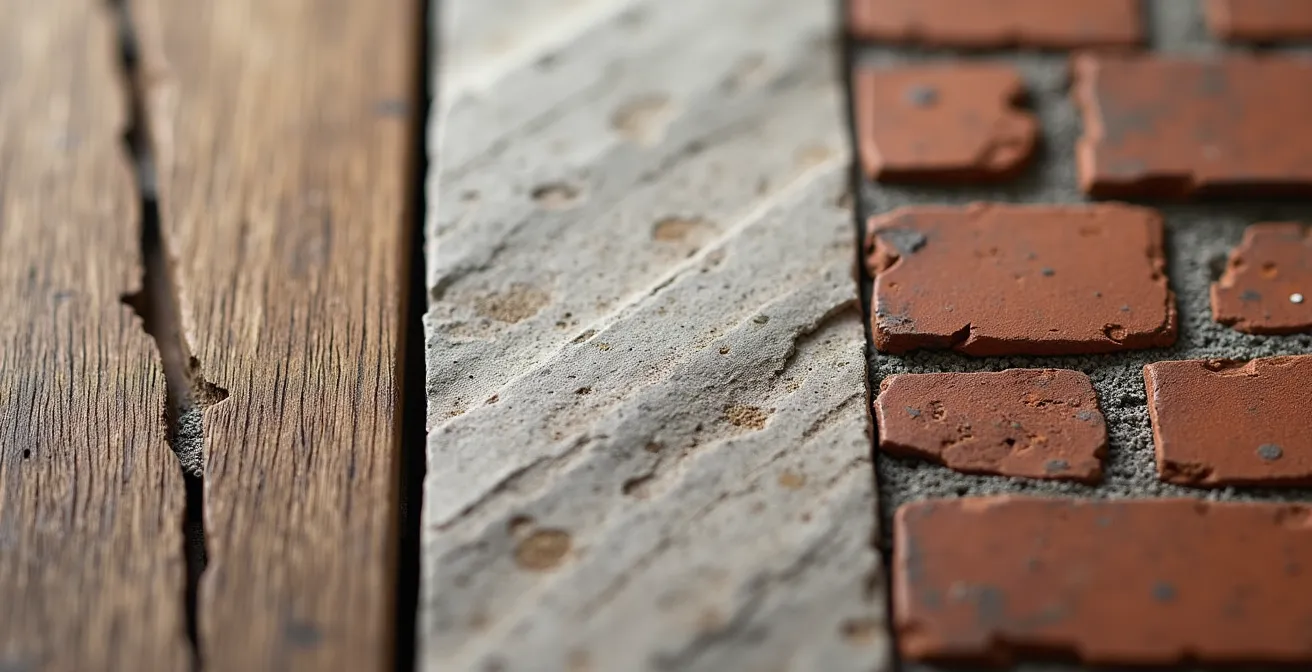
The inherent texture and authenticity of natural materials like wood, stone, and brick, as seen here, create a sense of permanence and quality that manufactured trends cannot replicate. Focusing a renovation budget on these foundational elements is the most reliable strategy for long-term value retention.
The Open-Plan Mistake That History Predicts We Will Regret
For over a decade, the open-plan layout has been the undisputed champion of residential design, with some studies showing that 70% of potential buyers list it as a preference. This has driven countless investors to knock down walls in pursuit of higher resale values. However, a growing body of evidence suggests this trend has peaked, and its functional downsides are becoming increasingly apparent in a post-pandemic world where homes must serve as offices, schools, and sanctuaries. The “big mistake” is assuming that a single, cavernous space suits all aspects of modern life.
The drawbacks are practical and significant: a lack of privacy for remote work, rampant noise transmission, and inefficient energy use. As real estate analyst Damon Michels points out, “Smaller, enclosed spaces are generally more energy-efficient, as heating or cooling can be localized to specific rooms.” This has given rise to the “broken-plan” concept, which offers a more nuanced solution. It maintains the sense of light and flow with features like glass partitions, half-walls, or strategic furniture placement, while reintroducing much-needed zones for privacy and quiet. This approach represents the next evolution in layout design, offering the best of both worlds and appealing to buyers who now demand more functionality from their homes.
When to Update Your Interiors: The 7-Year Cycle of Design Relevance
For investors, timing is everything. Knowing when to update an interior is as important as knowing what to update. Chasing every new trend is a recipe for financial loss, while letting a property become dated can equally erode its value. A strategic approach involves understanding the different “layers” of design and their distinct lifecycles. Not all elements of a home become obsolete at the same pace, and allocating renovation budgets accordingly is the key to maximizing ROI in a market that is constantly evolving.
The interior design industry itself is a dynamic economic force; the global interior design market is projected to grow at a 4.3% CAGR from 2025 to 2030. To navigate this, it’s useful to think in terms of a three-tiered system of obsolescence. This framework helps prioritize spending and protect a property’s core value.
Your Audit Checklist: The Design Layer Obsolescence Timeline
- Tier 1 (Update every 2-5 years): Assess fast-moving, trend-sensitive elements. These are your low-cost, high-impact items like textiles (cushions, throws), paint colors, and small decorative objects. They should be easily and inexpensively replaceable to keep the property feeling current.
- Tier 2 (Replace every 7-15 years): Evaluate mid-investment items that balance style with function. This includes appliances, lighting fixtures, and trend-specific finishes like backsplash tiles. These items define a home’s “era” and typically follow a 7-to-15-year cycle of relevance.
- Tier 3 (Maintain for 30+ years): Protect the timeless foundation of the home. This tier includes original layouts, quality windows, classic flooring (like hardwood), and core structural materials. These are the home’s greatest assets and should be preserved and maintained, not replaced.
Why Your Green Oak Frame Cracks and Shrikes in the First 2 Years?
For homeowners and investors with a new green oak-framed structure, the initial years can be alarming. The wood, which was milled and installed with a high moisture content, will begin to dry and acclimate to its new environment. This natural process causes the timber to shrink, leading to the development of cracks (known as “checks”) and loud, sudden noises or “shrieks.” This is not a sign of a structural defect; on the contrary, it is the hallmark of an authentic, living material finding its final form.
The science is straightforward: as the water molecules leave the wood fibers, the timber contracts, primarily across its width. This differential shrinkage creates internal stresses that are released in the form of splits and cracks. The process is most dramatic in the first 1-2 years and will gradually slow as the wood reaches equilibrium with the ambient humidity. From an investment perspective, this phenomenon should be framed as a positive. It is a tangible expression of structural honesty—a key principle that resonates with buyers seeking authenticity. Rather than a flaw to be hidden, the cracks and character marks are proof of genuine, traditional craftsmanship, adding a unique story and patina to the property that manufactured materials can never replicate.
Key Takeaways
- Authenticity Sells: Features that reveal a home’s history and material honesty (exposed brick, aged wood) create a quantifiable “emotional premium.”
- Function Over Form: Design elements that solve modern lifestyle problems (e.g., creating social zones or private nooks) have greater value retention than purely aesthetic trends.
- Invest in the Core: Focus renovation budgets on timeless structural elements and materials; use easily replaceable items like textiles and paint for trendy accents.
Why Exposed Brick Walls Create Emotional Connection to History?
An exposed brick wall does more than add texture to a room; it serves as a powerful narrative device that connects a modern living space to its historical roots. This element of “biophilic storytelling” taps into a fundamental human desire for authenticity and permanence in an often sterile, digital world. For a potential buyer, it offers a tangible link to the building’s past, whether it’s an industrial loft or a Victorian townhouse. This connection is not merely sentimental—it has a measurable impact on property value. A recent market analysis reveals that real estate listings in major cities that feature “exposed brick” consistently command a 5-10% price premium, quantifying this emotional appeal into a clear financial gain.
However, for an investor, it’s crucial to distinguish between authenticity and imitation. The value lies in genuine, structural brick that tells the building’s true story. Decorative brick veneer, while cheaper to install, is merely a cosmetic layer and does not command the same premium. This comparison highlights the trade-offs in terms of cost, long-term value, and maintenance.
| Feature | Authentic Structural Brick | Decorative Brick Veneer |
|---|---|---|
| Installation Cost | $15-25 per sq ft | $8-12 per sq ft |
| Long-term Value | High – tells building’s true story | Moderate – decorative only |
| Maintenance | Repointing every 20-30 years | Minimal maintenance |
| Insulation Issues | Poor – requires additional insulation | Better – modern backing |
| Moisture Risk | High – can wick moisture | Low – sealed installation |
Choosing to expose and restore authentic brick is an investment in a property’s unique story. While it may present challenges like insulation and moisture management, the significant return in both emotional appeal and financial value makes it a strategic choice for investors aiming for the top of the market.
Structural Integrity: How to Spot Dangerous Cracks Before Buying a Fixer-Upper?
For any investor eyeing a fixer-upper, the single greatest financial risk lies hidden within the walls. Cosmetic flaws are easily fixed, but structural defects can turn a promising investment into a financial black hole. With the median sales price for U.S. homes reaching $410,800 in Q2 2025, the stakes are too high to overlook potential red flags. The ability to differentiate between benign cosmetic settling and a dangerous structural crack is a non-negotiable skill. A trained eye can spot the tell-tale signs of foundation movement or structural failure, saving tens or even hundreds of thousands of dollars in unforeseen repairs.
While a professional structural engineer’s report is always the final word, every investor should be equipped with a basic diagnostic toolkit. The location, direction, and width of a crack are all critical data points that tell a story about the forces acting on the building. Mastering a few key rules can help you quickly assess the potential severity of an issue during an initial walkthrough, allowing you to decide whether to proceed with a more in-depth, costly inspection or walk away from the deal entirely.
Your Field Guide: The 45-Degree Rule for Identifying Structural Cracks
- Identify Crack Angle: Be vigilant for cracks running diagonally at approximately 45 degrees, especially near the corners of doors and windows. These are classic indicators of structural movement or foundation settling.
- Check Crack Width: Carry a small ruler or coin for reference. Any crack wider than 5mm (about 1/4 inch) is a significant red flag that requires immediate professional assessment.
- Examine Crack Pattern: Look for “step-cracks” that follow the mortar lines in brickwork or block walls. This pattern almost always indicates foundation movement or failure.
- Differentiate Settling vs. Structural: Thin, straight vertical or horizontal cracks that follow drywall seams or masonry joints are often due to normal, cosmetic settling and are less concerning.
- Document Crack Progression: If you have the opportunity for a second viewing, mark the ends of a suspicious crack with a pencil and date it. This allows you to monitor if the crack is actively growing, which signals an ongoing problem.
Armed with this analytical framework, your next step is to critically evaluate your property’s inherent character and market demands. Begin applying these principles to identify renovations that promise not just a fleeting profit, but lasting, defensible value.