Furniture & Accessories
Your furniture and accessories shape more than just the aesthetics of your home—they directly influence your physical health, mental well-being, and how effectively your space serves your daily needs. From the height of a pendant light affecting your concentration to the chair that either supports or strains your spine, every choice creates a ripple effect through your comfort and lifestyle. Understanding these connections transforms furniture selection from a decorative decision into a strategic investment in your quality of life.
This comprehensive resource explores the critical aspects of furnishing your space thoughtfully. Whether you’re navigating ergonomic principles to prevent injury, selecting durable materials that withstand active households, or maximizing compact living areas with versatile pieces, the knowledge here empowers you to make informed decisions. You’ll discover how lighting functions as furniture, why modular designs offer exceptional value, and how natural fibers contribute to year-round comfort.
Lighting as Furniture: Creating Atmosphere and Function
Lighting fixtures, particularly suspension lights, occupy physical and psychological space in ways that rival traditional furniture. Their placement determines not just illumination levels, but how your brain processes the environment and maintains focus during tasks.
Suspension Height and Psychological Impact
The vertical positioning of overhead lighting creates distinct psychological effects. Lower suspension heights—typically 28 to 34 inches above a dining table—create intimacy and focus by concentrating light downward, making the illuminated area feel like a defined zone separate from surrounding spaces. This works like a spotlight on a stage, naturally drawing attention and encouraging conversation within that circle.
Conversely, higher fixtures disperse light more broadly, making rooms feel expansive but potentially less focused. For workspaces where concentration matters, a slightly lower position (without causing glare) helps the brain delineate “task zones” from relaxation areas, improving productivity through environmental cues.
Sizing and Quantity Considerations
Determining appropriate fixture size follows a practical formula: add your room’s length and width in feet, then convert that sum to inches for the fixture diameter. A 12-foot by 14-foot room suggests a 26-inch diameter fixture as a starting point. However, this guideline requires adjustment based on ceiling height and the fixture’s visual weight.
Multiple smaller fixtures often outperform single large ones for several reasons:
- Distributed light sources reduce harsh shadows and create more even illumination
- Flexibility in arrangement allows customization for specific activities or furniture layouts
- Individual control enables varied ambiance settings throughout the day
- Visual interest through repetition adds architectural rhythm to plain ceilings
Avoiding Glare and Visual Fatigue
Glare occurs when brightness contrast between a light source and its surroundings exceeds your eye’s comfortable adaptation range—similar to stepping from a dark theater into bright sunlight. For suspension lights, this manifests as eye strain and headaches when bare bulbs sit within your direct line of sight during typical activities.
Effective solutions include diffusing shades, positioning fixtures outside primary sight lines, and using dimmers to adjust intensity throughout the day. Installation timing matters: test fixture positions with temporary setups before permanent mounting, ideally during the hours you’ll actually use the space, to identify problematic glare angles you might miss during daytime installation.
Ergonomic Furniture for Long-Term Health
Furniture designed without ergonomic consideration forces your body into compromises that accumulate as chronic pain and structural problems. Understanding the biomechanics involved transforms furniture from passive objects into active health interventions.
Understanding Spine Mechanics
Your spine functions like a flexible column of stacked blocks, maintained in proper alignment by muscles that fatigue when forced to work continuously. Furniture that requires constant muscular effort to maintain posture—such as seats without lumbar support or desks at incorrect heights—creates the equivalent of holding a yoga pose for eight hours. The inevitable muscle fatigue leads to slumping, which then transfers load to spinal discs and ligaments never designed for sustained compression.
Proper furniture allows your skeleton, rather than your muscles, to bear your weight. This explains why a well-designed chair feels “effortless” even after hours, while a poor one leaves you exhausted despite sitting still.
Proper Adjustment Techniques
Even ergonomically excellent furniture fails when incorrectly adjusted. Follow this sequence for office seating:
- Adjust seat height so feet rest flat with thighs parallel to the floor
- Position lumbar support at belt level, matching your spine’s natural inward curve
- Set armrests so shoulders remain relaxed, not elevated or slumped
- Confirm 2-3 finger width between seat edge and the back of your knees
- Angle the seat pan slightly forward (1-3 degrees) to reduce tailbone pressure
Many people never adjust beyond seat height, leaving the other mechanisms ineffective. Think of these adjustments like tuning a musical instrument—each element affects the others, and the goal is harmonious alignment rather than individual “correct” settings.
Active Seating Alternatives
Active sitting options—balance stools, kneeling chairs, or exercise ball seats—engage core muscles and prevent the complete stillness that causes stiffness. However, they work best as supplements rather than replacements for traditional ergonomic chairs. Alternating between seated positions throughout the day mimics natural movement variability, preventing any single posture from causing overuse strain.
Monitor placement deserves equal attention: the top of your screen should align with or slightly below eye level, positioned an arm’s length away. This prevents the forward head posture that strains neck muscles and contributes to headaches.
Adaptable Furniture for Evolving Spaces
Life circumstances shift—household size changes, work-from-home becomes permanent, hobbies evolve—and furniture that adapts to these transitions offers exceptional long-term value compared to single-purpose pieces requiring complete replacement.
Modular Design Benefits
Modular furniture functions like building blocks, allowing reconfiguration without purchasing new pieces. A sectional sofa that separates into individual seats can transform from party-hosting configuration to intimate conversation groupings to space-saving alignment against walls. This flexibility matters particularly for renters who move between different room dimensions or homeowners whose functional needs shift over time.
Beyond spatial arrangement, modularity enables phased purchasing. Starting with core components and adding sections as budget allows spreads costs while maintaining design cohesion—a strategy impossible with traditional matched sets requiring complete purchase.
Quality Connectors and Hardware
The adaptability value of modular furniture hinges entirely on connector durability. Poor-quality hardware loosens with each reconfiguration, eventually failing to hold sections securely. Look for metal connectors with positive locking mechanisms rather than simple friction fittings. Threaded inserts embedded in solid wood frames far outlast surface-mounted brackets attached to particleboard.
Test floor models if possible: connect and disconnect sections several times. Quality connectors operate smoothly without requiring force, yet hold firmly without movement. Stiff or loose connections on new furniture will only worsen with use.
Upgrade Pathways and Compatibility
Consider whether manufacturers offer compatible expansion pieces or whether the design follows standard dimensions allowing third-party additions. Proprietary systems with discontinued lines trap you into the secondary market for matching pieces. Conversely, furniture using standard measurements—like cube storage systems in consistent increments—enables mixing manufacturers and finding replacements indefinitely.
Fabric matching presents challenges when adding sections years later. Photographing current upholstery in natural light and keeping fabric samples helps matching during future additions, though expecting perfect matches becomes unrealistic. Embracing intentional variation through complementary rather than identical fabrics often creates more sophisticated results than forced matching of aged textiles.
Maintaining Quality in Active Households
Luxury or high-quality furniture requires different maintenance strategies in homes with children, pets, or high traffic compared to showroom conditions. Proper selection and preventative care extend lifespan dramatically while maintaining appearance.
Fabric Selection for Durability
Fabric durability relies on fiber content, weave tightness, and finish treatments rather than appearance or price alone. Synthetic fibers like polyester or nylon resist staining and wear better than natural fabrics in active settings, while blends balance durability with the breathability and comfort of natural materials.
The Martindale rub test measures abrasion resistance: upholstery rated above 25,000 cycles suits residential use, while 30,000+ handles heavy use. Leather offers different trade-offs—it resists stains and pet hair better than fabric but shows scratches more readily. Choosing colors with slight patterns or texture camouflages minor wear better than solid, saturated hues that highlight every mark.
Managing Pet Hair and Spills
Pet hair interaction with fabric depends on weave structure more than fiber type. Tight, smooth weaves release hair easily during vacuuming, while loose, textured fabrics trap hair within the weave. Velvet and similar pile fabrics create the worst scenario, essentially functioning like Velcro for pet fur.
For spill management, speed matters more than technique. Blotting immediately—before liquids penetrate to padding or frame—prevents 90% of permanent staining. Keep cleaning supplies accessible rather than stored away, since the delay in retrieving products allows stains to set. Water-based spills respond to simple blotting, while oil-based substances need solvent-based cleaners appropriate to your fabric type.
Preventative Care Routines
Establishing a maintenance schedule prevents minor issues from becoming expensive repairs:
- Weekly: Vacuum upholstery using brush attachments to remove dust before it embeds in fabric
- Monthly: Check and tighten hardware connections, rotate cushions to distribute wear
- Seasonally: Deep clean with appropriate methods for fabric type, condition leather
- Annually: Professional cleaning for high-value pieces, reapply fabric protection treatments
Crushing and bruising of cushion fill, while inevitable, can be minimized through regular fluffing and rotation. Quality foam regains shape when pressure releases, but constant compression in the same location eventually creates permanent deformation. Distributing use across all cushion areas extends the timeline before replacement becomes necessary.
Maximizing Small Spaces with Versatile Pieces
Compact living demands furniture that serves multiple functions without sacrificing safety or stability. The challenge lies in finding pieces that genuinely excel at each function rather than compromising all of them.
Multi-Functional Design Elements
Effective versatile furniture performs each function fully rather than offering partial solutions. A coffee table that rises to dining height should provide stable eating surface and comfortable leg clearance—not just technically transform while remaining awkward to use. Similarly, storage ottomans should offer substantial storage volume and comfortable seating, not minimal space accessed through inconvenient mechanisms.
Evaluate material durability for each intended use. A bench serving as both seating and entryway shoe storage requires moisture-resistant finishes for the foot-contact areas and cleanable upholstery for the seating portion. Pieces designed for single purposes often fail quickly when repurposed because materials weren’t selected for alternate stresses.
Safety and Stability Requirements
Transforming furniture introduces safety considerations absent in static pieces. Folding elements require hinge mechanisms with positive locks preventing accidental collapse during use. Drop-leaf tables need supports that extend automatically rather than requiring separate deployment, reducing the risk of setting items on unsupported surfaces.
Stability becomes critical when furniture serves different functions with varying weight distributions. A bookshelf that converts to a desk must remain stable whether loaded with books vertically or experiencing the lateral forces from someone leaning while writing. Look for wide footprints relative to height and wall-attachment options for tall pieces, regardless of manufacturer claims about freestanding stability.
Shape optimization affects both function and safety. Rounded corners on multi-purpose pieces reduce injury risk in tight spaces where people navigate around furniture in different configurations. Smooth-operating mechanisms without pinch points matter particularly in households with children who help with transformations.
Natural Fiber Benefits and Quality Assessment
Natural fiber upholstery and textiles offer distinct advantages for comfort and environmental impact, but quality varies dramatically within categories like cotton, linen, or wool. Understanding assessment criteria prevents paying premium prices for inferior products.
Thermal Comfort Properties
Natural fibers regulate temperature through moisture management and air circulation rather than insulation alone. Cotton and linen absorb moisture vapor from skin, then release it to the environment, preventing the clammy feeling synthetic fabrics create during warm weather. Wool performs this function across wider temperature ranges, providing warmth in winter while remaining breathable in summer—functioning similarly to high-performance athletic fabrics but without chemical treatments.
This thermal regulation becomes noticeable during extended contact with upholstered furniture. After sitting for an hour, natural fiber seating maintains comfort while synthetic upholstery often feels too warm. The effect intensifies in climates with high humidity, where moisture vapor management significantly impacts perceived comfort.
Identifying Quality Construction
Weave tightness indicates quality and durability in natural fiber textiles. Hold fabric samples to light—minimal light transmission suggests tight weaves that resist wear and pilling. Thread count, while meaningful, matters less than the quality of fibers used; loosely twisted, short-staple cotton woven to high thread counts wears worse than tightly twisted, long-staple fibers in moderate counts.
For upholstery specifically, examine backing materials and attachment methods. Quality natural fiber upholstery uses substantial backing fabrics and tight upholstery techniques that prevent sagging. The fabric should feel dense and substantial, not thin or loosely structured. Press firmly against upholstered areas—quality construction resists showing individual fingers or revealing frame components through the padding.
Managing Wrinkles and Reupholstery Timing
Natural fibers wrinkle more readily than synthetics due to their molecular structure, which is a feature rather than a defect. These wrinkles indicate the same flexibility that provides comfort and breathability. Linen particularly develops characteristic relaxed wrinkling that many consider part of its aesthetic appeal. If wrinkle-free appearance matters critically, consider natural-synthetic blends that retain some performance benefits while minimizing creasing.
Reupholstery becomes worthwhile when frame quality exceeds fabric condition. Solid hardwood frames justify reupholstery costs, while particleboard or low-quality construction rarely does. Signs indicating reupholstery timing include fabric wear exposing backing or padding, permanent staining despite cleaning, or outdated styling on otherwise excellent frames. Quality natural fiber fabrics typically show 10-15 years of service under normal residential use before requiring replacement, making the timing decision less frequent than with lower-grade materials.
Understanding these interconnected aspects of furniture and accessories empowers you to create spaces that serve your practical needs while supporting health and adapting to life changes. Whether prioritizing ergonomic support, maintenance simplicity, or material sustainability, informed choices generate value that extends far beyond initial purchase decisions. As you explore specific furniture types and accessories, these foundational principles guide evaluation criteria and help identify which features matter most for your particular circumstances.

Why Is High-Quality Linen Upholstery Worth the Investment for Summer Homes?
Choosing premium linen upholstery for a seasonal residence is less about aesthetics and more about investing in superior material science for unparalleled comfort in warm climates. Linen’s unique hollow-fiber structure actively manages heat and moisture, providing a tangible cooling effect…
Read more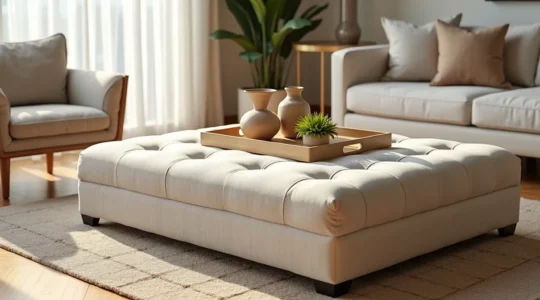
How to Choose Multifunctional Ottomans That Serve as Coffee Tables and Guest Seating?
The perfect multifunctional ottoman for a micro-apartment isn’t about finding one piece that does everything, but understanding the hidden trade-offs in stability, space, and usability to maximize your return on investment. Firmness is non-negotiable for a coffee table function; look…
Read more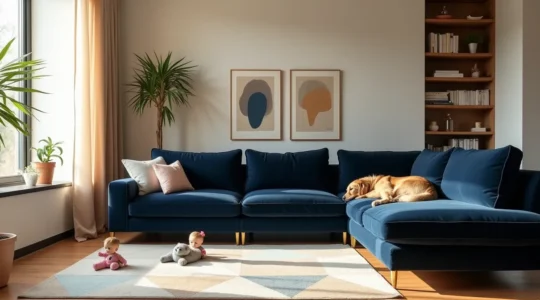
Are Velvet Sofas Practical With Pets and Kids? The Durability Expert’s Verdict
Contrary to popular belief, a velvet sofa is not a liability in a home with pets and children; it’s a strategic choice, thanks to its unique material science. The tight, loop-free weave resists pet claws and makes fur easy to…
Read more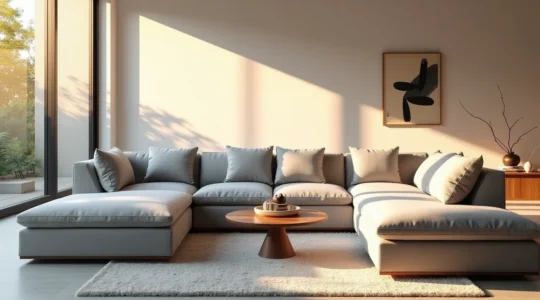
Modular Seating vs. Fixed Sofas: Which Delivers a Better Long-Term ROI for the Modern Host?
A fixed sofa is a depreciating liability tied to a single space; a modular sofa is a flexible asset with a quantifiable lifecycle value that adapts to your life. It eliminates costly replacement cycles driven by moving or family growth,…
Read more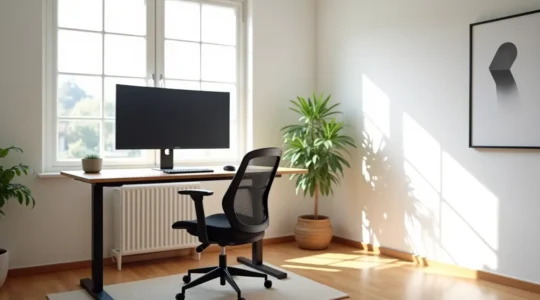
The Hidden Dangers of Your Home Office: An Ergonomic Guide to Pain-Free Remote Work
The persistent pain from remote work isn’t a sign you need a more expensive chair; it’s a symptom of a fundamental biomechanical mismatch between your body and your workspace. Most pain originates from a “postural cascade” where one poor adjustment…
Read more
How to Position Pendant Lighting Over a Dining Table for Perfect Ambiance?
Perfect dining ambiance isn’t about following rigid height and width rules; it’s about sculpting a ‘cone of intimacy’ with light that encourages connection and transforms the dining experience. The height of a pendant light dictates the psychological boundary of your…
Read more