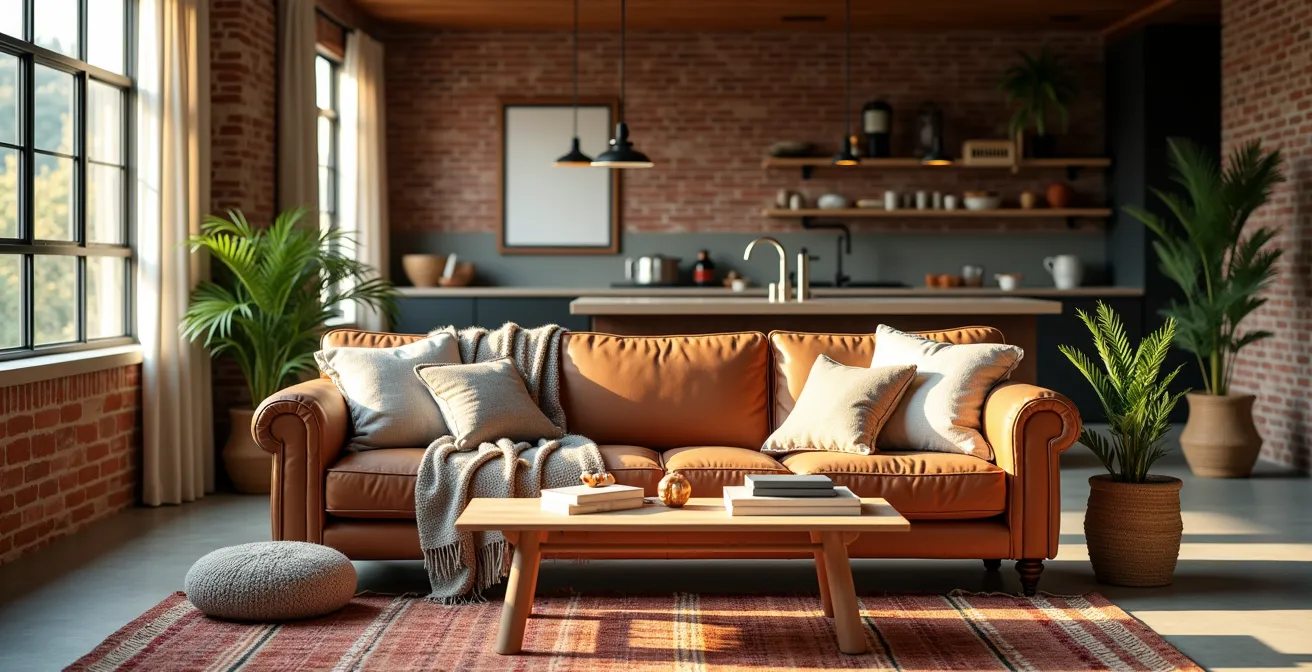
Contrary to popular belief, softening an industrial home isn’t about hiding its raw character, but about choreographing a sensory dialogue between hard and soft elements.
- Embrace materials like brick and wood not just for their look, but for their ability to tell a story and develop a “living patina” that reflects family life.
- Solve practical family issues like acoustics and dust with strategic, built-in solutions, not just decorative cover-ups.
Recommendation: Focus on “material zoning”—using warm, tactile materials for high-contact family areas (like tabletops and play-area floors) while reserving cold materials for visual structure.
The allure of industrial design—its soaring ceilings, exposed brick, and honest materials—is undeniable. For many families drawn to converted lofts and modern builds, it promises space and character. Yet, the very elements that define its strength can become its weakness in a family context. The vastness can feel cold, the hard surfaces can amplify every sound, and the raw finishes can seem unforgiving. The common advice is to simply pile on soft furnishings, effectively covering up the very soul of the space. This approach often leads to a home that feels disjointed, neither truly industrial nor genuinely cozy.
The real challenge isn’t to fight against the industrial grit, but to work with it. The secret to a warm, family-friendly industrial home lies in creating a deliberate and thoughtful sensory dialogue. It’s about understanding how the cool, rough texture of a 100-year-old brick wall can be enhanced by the plushness of a velvet sofa, how the visual weight of a steel beam can be balanced by the organic warmth of pale oak, and how the echo of a child’s laughter can be softened into a pleasant hum. This is less about decoration and more about architectural empathy—designing for the touch, the sound, and the feeling of a space, not just its appearance.
This guide moves beyond the superficial fixes. We will explore how to make strategic choices about materials, acoustics, and lighting to create an environment that is both aesthetically striking and deeply comfortable. It’s about transforming a raw space into a true family sanctuary, where history and modernity, grit and comfort, coexist in perfect harmony.
For those who prefer a visual summary, the following video outlines some of the key features and tips for mastering the industrial style in a living room context.
This article will guide you through the core strategies for achieving this balance. We will delve into the emotional power of raw materials, the practicalities of making them family-proof, and the nuanced decisions that turn a cold loft into a warm home.
Contents: How to Create a Warm and Functional Industrial Family Home
- Why Exposed Brick Walls Create Emotional Connection to History?
- How to Seal Exposed Brick to Prevent Dusting Without Altering the Look?
- Metal vs Wood: What Ratio Creates the Perfect Industrial Warmth?
- The Echo Chamber Problem in Industrial Lofts (And How to Fix It)
- How to Use High-Pile Rugs to Contrast Concrete Floors?
- Pale Oak vs Walnut: Which Wood Tone Warms Up White Walls Best?
- How to Calculate the Ideal Pendant Diameter Based on Table Width?
- Green Oak vs Kiln-Dried: Which Frame Type Is Best for a Modern Extension?
Why Exposed Brick Walls Create Emotional Connection to History?
An exposed brick wall is more than just a design feature; it’s a psychological anchor. In a family home, it serves as a tangible link to the past, its weathered surface telling a story that predates the family’s own. Each crack, color variation, and timeworn imperfection adds a layer of authenticity and character that newly constructed walls can’t replicate. This sense of history provides a grounding feeling of stability and permanence, a subtle but powerful comfort in the fast-paced modern world. Rather than viewing scuffs from daily life as damage, they can be reframed as the family adding its own chapter to the wall’s long history—a concept we call “living patina.”
This connection isn’t just visual. The raw, earthy texture invites touch, creating a multi-sensory experience that contrasts with the smooth, sterile surfaces of modern technology. By positioning a brick wall as a backdrop for family photos or children’s artwork, you merge your personal history with the architectural heritage of the building. This juxtaposition elevates the wall from a mere surface to a family storyboard, a silent witness to the life unfolding around it. It embraces the idea of wabi-sabi—finding beauty in imperfection—which aligns perfectly with the beautiful, messy reality of family life.
Case Study: Cozy Industrial Home in North London
A double-fronted Edwardian house in North London perfectly illustrates this principle. The design successfully marries industrial elements with cozy family living by creating powerful juxtapositions. In the living room, a deep velvet sofa is set against raw concrete and stone surfaces, while a 150-year-old oak bench serves as a shelf. This intentional dialogue between hard and soft, old and new, creates a rich, layered atmosphere. In another corner, Fifties Danish cocktail chairs are placed before a massive slate fireplace, crafting an intimate, mid-century vibe that feels both sophisticated and welcoming, proving that industrial bones can indeed foster a warm family heart.
How to Seal Exposed Brick to Prevent Dusting Without Altering the Look?
While an exposed brick wall offers immense character, it comes with a practical downside: dust. Over time, the brick and mortar can slowly deteriorate, releasing fine particles into the air. This isn’t just a cleaning nuisance; according to research on exposed brick walls, this constant dusting can affect indoor air quality, which is a significant concern for families, especially those with young children or members with respiratory sensitivities. The challenge, therefore, is to stabilize the surface without sacrificing its raw, matte appearance. Applying a sealant is the definitive solution, but choosing the right one is critical to avoid the dreaded “wet” or plastic-like look.
The key is to opt for a penetrating sealant rather than a film-forming one. Products based on silane or siloxane are ideal. They work by soaking into the porous structure of the brick and mortar, bonding the particles together from within. This process effectively stops the dusting and crumbling without creating a visible film on the surface. The result is a fully protected wall that retains its natural, tactile texture and matte finish. Before committing to the entire wall, it’s crucial to perform a patch test in an inconspicuous area. This allows you to see exactly how the sealant interacts with your specific brick and ensure it delivers the invisible protection you’re looking for.
This table compares the most common sealant types, helping you make an informed decision based on your family’s needs for durability, cleanability, and aesthetic integrity.
| Sealant Type | VOC Level | Cleanability | Visual Impact | Durability |
|---|---|---|---|---|
| Penetrating Siloxane | Zero-VOC available | Excellent | Invisible/Matte | 5-10 years |
| Film-forming Acrylic | Low-VOC options | Good | Slight sheen | 3-5 years |
| Natural Wax-based | Zero-VOC | Moderate | Natural patina | 2-3 years |
Metal vs Wood: What Ratio Creates the Perfect Industrial Warmth?
The quintessential industrial palette is a marriage of cold metal and warm wood. Getting the balance right is the secret to a space that feels both authentic and inviting. The common mistake is treating them as equal partners. For a family home, the ratio should be skewed heavily towards wood, governed by a principle of “material zoning by touch.” This strategy dictates that any surface a family member is likely to touch frequently should be made of wood or another warm, natural material. This includes dining tables, chair armrests, cabinetry handles, and flooring in play areas.
Metal, with its cold, hard properties, should be reserved for structural or purely visual elements. Think steel window frames, high shelving, lighting fixtures, and exposed ceiling trusses. By creating this clear hierarchy, you choreograph a sensory experience. The eye appreciates the strong, graphic lines of the metal, but the body interacts primarily with the comforting, forgiving nature of wood. This tactile contrast enhances the perceived warmth of the wooden elements, making them feel even cozier against the industrial backdrop. As interior design expert Kristina from Decoist Magazine notes:
Introducing wood is one of the best ways to contrast the cold feel of the unfinished features. In a room with exposed pipes, wooden furniture will add a touch of coziness. Distressed wood will add a visual touch with its grained texture.
– Kristina, Interior Design Expert, Decoist Interior Design Magazine
This isn’t about a specific 70/30 or 60/40 rule, but a functional philosophy. A home where a child can run their hands along a smooth oak banister while looking out a black steel-framed window is a home that has mastered this dialogue. The grain and imperfections in distressed wood further this cause, adding a visual texture that softens the clean, hard lines of metal and concrete, creating a space that feels layered and lived-in.
The Echo Chamber Problem in Industrial Lofts (And How to Fix It)
One of the most overlooked aspects of softening an industrial space for family life is managing sound. Large volumes, high ceilings, and hard surfaces like concrete, brick, and glass create an acoustic environment ripe for reverberation. In a quiet, minimalist setting, this can be dramatic. In a bustling family home, it becomes an echo chamber where the sound of a dropped toy, a closing door, or overlapping conversations can become a cacophony. Achieving acoustic comfort is not a luxury; it’s essential for a calm and functional domestic space.
Fixing this requires a multi-layered approach that absorbs sound at different levels. Start from the ground up with large, thick rugs. On the walls, consider incorporating fabric panels, large-scale canvas art, or even a floor-to-ceiling bookshelf filled with books, whose varied shapes and paper texture are excellent at diffusing sound waves. For ceilings, suspended acoustic panels made of felt or micro-perforated wood can make a dramatic impact both visually and acoustically. These solutions don’t just dampen noise; they define zones and add textural softness. The effect is significant; a scientific study on acoustic treatments found that adding absorbent panels led to a predicted reduction in reverberation time from 2.4s to 1.4s, creating a noticeably calmer environment.
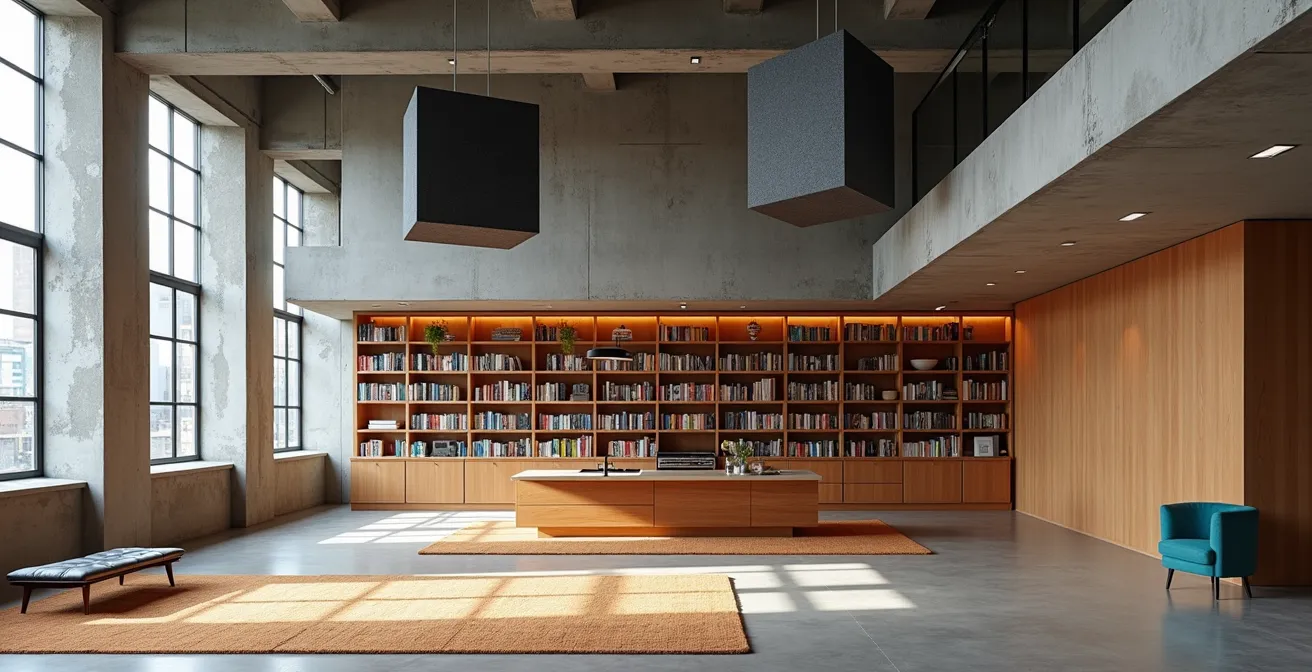
By strategically integrating these sound-absorbing materials, you do more than just quiet the room. You create a sense of intimacy and containment within a large, open space. You transform an echo chamber into a series of comfortable acoustic zones, allowing for a quiet reading corner to coexist peacefully with a lively play area.
How to Use High-Pile Rugs to Contrast Concrete Floors?
A polished concrete floor is a hallmark of industrial style—it’s durable, sleek, and minimalist. However, for a family, its hardness and coldness can be drawbacks, especially with children who spend a lot of time playing on the floor. The solution is not to cover it entirely, but to create a powerful sensory dialogue with high-pile rugs. This isn’t just about adding a soft spot; it’s about creating “islands of softness” that define functional zones and provide dramatic textural contrast.
The key is to be bold with both size and pile height. A small rug will look lost and insignificant in a large loft. Opt for a large rug (at least 8×10 feet) to anchor your main seating area, ensuring at least the front legs of all sofas and chairs are on it. This visually designates the space as a zone for gathering and comfort. For pile height, choose a shag or high-pile rug with a depth of at least 1.5 inches. The feeling of sinking your feet into its plushness after walking on the cool, smooth concrete is a powerful sensory reward that instantly signals comfort and relaxation.
When choosing a rug for a family space, practicality is paramount.
- Material: Wool is a fantastic choice as it’s naturally durable and stain-resistant. For areas prone to spills and heavy wear, polypropylene offers maximum cleanability and is a budget-friendly option.
- Safety: Look for rugs with the CRI Green Label Plus certification, which ensures low VOC emissions, making it a non-toxic choice for floor play.
- Layering: For added depth and practicality, consider layering a smaller, more plush rug over a larger, durable flat-weave. This allows you to add a pop of texture or color that can be easily changed or cleaned.
This strategic use of rugs does more than just warm up a cold floor. It adds a crucial layer of visual interest, acoustic absorption, and, most importantly, a designated zone of pure comfort for the whole family.
Pale Oak vs Walnut: Which Wood Tone Warms Up White Walls Best?
Wood is the primary tool for injecting warmth into an industrial scheme, especially against a stark backdrop of white or grey walls. However, not all woods are created equal. The choice of wood tone—from the light, airy feel of pale oak to the rich, dramatic depth of walnut—profoundly impacts the atmosphere of a room. As Alyssa Gautieri states in Elle Decor, “Contrasting against exposed pipes and industrial metalwork, warm woods can make a space feel more comfortable.” The decision between a light or dark tone should be based on the specific light in your space and the mood you wish to create for your family.
Pale Oak and similar light woods like maple or ash work exceptionally well in spaces with cool, north-facing light. They have a low visual density, which helps a room feel larger, brighter, and more energetic—perfect for morning spaces like kitchens or active family rooms. Their light, Scandinavian feel creates a playful and airy atmosphere that can prevent smaller industrial apartments from feeling too heavy or dark. It’s a choice that speaks of lightness and optimism.
Walnut, on the other hand, brings a sense of gravity and intimacy. Its deep, rich tones create a dramatic and sophisticated contrast against white walls, especially in large lofts with ample warm, south-facing light. Walnut has a high visual density, which helps to define and ground a space, making it feel more contained and intimate. This makes it an excellent choice for evening retreats like a master bedroom, a cozy library nook, or a formal dining area, fostering an atmosphere of calm and groundedness.
The best approach for a multi-functional family space is often to mix tones, using lighter woods for flooring and large furniture pieces and introducing darker woods as accents in shelving or side tables. This creates a layered, dynamic look that is both versatile and visually interesting.
This table breaks down the atmospheric impact of each wood tone, providing a clear guide for choosing the right material to complement your white walls and family lifestyle, based on an analysis of warm industrial styles.
| Wood Type | Light Temperature Match | Family Atmosphere | Visual Density | Best Application |
|---|---|---|---|---|
| Pale Oak | Cool/North-facing light | Light, energetic, playful | Low – space expanding | Small apartments, morning spaces |
| Walnut | Warm/dramatic contrast | Grounded, intimate, calm | High – space defining | Large lofts, evening retreats |
| Mixed Tones | Versatile | Dynamic, layered | Medium | Multi-functional family spaces |
How to Calculate the Ideal Pendant Diameter Based on Table Width?
In an industrial loft with high ceilings, lighting is both a functional necessity and a primary sculptural element. A pendant light over a dining table does more than illuminate; it anchors the space, defines the dining zone, and acts as a focal point. Choosing the wrong size is a common mistake—too small and it gets lost in the volume of the room, too large and it overwhelms the table. Calculating the right diameter is a straightforward process that ensures a perfect balance.
The standard rule of thumb is to choose a pendant with a diameter that is roughly half the width of your table. For example, a 48-inch wide table would call for a 24-inch diameter pendant. However, this formula is for a standard 8-foot ceiling. In a lofty industrial space, you need to account for the extra vertical volume. A good adjustment is to add 1-2 inches to the pendant’s diameter for every additional foot of ceiling height. This ensures the fixture has enough visual weight to feel proportionate to the grander scale of the room.
For family life, a single large pendant might not be the most practical choice for a long dining table that doubles as a homework station. A series of 2-3 smaller pendants can provide more even, distributed light across the entire surface. This approach also allows for a more textured lighting scheme, mixing direct overhead light with the ambient glow from nearby table or floor lamps to create a layered, inviting atmosphere perfect for any activity, from a family dinner to a late-night project.
Your Action Plan: Pendant Sizing for High Ceilings
- Start with the base formula: Calculate the base diameter by dividing your table’s width by two (Pendant Diameter = Table Width ÷ 2).
- Adjust for ceiling height: For every foot of ceiling height above the standard 8 feet, add 1-2 inches to your calculated pendant diameter.
- Consider function: For long tables used for multiple activities like homework, opt for two or three smaller pendants instead of one large one for more even light distribution.
- Calculate spacing for multiples: To space multiple pendants evenly, use the formula: Table Length ÷ (Number of Pendants + 1).
- Embrace sculptural impact: In very large industrial spaces, don’t be afraid to deliberately oversize the pendant slightly to create a dramatic, artistic focal point.
Key Takeaways
- True industrial warmth comes from a “sensory dialogue,” not just adding soft things. Contrast hard materials with soft textures strategically.
- Prioritize “material zoning” by using warm, tactile wood for high-contact family surfaces and reserving cold metal for visual or structural elements.
- Solve practical family-centric problems like acoustics and brick dust with built-in solutions to maintain the style’s integrity while ensuring comfort.
Green Oak vs Kiln-Dried: Which Frame Type Is Best for a Modern Extension?
When adding a modern extension to a home, especially one with an industrial aesthetic, the choice of structural frame is a foundational decision. For a wooden frame, the debate often centers on Green Oak versus Kiln-Dried Oak. This choice goes beyond simple construction; it’s a philosophical decision that determines whether your home will be a static, predictable structure or a living building that evolves over time. For a family embracing the industrial ethos of honest, aging materials, Green Oak often presents a more compelling story.
Kiln-Dried Oak is the safe, predictable choice. The wood is dried in a controlled environment to a low moisture content, making it stable and less prone to movement, shrinking, or cracking after installation. This results in a precise, ‘set-and-forget’ structure that is faster to assemble. It aligns with a clean, controlled aesthetic where perfection is the goal. However, this process requires significant energy and strips the wood of some of its natural character.
Green Oak, in contrast, is unseasoned wood used in its natural state. As it slowly dries over many years within the structure, it will shrink, twist, and develop cracks or ‘checks’. This is not a flaw; it is the essence of its character. This approach embodies the Japanese concept of wabi-sabi—an appreciation for the beauty of imperfection and transience. As Edward George Design Studio puts it, a Green Oak frame “creates a living building that evolves with your family over time.” This living patina, where the house visibly ages alongside its inhabitants, is the ultimate expression of the industrial philosophy.
This decision impacts everything from maintenance to environmental footprint. The following table, inspired by principles from an industrial design guide, outlines the core differences to help you choose the frame that best reflects your family’s values.
| Frame Type | Philosophy | Maintenance | Construction Time | Environmental Impact |
|---|---|---|---|---|
| Green Oak | Living, evolving structure embracing Wabi-Sabi | Requires flexible seals, ongoing adjustments | Longer artisanal process | Lower carbon footprint, local sourcing |
| Kiln-Dried | Predictable, static, controlled aesthetic | Set and forget approach | Faster assembly, precise fit | Higher processing energy use |
By moving beyond surface-level decoration and making intentional choices about materials, sound, and structure, you can create an industrial home that is not just stylish, but a deeply comfortable, functional, and evolving sanctuary for your family. To start putting these strategies into practice, begin by auditing your own space with these principles in mind.