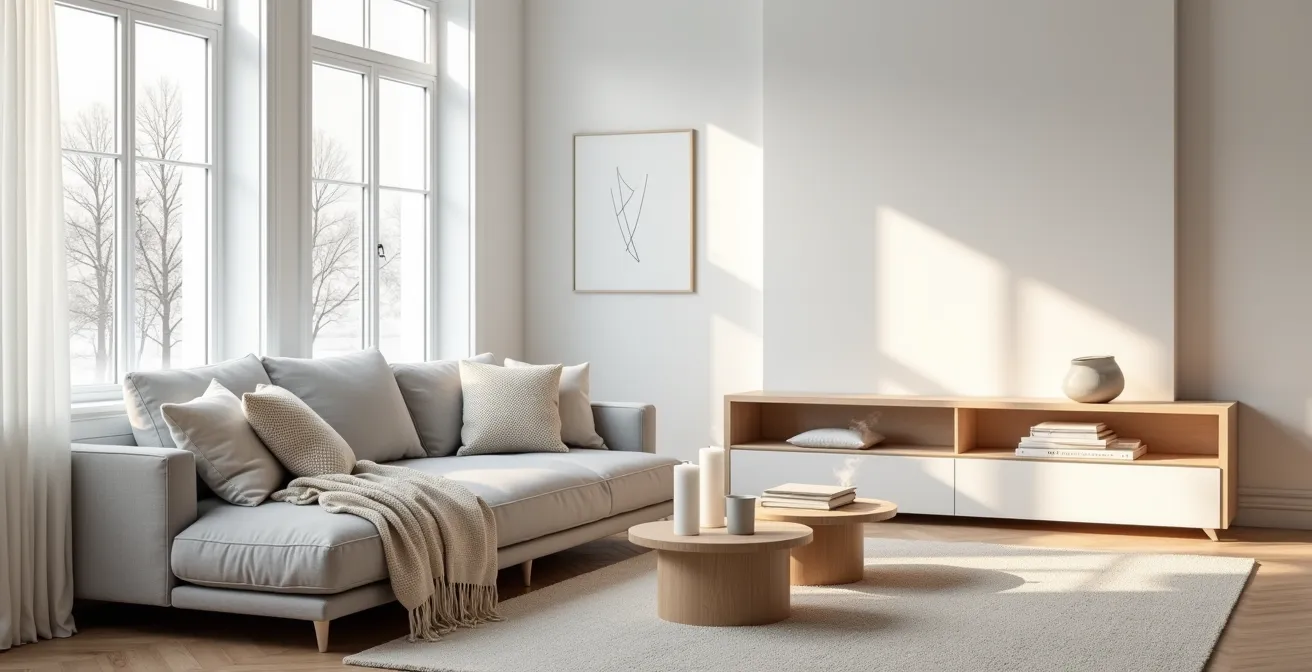
Contrary to popular belief, achieving hygge isn’t about adding clutter with cozy objects. The real key lies in a deliberate sensory strategy. It uses the psychology of light, a hierarchy of textures, and meaningful stories to consciously transform the potential sterility of minimalism into a deeply warm and personal sanctuary, especially needed in colder climates.
For those who love clean lines and uncluttered spaces, especially in northern climates, a common fear emerges as winter approaches: the minimalist home can quickly feel sterile, cold, and unwelcoming. The pursuit of “less” can inadvertently lead to a space that feels more like a gallery than a haven. The standard advice often involves simply lighting a few candles or draping a generic throw over a sofa, but these quick fixes rarely address the root of the problem and can feel like adding clutter rather than creating comfort.
This approach misses the fundamental essence of Scandinavian design. True hygge is not an aesthetic you buy; it’s a feeling you cultivate with intention. It’s a carefully orchestrated sensory experience designed to provide psychological warmth, safety, and contentment. The real secret isn’t just about adding ‘cozy things’ but about understanding *why* certain elements make a space feel warm and how to integrate them into a minimalist framework without compromising its principles. It’s about moving from decoration to a deliberate sensory strategy.
This guide will deconstruct that strategy. We will explore how to manage the perception of warmth through light, how to declutter sentimental items without guilt by turning them into narrative focal points, and how to use a deep understanding of materials—from wood grains to fabric weaves—to build layers of comfort. You will learn to craft a home that is both calmingly simple and profoundly cozy.
This article breaks down the essential strategies for infusing authentic hygge into your minimalist home. The following sections provide a clear roadmap to creating a warm and inviting sanctuary.
Summary: Mastering Hygge: A Guide to Warmth in Minimalist Design
- Why Lighting Candles Changes the Thermal Perception of a Room?
- How to Declutter Sentimental Items Without Feeling Guilt?
- Pale Oak vs Walnut: Which Wood Tone Warms Up White Walls Best?
- The ‘Hospital Look’ Error: When Minimalism Goes Too Far
- How to Layer Sheepskins and Throws for the Ultimate Scandi Winter?
- Oil vs Varnish: Which Finish Protects Oak Frames from UV Graying?
- Wool vs Synthetic: Which Fiber Holds Intricate Patterns Better Over Time?
- How to Soften Modern Industrial Interior Schemes for a Cozy Family Atmosphere?
Why Lighting Candles Changes the Thermal Perception of a Room?
The iconic image of a hygge-filled room almost always includes candlelight, but its power extends far beyond the minimal heat it produces. The effect is primarily psychological, a masterclass in managing the thermal perception of a space. The flickering flame acts as a primal signal of safety and warmth, deeply embedded in our evolutionary history. Its low color temperature, casting a warm, amber glow (around 1800 Kelvin), is a stark contrast to the cold, blue-toned light of a winter sky or a standard LED bulb. This warm spectrum of light makes everything it touches—walls, textiles, and human skin—appear warmer and more vibrant.
Furthermore, the dynamic, unpredictable movement of a candle’s flame creates a living, breathing focal point in a static room. This gentle motion captures our attention, encouraging a state of soft focus and mindfulness that is the very essence of hygge. It provides a visual anchor that feels organic and alive, a powerful antidote to the stark, unchanging lines of a minimalist interior. It’s this combination of warm color temperature and organic movement that tricks our brain into feeling cozier and safer, effectively raising the perceived temperature of the room without touching the thermostat.
Ultimately, a candle is a tool for sensory strategy. It doesn’t just illuminate a space; it changes its character. By introducing a small, controlled element of natural fire, you signal to your subconscious that this is a place of refuge from the cold world outside. This simple act is a foundational step in transforming a minimalist space from merely uncluttered to genuinely comforting.
How to Declutter Sentimental Items Without Feeling Guilt?
One of the biggest hurdles in minimalist living is dealing with sentimental items. The guilt associated with letting go of an heirloom or a gift can be paralyzing. The Scandinavian approach to this problem isn’t about ruthless purging; it’s about reframing the goal from “decluttering” to “curating.” The key is to shift the focus from the physical object to the memory it represents, a method of active storytelling. Instead of hiding these items in a box, you give the most meaningful ones a place of honor, transforming them from passive clutter into active narrative elements that enrich your space.
This philosophy is beautifully articulated in the work of hygge expert Meik Wiking. He advocates for creating a single, beautiful “memory box” or a rotating display for cherished objects. As an example from his research, he describes how in a restored farmhouse, antique elements like old wood floors and bronze door knobs are not seen as clutter to be removed. Instead, they are preserved as functional, beautiful items that contribute directly to the hygge feeling. This demonstrates that sentimental objects can serve dual purposes: they hold our stories while also adding texture and character to our homes. The goal is to honor the memory, not to be held hostage by the object.
By consciously selecting which stories to tell through your objects, you remove the guilt. You are not discarding a memory; you are choosing which ones to feature. This process gives your minimalist home a soul, making it a unique reflection of your life’s journey rather than an impersonal catalog of designer furniture. It ensures your space tells your story, and your story alone.
Action Plan: The Active Storytelling Method for Decluttering
- Create a high-quality digital archive with photos and written stories for each sentimental item you let go of.
- Repurpose functional heirlooms: consider framing handwritten letters as unique abstract art pieces.
- Transform a grandmother’s quilt into a textured wall hanging, which also adds acoustic warmth.
- Use inherited teacups or small bowls as distinctive planters for succulents or for holding keys.
- Designate one beautiful memory box for a rotating seasonal display of cherished items, keeping the display fresh and intentional.
Pale Oak vs Walnut: Which Wood Tone Warms Up White Walls Best?
In a minimalist Scandi home dominated by white walls, wood is not just a material; it is the primary source of warmth and character. However, not all woods are created equal. The choice between a light wood like pale oak and a dark wood like walnut fundamentally alters the atmosphere of a room. The “best” choice depends entirely on the undertone of your white paint and the specific kind of warmth you want to create: harmonious and serene, or dramatic and focused.
Pale oak, especially with a matte or oiled finish, often has yellow or slightly green undertones. This makes it a perfect partner for the cool, blue-toned whites often found in modern paints. The oak provides a gentle, natural warmth that balances the coolness of the walls, creating a bright, airy, and cohesive feeling. It’s the quintessential choice for a classic, light-filled Scandinavian interior that feels expansive and calm. It doesn’t shout for attention; it provides a foundational, monolithic warmth that unifies the space.
Walnut, with its deep, rich brown and red undertones, creates warmth through contrast. Against a stark white wall, a piece of walnut furniture becomes a dramatic focal point. This is a more modern, bold take on Scandinavian design. It works exceptionally well with warm-toned whites (those with a hint of yellow or cream). A powerful design principle to follow here is the 80/20 rule, as demonstrated in interior designer Reena Simon’s Scandinavian home renovation. Her space uses 80% pale oak for cohesive warmth, while a single statement piece in a dark, contrasting tone provides a powerful, focal warmth. The choice, therefore, is not just about the wood, but about its relationship with the surrounding whites and the role you want it to play in your room’s story.
The ‘Hospital Look’ Error: When Minimalism Goes Too Far
The most common pitfall of minimalist design is the “hospital look”—a space so devoid of personality and texture that it feels sterile and uninviting. This happens when minimalism is misinterpreted as the mere absence of things, rather than the intentional presence of the right things. The antidote to this clinical feeling is not color, but texture. A rich and varied textural palette is the secret weapon of Scandinavian design, providing depth, interest, and critical sensory warmth to a neutral space.
This critical distinction is the difference between amateur and masterful minimalism. As Allison Lindeman of the KLC School of Design notes, “Minimalist lines and neutral colors can fall flat. However, good Scandinavian design is layered and varied, using texture and materials, rather than color, to create depth and interest.” This means actively seeking out materials that engage the senses of sight and touch: the rough weave of linen, the smooth grain of polished wood, the chunky knit of a wool blanket, and the soft pile of a sheepskin rug. Each texture interacts with light differently, creating subtle shadows and highlights that bring a white room to life.
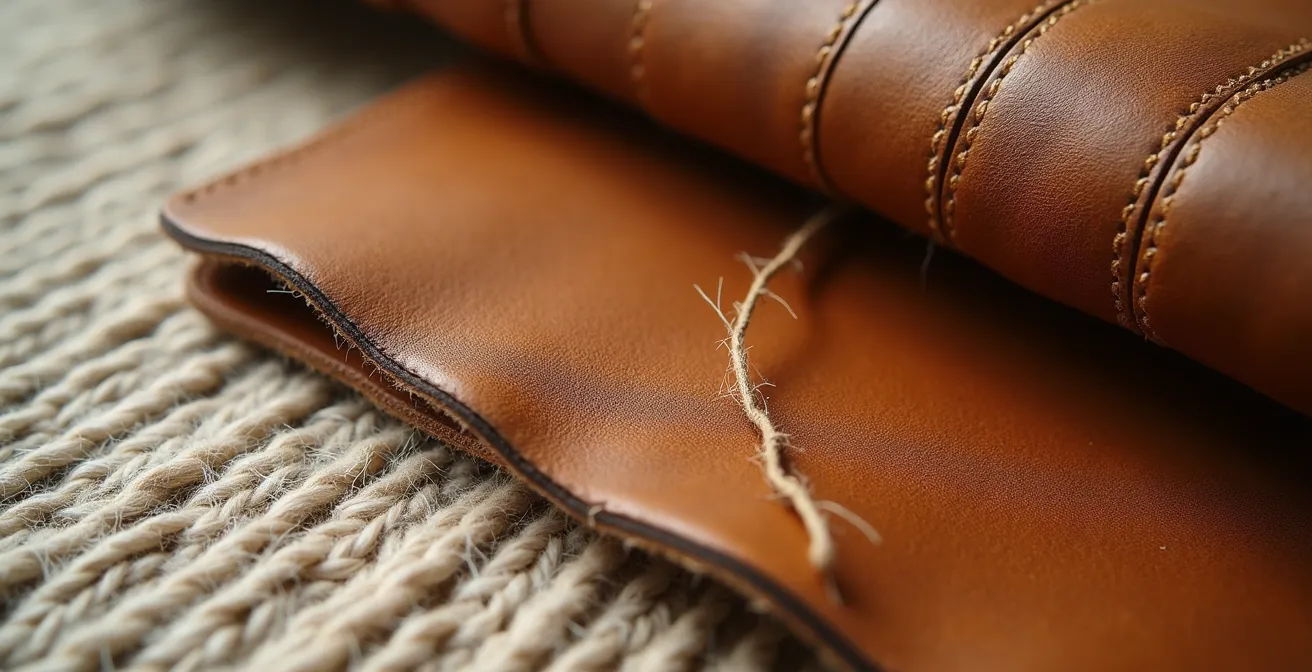
To avoid the sterile look, you must think like a composer, orchestrating a symphony of textures. Introduce organic shapes like curved mirrors or live-edge tables to break up rigid lines. Add patina and history with vintage pieces that show the gentle wear of time on leather or wood. Most importantly, ensure every room features at least three different texture scales, from the large weave of a rug to the fine grain of a ceramic vase. It is this thoughtful layering of textures—this textural hierarchy—that creates acoustic and visual warmth, making a space feel complex, inviting, and deeply human.
How to Layer Sheepskins and Throws for the Ultimate Scandi Winter?
In a Scandinavian winter, layering is a way of life, and this philosophy extends directly to interiors. Throws, blankets, and sheepskins are not mere accessories; they are essential tools for adding instant, adaptable warmth and comfort. However, simply tossing a few blankets on a sofa can look messy rather than chic. The key is a methodical approach to layering that considers a hierarchy of textures, creating an arrangement that looks both effortlessly casual and deeply inviting.
The system begins with establishing a base. Start with your largest-scale, lowest-texture item, such as a smooth linen-covered sofa or a flat-weave wool rug. This is your canvas. Next, introduce a medium-scale, chunkier texture. A cable-knit throw or a waffle-weave blanket, folded neatly or draped casually over one corner, adds visual interest and a clear invitation to get comfortable. The final touch is the high-contrast, small-scale texture. This is where a long-haired Icelandic sheepskin or a fuzzy mohair throw comes in. Draped over a chair, layered at the foot of a sofa, or placed on the floor, these high-pile items provide the ultimate sensory pay-off of softness and luxury.
Don’t be afraid to experiment beyond the sofa. A wool blanket can serve as a rustic table runner for a winter dinner party. A sheepskin instantly upgrades the comfort and look of a hard wooden dining chair or office stool. The goal is to master the “chop and drop”—a quick karate chop to the middle of a draped throw creates a casual, lived-in fold that looks far more natural than a perfect rectangle. By following this texture-first layering system, you can create pockets of extreme coziness throughout your home, ensuring warmth and comfort are always within reach.
Oil vs Varnish: Which Finish Protects Oak Frames from UV Graying?
Choosing a finish for your oak furniture and frames is more than a practical decision about protection; it’s a philosophical choice that defines your home’s relationship with time. In a hygge-focused interior, every material choice should contribute to warmth and authenticity. The battle between oil and varnish is a perfect example: one embraces the natural aging process, while the other seeks to freeze it. UV light will inevitably cause wood to gray over time, and your chosen finish dictates how this story unfolds.
A traditional oil finish soaks into the wood, enhancing the natural grain and providing a warm, tactile, “in-the-wood” feel. Its UV protection is minimal, meaning the wood will gradually and gracefully develop a wabi-sabi character—a beautiful patina of age. This requires a mindful ritual of regular re-oiling, an act of care that deepens your connection to the object. Varnish, on the other hand, creates a hard, plastic-like barrier on the surface. It offers maximum UV protection, preventing all aging, but at the cost of the wood’s natural feel. The surface feels cold to the touch, and there is no interaction or evolving story. A third option, hardwax-oil hybrids, offers a compelling middle ground, providing moderate UV protection while maintaining a more natural feel and allowing for a more controlled, graceful aging process.
The decision ultimately comes down to your definition of hygge. Is it the perfection of a never-changing surface, or the beauty of a material that lives and evolves alongside you? For a truly authentic Scandi feel, finishes that allow for a controlled patina and invite a ritual of care are almost always preferred. They transform a piece of furniture from a static object into a living part of your home’s story.
This detailed comparison highlights how different finishes affect not just the look, but the very feeling and philosophy of a piece. According to a design guide on Scandinavian Minimalism, the interaction with materials is key.
| Property | Traditional Oil | Varnish | Hardwax-Oil Hybrids |
|---|---|---|---|
| UV Protection | Minimal, allows natural aging | Maximum barrier protection | Moderate with UV inhibitors |
| Feel & Warmth | Warm, in-the-wood feel | Cold, plastic-like surface | Warm, matte natural feel |
| Patina Development | Develops wabi-sabi character | Prevents all aging | Controlled graceful aging |
| Maintenance | Regular re-oiling ritual | Set and forget | Annual light refresh |
| Hygge Factor | High – mindful care ritual | Low – no interaction | Medium – balanced approach |
Wool vs Synthetic: Which Fiber Holds Intricate Patterns Better Over Time?
When selecting a rug for a minimalist space, an intricate pattern can serve as a beautiful, grounding piece of art. However, the longevity of that pattern is critically dependent on the fiber used. While synthetic fibers might offer sharper, crisper graphics straight off the loom, wool is the undisputed champion for holding its pattern with grace and integrity over decades of use. This comes down to the fundamental physical structure of the fibers themselves.
Synthetic fibers like polyester or polypropylene are essentially smooth plastic strands. They render patterns clearly at first but have no “memory.” Under foot traffic, these fibers crush and mat, and this damage is permanent. The pattern blurs, clarity is lost, and high-traffic areas quickly degrade. Wool, in contrast, is a miracle of natural engineering. Each fiber has a natural crimp and is covered in microscopic scales. This structure gives it incredible resilience; it can be compressed repeatedly and will spring back, preserving the integrity of the weave. According to Nordic design experts, this resilience is why wool is featured in over 80% of hygge-focused Danish interiors.
The way the fibers age also contributes to the hygge factor. The microscopic scales on wool diffuse light, giving patterns a softer, more heathered appearance from the start. Over time, wool develops a beautiful patina of use, but the pattern’s structure remains. The initial perfection of a synthetic rug is fleeting, leading to quick deterioration. The natural imperfection of a wool rug, however, evolves into character, making it a more valuable and cherished part of the home in the long run. For a space built on authenticity and longevity, wool is the clear choice.
This table breaks down the key differences in how these fibers perform over time, showing why natural resilience trumps initial perfection for long-term pattern integrity.
| Characteristic | Wool Fibers | Synthetic Fibers |
|---|---|---|
| Initial Pattern Clarity | Softer, heathered appearance | Sharp, crisp graphics |
| Light Refraction | Microscopic scales create diffuse light | Smooth strands render clear patterns |
| Traffic Resilience | Natural crimp springs back for decades | Crushes and mats permanently |
| Pattern Aging | Develops patina, maintains integrity | Blurs and degrades in high-traffic |
| Long-term Value | Natural imperfection becomes character | Perfect start, quick deterioration |
Key Takeaways
- Hygge is a sensory strategy, not an aesthetic. It’s about managing perceptions of warmth through the psychology of light, texture, and memory.
- Fight sterility with a ‘textural hierarchy’. Layering varied natural textures like wood, wool, and linen creates depth and acoustic warmth that color alone cannot achieve.
- Declutter with purpose using ‘active storytelling’. Transform sentimental items from hidden clutter into curated narrative elements that give your space a soul.
How to Soften Modern Industrial Interior Schemes for a Cozy Family Atmosphere?
Modern industrial spaces, with their high ceilings, concrete walls, and exposed steel, present the ultimate challenge for creating a cozy, family-friendly atmosphere. Their raw, open nature can feel vast and impersonal. However, the same sensory strategies used in Scandinavian minimalism can be powerfully applied here to humanize the architectural scale and create intimate, warm zones within the larger volume. The goal is not to hide the industrial elements, but to place them in a warm, textural dialogue with softer, more refined materials.
The core principle is creating intimate zones. In a room with towering ceilings, a low-hanging pendant light over a seating area or dining table creates a “virtual ceiling,” instantly making the space feel more enclosed and protected. Large, plush area rugs are non-negotiable; they anchor furniture groupings, define functional areas, and provide a soft, warm surface underfoot that immediately counters the coldness of concrete or steel. Texture is your most valuable tool for creating contrast. The hardness of a concrete wall is softened immensely when juxtaposed with the softness of velvet upholstery or a cascade of silk cushions. The coldness of a steel beam is humanized by wrapping it in warm-toned string lights or draping a light linen textile nearby.
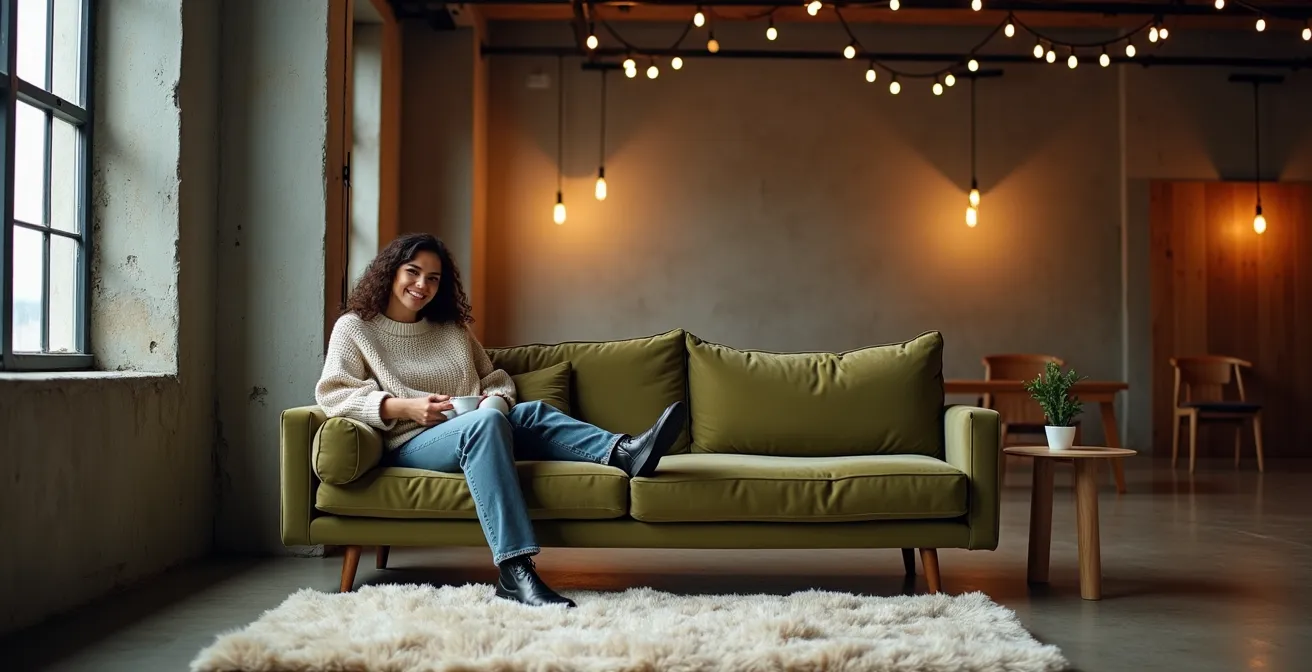
This table of material pairings illustrates the strategy of contrast and refinement. It’s about finding the perfect softening element for each raw industrial feature. By systematically introducing these refined textures, warm metals like polished brass, and natural materials, you create a sophisticated layering effect. This approach honors the strong character of the industrial space while infusing it with the comfort, warmth, and human scale necessary for a cozy family atmosphere, proving that even the coldest spaces can be filled with hygge.
| Raw Industrial Element | Refined Softening Element | Hygge Impact |
|---|---|---|
| Concrete walls | Velvet upholstery, silk cushions | Creates sophisticated warmth through textural contrast |
| Steel beams | Wrapped string lights, draped linen | Humanizes architectural scale |
| Metal fixtures | Polished brass accents, wood details | Adds warmth through reflective surfaces |
| Glass surfaces | Wool runners, sheepskin throws | Eliminates cold-touch problem |
| High ceilings | Low-hanging pendants, floating textiles | Creates intimate zones within volume |
Begin today by applying this sensory strategy to one corner of your home, and start the journey of transforming your minimalist space into a true hygge sanctuary.